
Shared Cleaning Standards That Stop the Reminding
Replace vague requests to clean more with a few observable agreements about what makes shared spaces usable, who owns each handoff, and when the system needs adjusting.

Replace vague requests to clean more with a few observable agreements about what makes shared spaces usable, who owns each handoff, and when the system needs adjusting.

If floors turn gritty soon after cleaning, look at the first few steps inside. A modest entry boundary can contain dirt and moisture without requiring a mudroom or a strict no-shoes rule.
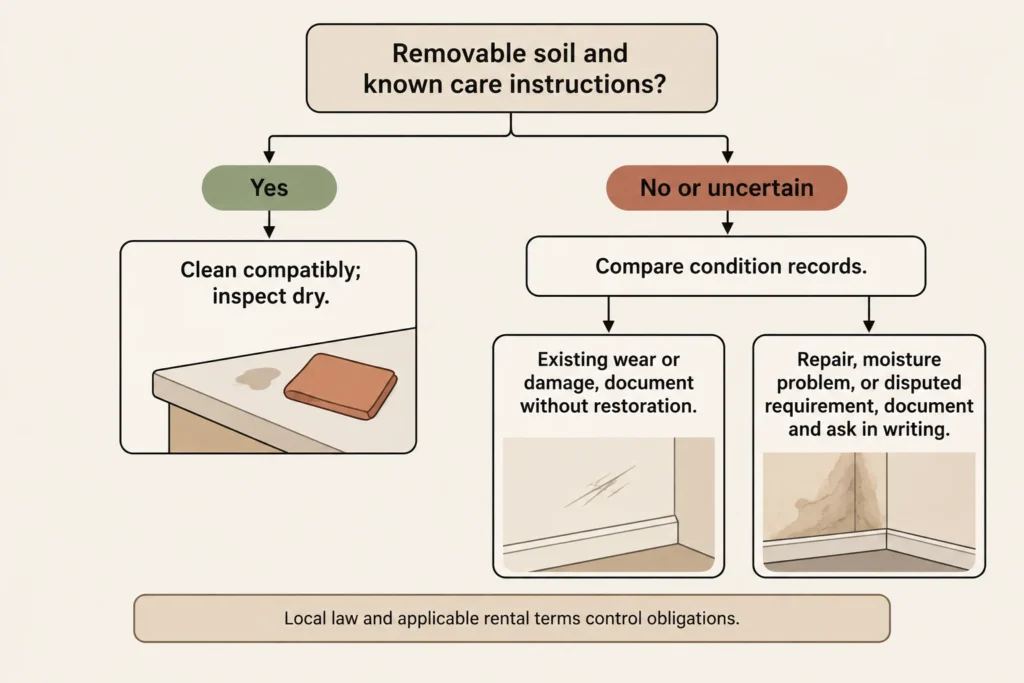
Build a bounded move-out cleaning plan from your rental requirements and condition records, prioritize removable soil, and leave uncertain finishes and repairs unaltered.

When every mess looks urgent, restore the household function needed next, then stop one delay from creating more work.

A deliberately small reset that keeps food, hygiene, tomorrow’s basics, trash, and essential paths manageable when your usual routine has fallen apart.

Divide complete responsibilities, not equal numbers of chores, by effort, reliable time windows, and actual capacity. Include planning, finishing, temporary backup, and a review of what repeatedly fails.

A useful Sunday clean is not about making the house perfect. It is about removing Monday-morning friction with a practical weekly reset that keeps the kitchen, bathroom, laundry, and entry under control.

A simple house cleaning schedule works best when tasks are grouped by how quickly mess builds up. Here is what to clean daily, weekly, and monthly without turning cleaning into a full-time job.
A weekly cleaning routine works best when it matches real life, not an idealized schedule. Here is a practical way to choose the right tasks, assign the right frequency, and keep the routine going even during busy weeks.