

At the end of the day, the mental list can become absurdly competitive: dishes crowd the sink, laundry waits in the washer, shoes narrow the hallway, crumbs cover the table, and the couch looks as though it has been negotiating with several people and a dog. The most visible mess usually demands attention first, but visibility is a poor measure of what will make the evening easier.
I once caught myself straightening couch cushions while damp laundry sat in the washer and dinner ingredients competed with dishes for counter space. The living room improved, but I was annoyed to realize I had chosen the quickest visual reward instead of protecting what had to happen next, so when time is tight, start with the mess blocking the next necessary use of the home.
Ask three questions before you pick up a cloth
Ask these in order, because a genuine immediate issue outranks convenience, and convenience outranks appearance.
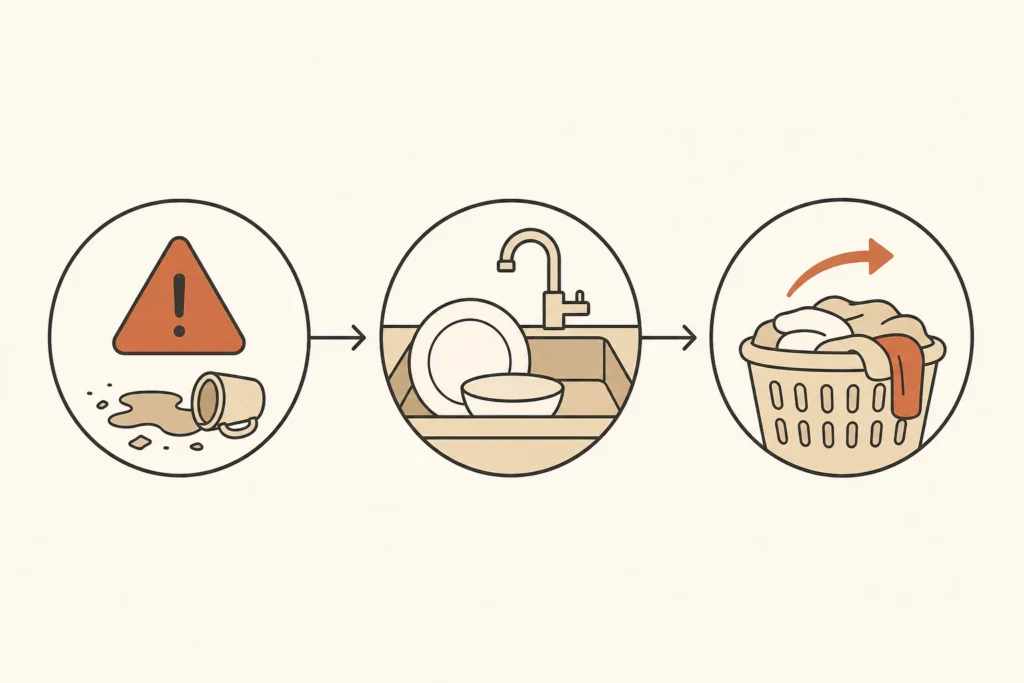
- Does anything need action now? Deal first with broken glass, an active leak, a chemical spill or exposure, a spill in the walking route, illness-related contamination, or time-sensitive food. Address perishables before they have been without a cold source for two hours, or one hour when the temperature is above 90°F. Ordinary dust and clutter do not qualify, and most routine household cleaning does not require automatic disinfection unless someone is sick or at higher risk of illness.
- What must work in the next few hours? Name the next real handoff: preparing dinner, using the toilet and sink, sleeping, leaving the house, or finishing a needed laundry load. This prevents a harmless but embarrassing mess from outranking the space or item someone is about to need.
- What will become two jobs if I wait? Move damp laundry forward before the stalled load turns into possible repeat work, contain a spill before it travels underfoot, or clear enough sink and counter capacity before meal preparation creates a second pile. Choose the delay most likely to spread soil, block another person, or schedule repeat work.
Restore the smallest working version
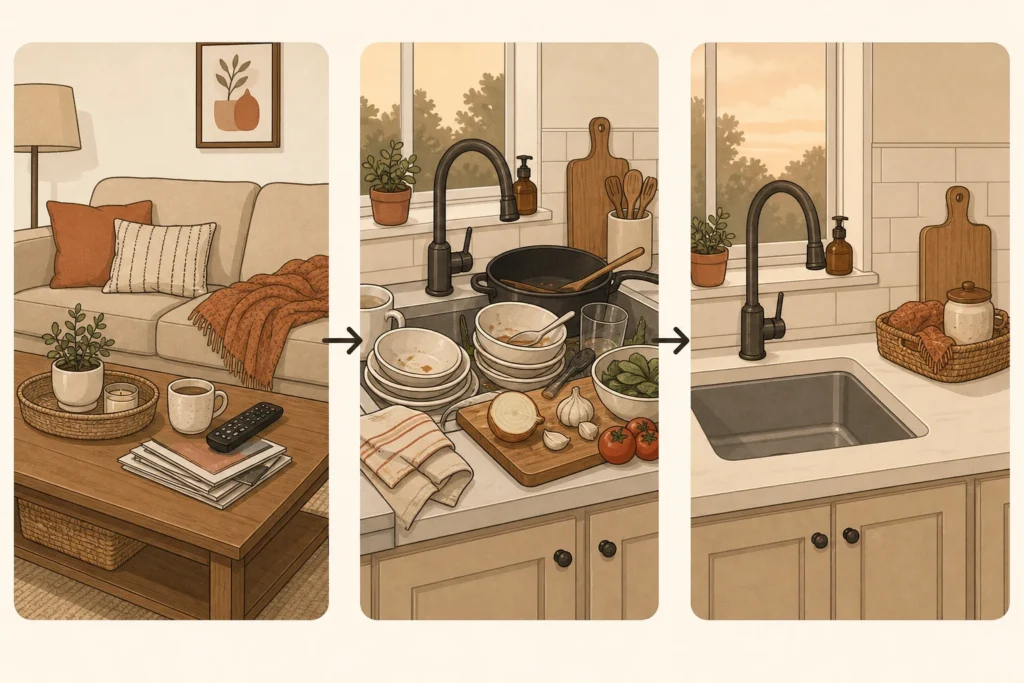
Do not let “make the kitchen usable” quietly expand into cleaning the entire kitchen, because dinner may require only one open sink basin, running water, and a clear prep patch. For hygiene, leave a clear route to an accessible toilet and sink with soap, and for laundry, transfer the needed load to the dryer or rack rather than sorting and folding everything nearby.
A departure reset can be just as small: open a walking strip and make the keys, bags, and shoes accessible. Loading or relocating enough dishes to free the basin is not the same as finishing every dish, just as clearing a route is not the same as organizing the whole entryway.
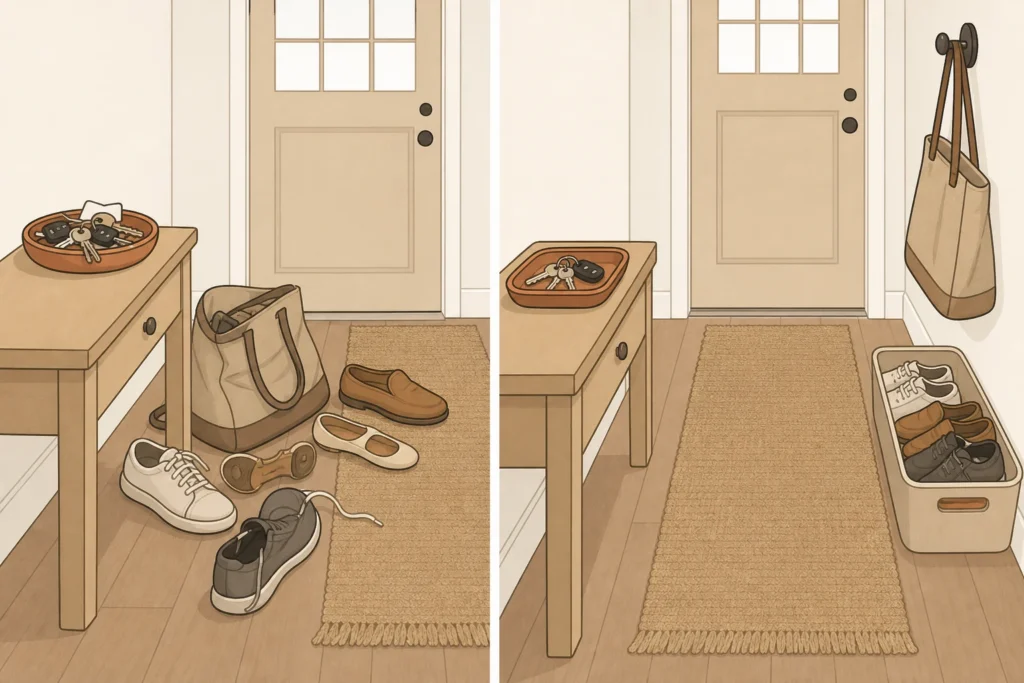
I find these partial results surprisingly satisfying because they give the home useful capacity instead of producing a polished corner surrounded by stalled work. The task has a boundary, and that boundary keeps ten useful minutes from turning into an exhausting cleaning campaign.
Let the rest wait on purpose
A task can matter without being the first task. Crumbs on the table, displaced cushions, and a dusty shelf may deserve attention later, but they do not outrank a full trash bin blocking meal cleanup, a bathroom that cannot be comfortably used, damp laundry waiting to move, or a route people cannot walk without stepping over things.
Stop once the next handoff works and the one compounding problem is contained or moving. If the same blocker wins this contest every day, treat that as setup information: the sink may need a bounded dish-waiting zone, laundry may need a transfer cue, or the entry may need a landing place, because repeated deferral calls for a later system change rather than a larger cleanup tonight.
Make the first move easier to repeat
That sentence is an if-then plan, not a promise that discipline will appear on command, and I like it because the next event supplies the priority instead of asking you to rank the entire house while tired. The goal is not to erase every sign of living, but to keep one visible mess from distracting you from the next ordinary thing the home needs to do.
Sources and references
- Centers for Disease Control and Prevention: When and How to Clean and Disinfect Your Home (2025-01-31)
- FoodSafety.gov: Splash into Food Safety at the Pool this Summer
- British Journal of Clinical Psychology / National Library of Medicine: Does Forming Implementation Intentions Help People With Mental Health Problems to Achieve Goals? A Meta-analysis of Experimental Studies With Clinical and Analg (2016-03-01)