

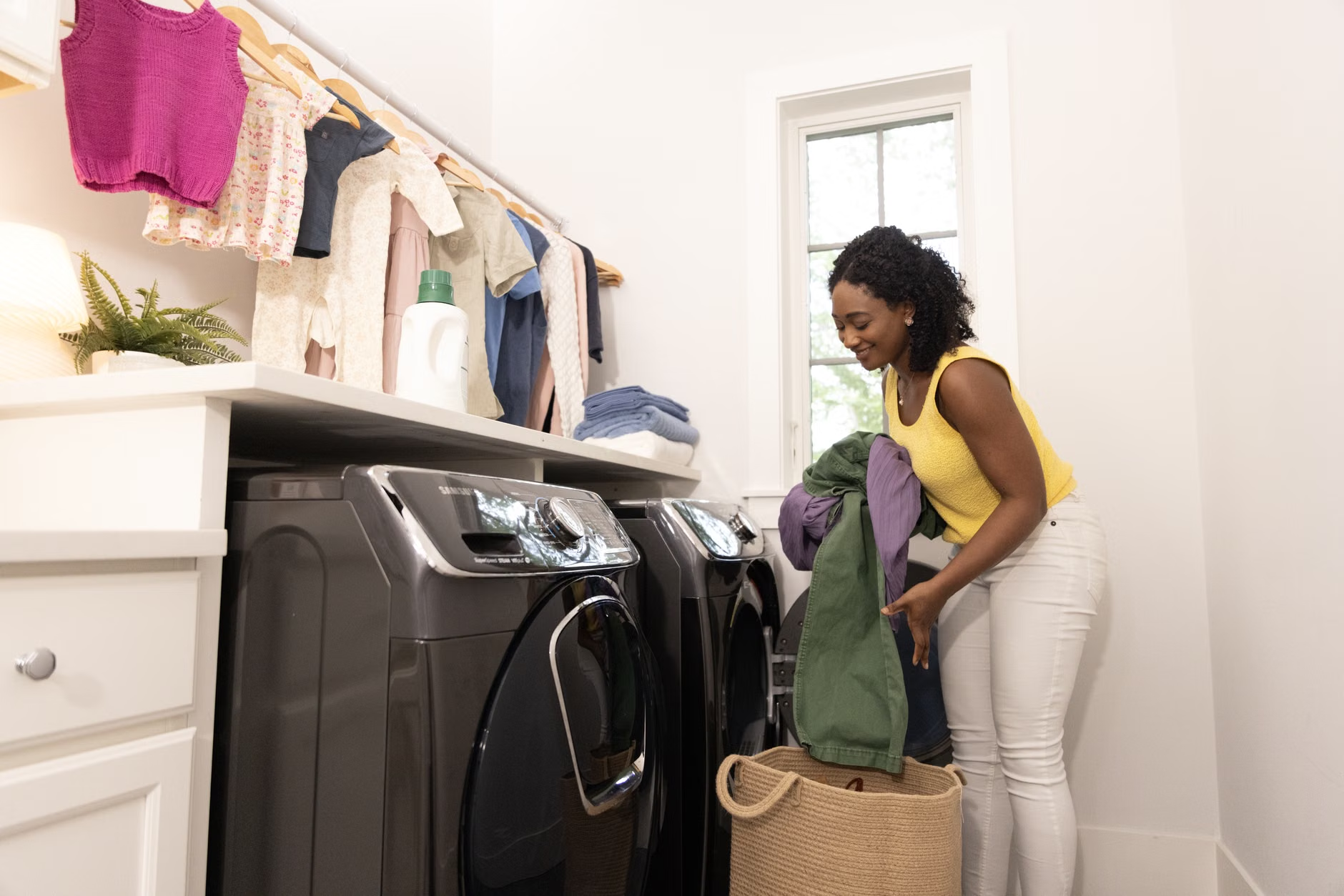
It is genuinely satisfying to make a large laundry pile disappear into one washer load. The disappointment arrives later, when shirts retain detergent, towels emerge heavy from the spin, or the dryer returns a warm bundle with damp centers. The shortcut has quietly scheduled more work.
The useful load size is not what physically fits. It is what can still circulate in the wash, rinse cleanly, shed water during the final spin, and tumble with airflow in the dryer. For bulky or absorbent textiles, drying is often the stage with the least usable room, so one washer load may reasonably become two dryer loads.
Set practical capacity by movement, not by the rim
In the washer, clothes should sit loosely rather than being pressed down to make room for one more armful. Fabric needs to lift, drop, turn, or otherwise reposition as the machine works. A tightly packed load restricts that movement, which can leave poorly cleaned areas, residue, tangles, or an unbalanced final spin.
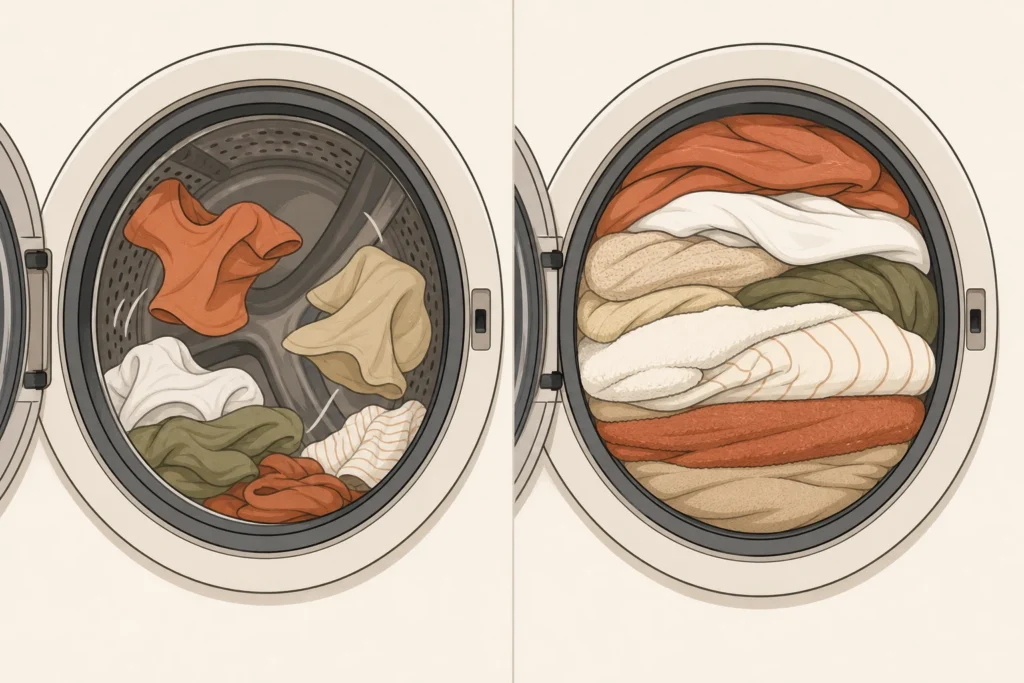
The dryer needs a different kind of room. Items must separate and tumble so moving air can reach damp surfaces and carry moisture away. Some manufacturers use approximately three-quarters full as a visual guide for certain dryer loads, but that is not a universal target. A loosely filled drum can still perform poorly if sheets have wrapped around smaller items or towels are packed into one heavy mass.
This is where bulky textiles make drum size misleading. Towels become much heavier when wet, sheets rope together, and blankets or comforters occupy the open space needed for movement. The machine’s stated maximum for the selected cycle is a boundary, not a promise that every material below it will wash and dry well as one load.
Washer-dryer combinations make the mismatch especially plain because some models have a lower drying limit than washing limit. If the unit lists different capacities, remove part of a full wash load before drying.
Automatic sensing cannot create tumbling room that the fabric has occupied.
Read the symptom at the handoff before blaming the machine
| What you see | Likely category | Smallest useful check |
|---|---|---|
| Clothes remain packed, trapped, or poorly rinsed after washing | Crowding or unsuitable fabric grouping | Reduce and re-sort the next comparable load. |
| Items are unusually wet or heavy after the final spin | Imbalance, cycle choice, or spin/drainage problem | Redistribute similar-weight items and run one spin. Note whether it repeats. |
| Outer items are dry but towel centers or tangled bundles are damp | Tangling or mixed drying speeds | Untangle, then separate heavy items from lightweight clothing. |
| A reasonable, loose load is still damp after a typical cycle | Restricted airflow, cycle, sensor, or appliance problem | Clean the lint screen and observe the exterior exhaust while the dryer runs. |
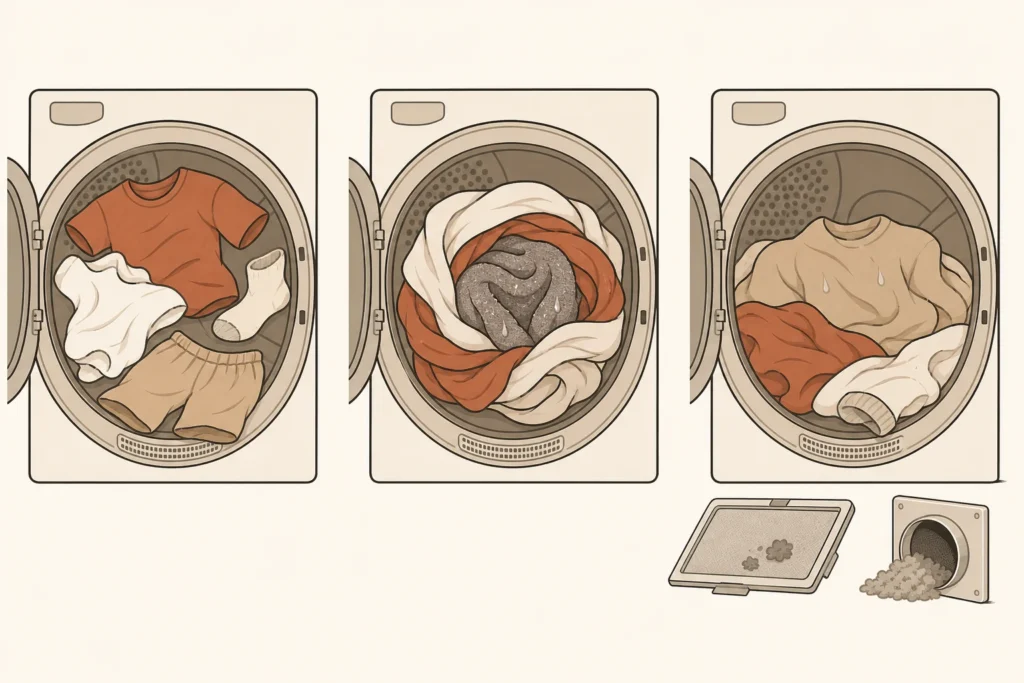
A smaller load that improves once is useful evidence, but it is not proof by itself. Too much detergent can leave residue even when fabrics have room, while a poor fabric mix can make drying look inconsistent. More importantly, repeated dampness on a sensible, freely tumbling load changes the diagnosis. At that point, continuing to shrink every load merely gives an airflow or machine problem better camouflage.
Run a fair two-load comparison instead of changing everything
Use two upcoming ordinary clothing loads to test the loading theory. A comforter, one unusually heavy item, or a chaotic bedding-and-towel mixture introduces too many other variables.
- Build the first load from similar ordinary clothing, then set aside enough pieces that nothing must be compressed in the washer and the eventual dryer load will have room to separate.
- Keep the fabric category, wash cycle, dry cycle, and dryness selection consistent with your normal routine. Use the detergent dose intended for the smaller load rather than keeping the dose for the original pile.
- At the handoff, expect garments to be pressed together by the final spin. That alone does not show overloading. Look instead for twisted bundles that trap smaller pieces, detergent residue, or sections that are much wetter than the rest. Untangle everything before drying, clean the lint screen, and confirm that a vented dryer’s exterior flap opens with noticeable exhaust.
- Repeat the same practical load size with the next comparable batch. One good result can be luck; the same improvement twice is much more useful.
- Compare the same handoff points. If both reduced loads wash, spin, and dry better, crowding was likely. If damp centers recur only when heavy and light items tangle together, change the grouping rather than shrinking every load. Unusually wet fabric before drying points back to balance, spin, or drainage. A loose load that leaves the washer normally but repeatedly stays damp despite a clean lint screen and normal exterior exhaust points instead to the cycle, moisture sensing, or dryer performance.
Keep one loading rule that prevents the repeat cycle
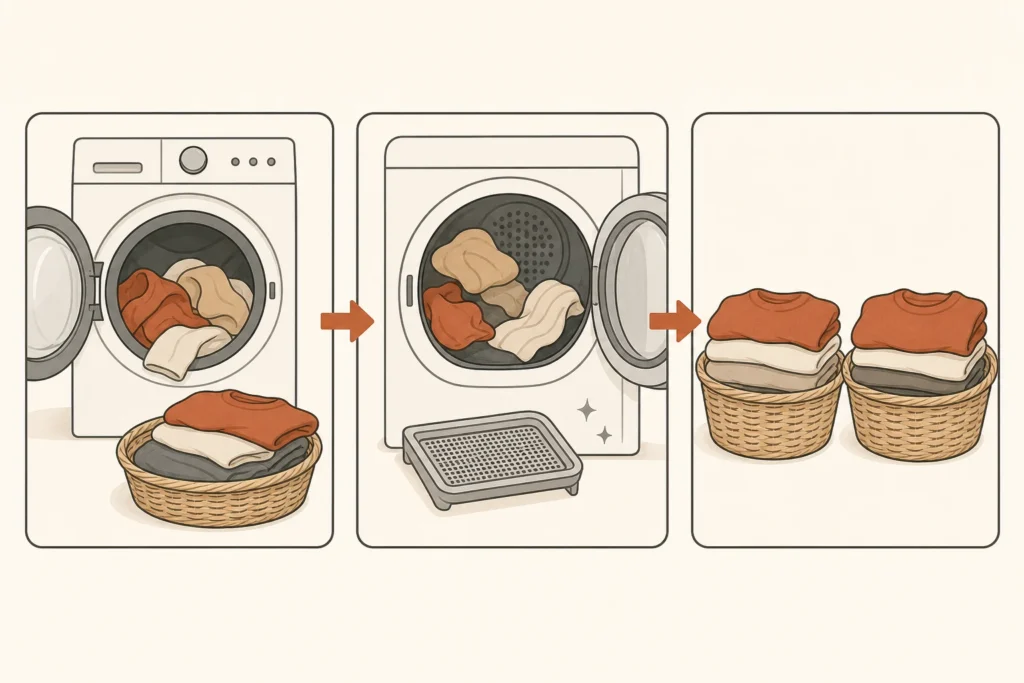
Load loosely for washing, then reassess after the final spin instead of assuming the same amount belongs in the dryer. Splitting towels, bedding, or other absorbent loads at that point is not failed efficiency. It can prevent the second cycle, the wrinkled bundle, and the irritating discovery that one damp towel has kept the whole basket unfinished.
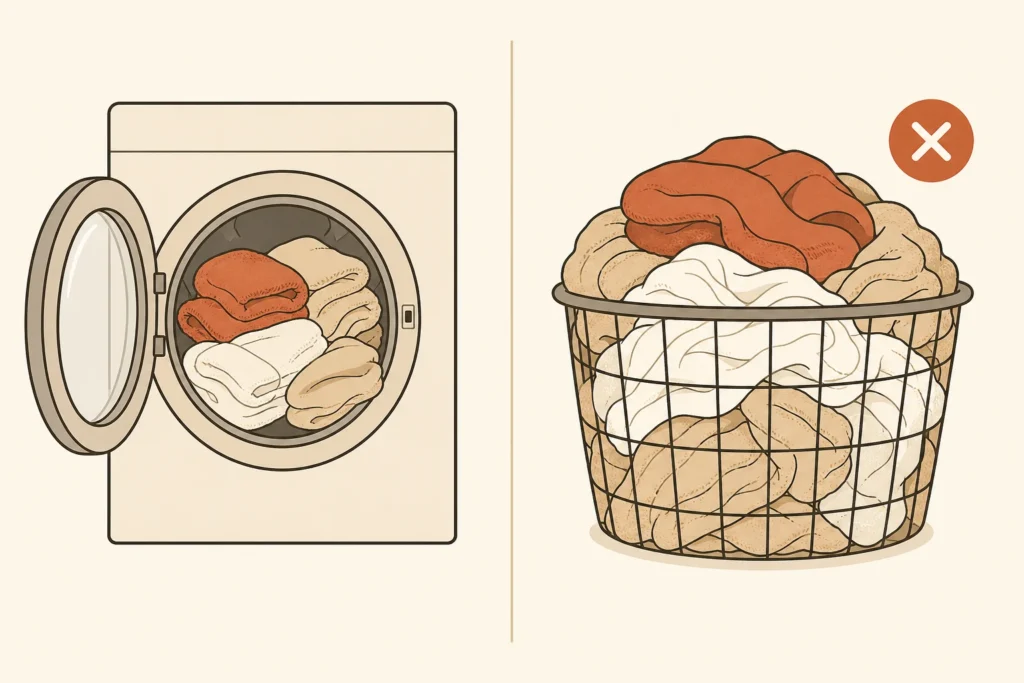
When possible, sort by drying behavior as well as color: heavy towels with heavy towels, lightweight clothing with similar pieces, and sheets without small items they can swallow. If sensible loads still need two cycles, stop reducing them indefinitely and work through the lint screen and exhaust checks in [Why Your Dryer Needs Two Cycles: Check the Load, Lint Screen, and Airflow Before Replacing It](https://cleanhomeroutines.com/dryer-needs-two-cycles-check-load-lint-screen-airflow/). The goal is not fewer loads on paper. It is laundry that finishes once.
Sources and references
- LG Electronics USA: LG USA Support: Sorting and Loading Your Front Load Washer (2026-06-01)
- Whirlpool Corporation: Whirlpool Product Help: Properly Loading a Dryer
- Samsung Electronics America: Samsung Support: The Best Laundry Load Size for Your Samsung Washing Machine and Dryer
- U.S. Environmental Protection Agency ENERGY STAR: ENERGY STAR: Clothes Dryers
- U.S. Consumer Product Safety Commission: CPSC Safety Alert: Overheated Clothes Dryers Can Cause Fires
- American Cleaning Institute: Laundering Problems & Solutions
- LG Electronics USA: LG Washer-Dryer Owner’s Manual