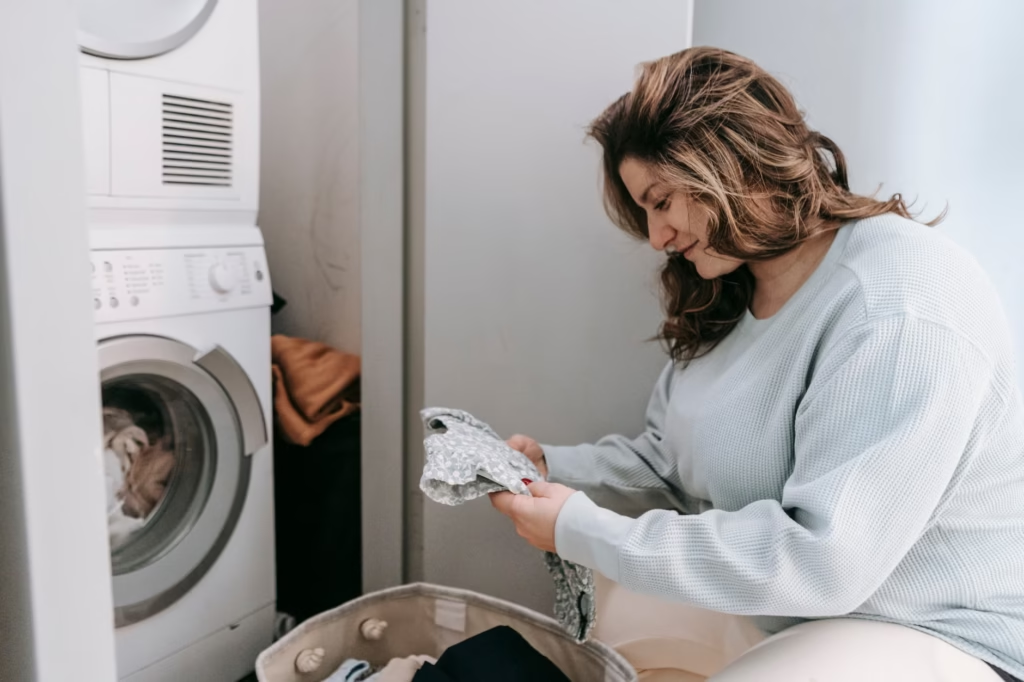
Can I Wash Kitchen Towels With Regular Laundry?
Ordinary hand- and dish-drying towels can join compatible laundry. What changes the answer is what they touched, how soiled they are, and the treatment their fabric allows.

Ordinary hand- and dish-drying towels can join compatible laundry. What changes the answer is what they touched, how soiled they are, and the treatment their fabric allows.

A laundry load is only efficient if it can circulate, rinse, spin, and tumble properly. Use these clues to separate overloading from airflow or appliance trouble.
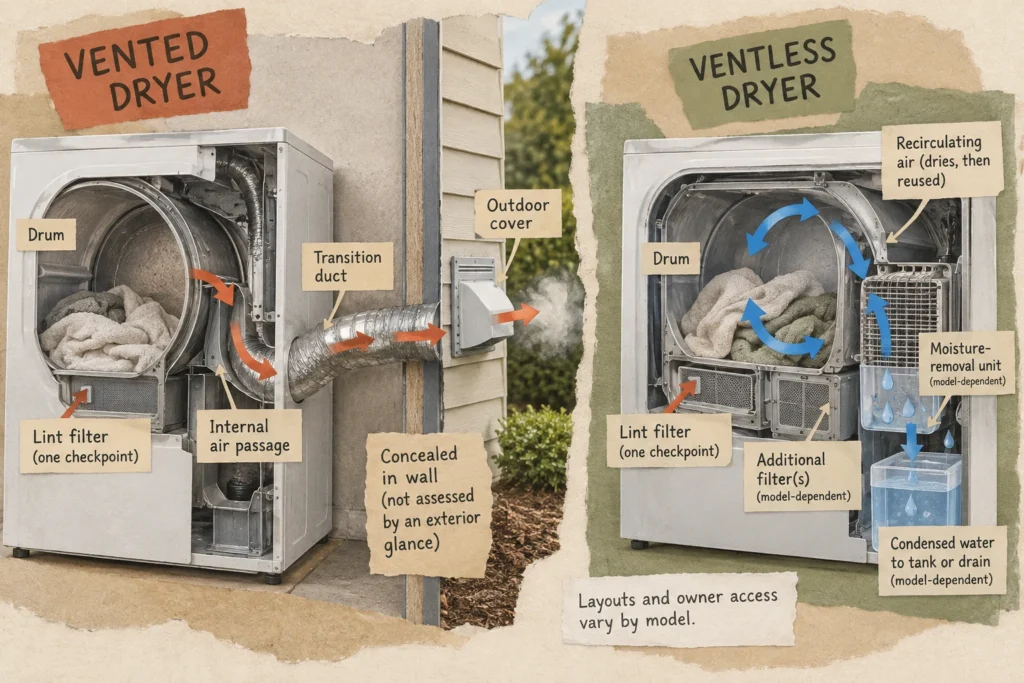
A clean lint screen doesn’t rule out restricted airflow. Here’s how dryer type, changed performance, and a few accessible clues can help you choose between a load correction, vent assessment, and appliance service.
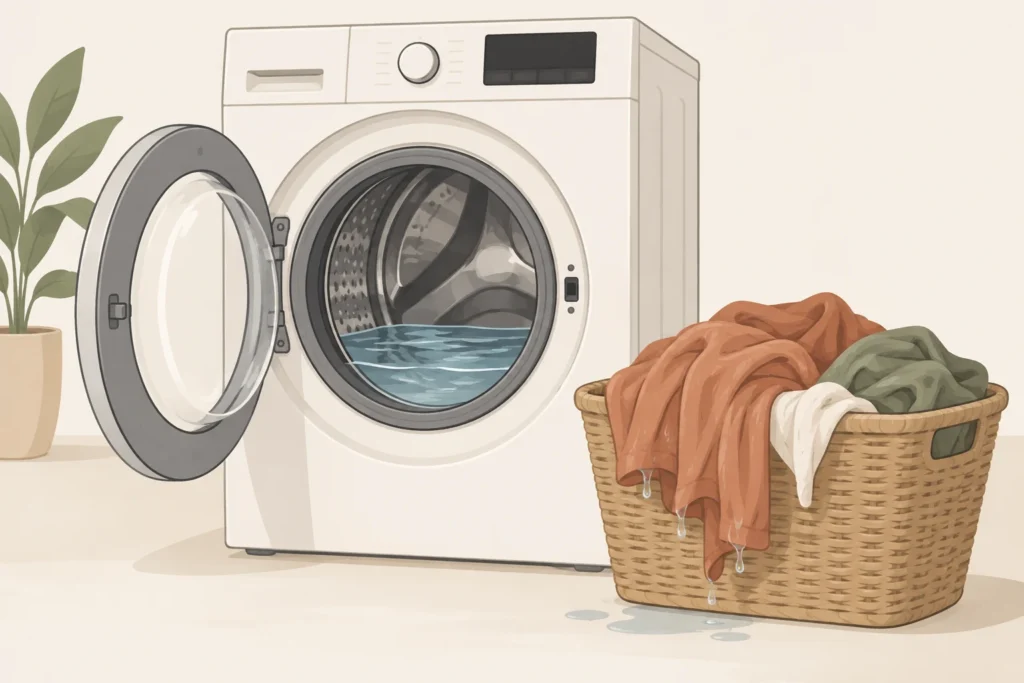
Separate retained tub water from wet clothing, then check errors, spin settings, and load balance before allowing one justified recovery attempt.
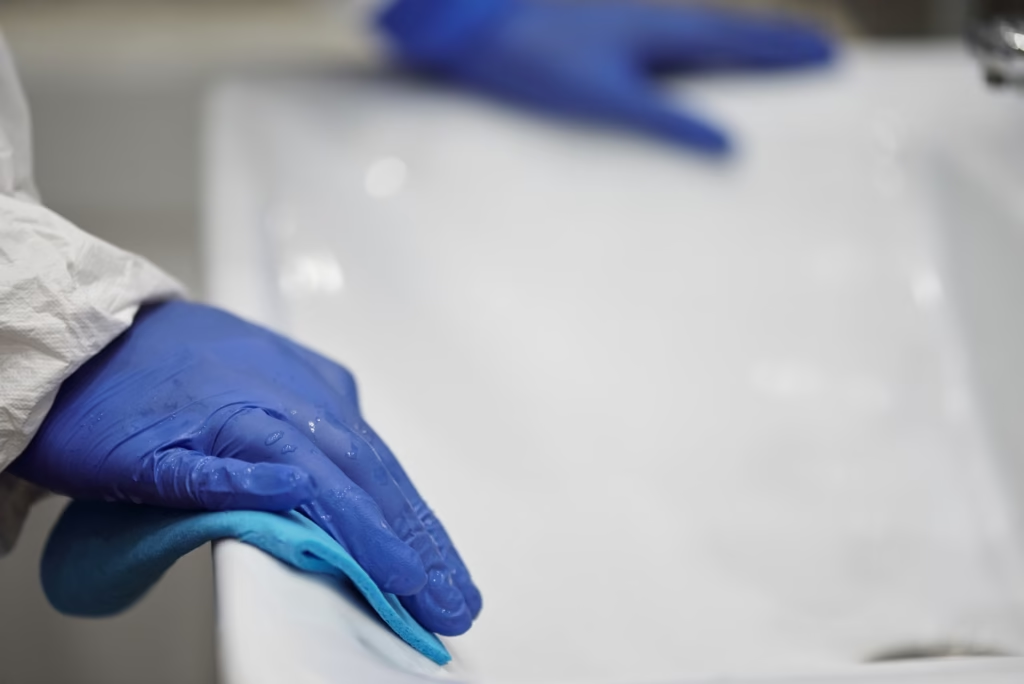
Contain soiled laundry, choose an illness-appropriate treatment that fits the fabric, and clean the surfaces touched during handling, without automatically adding an empty washer cycle.
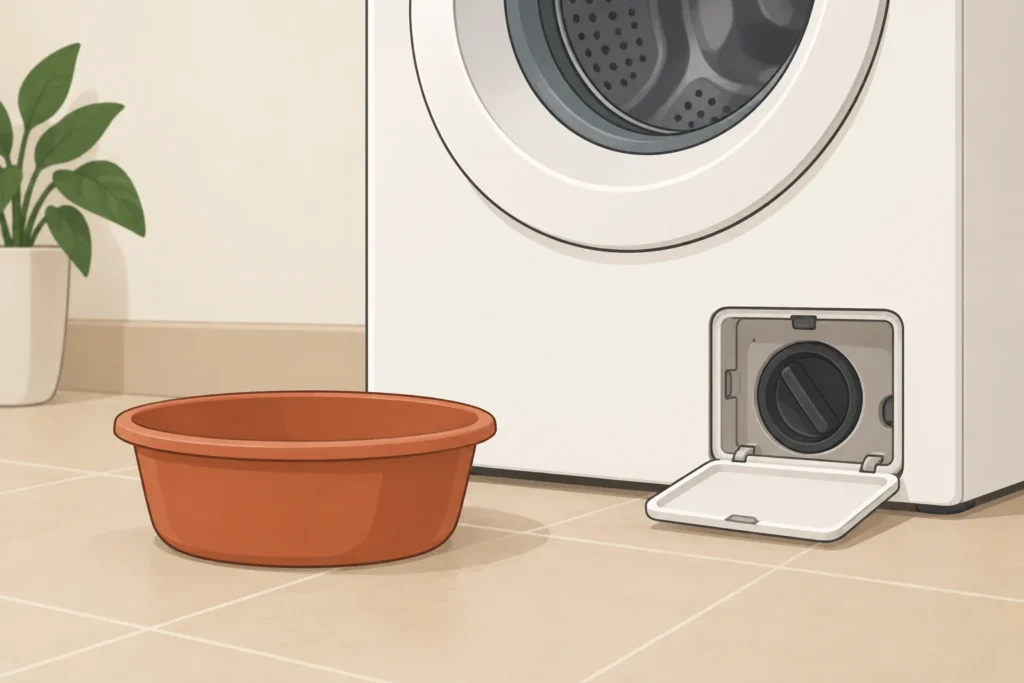
Confirm that your exact washer permits owner filter access, control retained water through the correct outlet, and check every closure before returning it to use.

If clean laundry develops a musty smell only after cooling or storage, use the timing to check the dryer, hamper, drawer, or closet before blaming the washer.
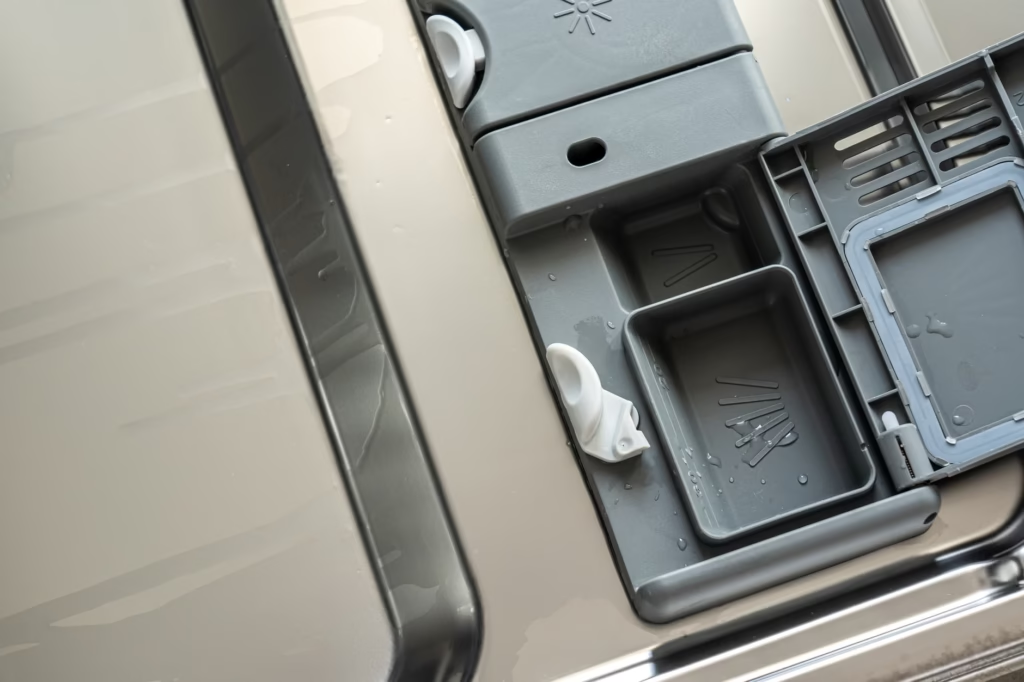
Leftover detergent doesn’t prove an inlet valve has failed. The compartment, cycle stage, product, and result of one corrected load can help you decide whether cleaning is enough or support is needed.

Washing and drying can both change a garment’s size. Learn which clues help identify the contribution, when reshaping may help, and how to prevent further shrinkage without special handling for every load.

Stop clean laundry from taking over chairs, beds, and baskets by protecting wrinkle-prone clothes first, then giving the rest a bounded route to storage.