

Fresh laundry that turns musty in a drawer feels like a broken promise: the work was done, yet the clothes need doing again. Before rewashing the pile or perfuming it more enthusiastically, note when the odor first appears. Delayed odor does not automatically indict the washer.
Laundry that smells musty while still wet has a different starting point from laundry that stays neutral until it cools, waits in a basket, or spends time in one closet. Timing narrows the search, although odor alone cannot prove mold or an appliance failure.
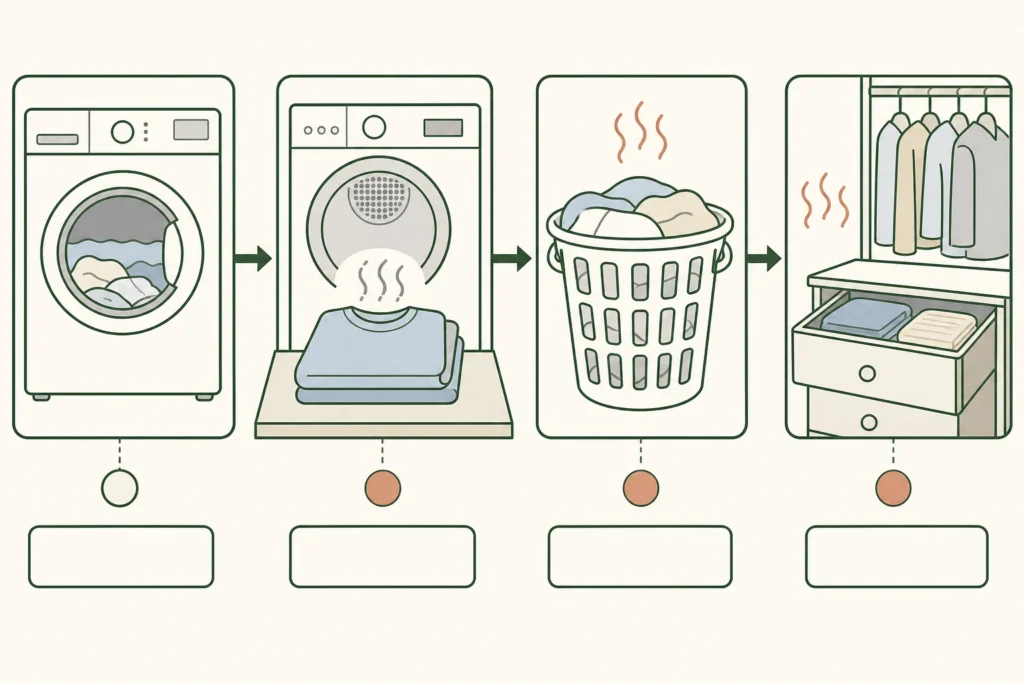
Follow one load through four handoffs
Check the load at each handoff instead of changing detergent, drying time, and storage conditions together. The first appearance of the smell tells you where to look first.
| When the odor first appears | Inspect this zone first | Make this proportionate check |
|---|---|---|
| Out of the washer | Wash stage | If it already smells musty, rewash according to the care label. Consider whether the wet load sat too long, then use the washing machine odor guide if the pattern continues. |
| Out of the dryer or after cooling | Drying and airflow | Keep the load out of storage. Once it cools, feel thick seams, waistbands, and pockets. If drying has slowed, check the lint screen and exterior exhaust. |
| After waiting in a hamper | Basket or a damp item mixed into it | Use a clean, dry basket. Keep fresh laundry away from damp towels, workout gear, and a visibly dirty container. |
| After time in a drawer or closet | Storage space and room moisture | Smell the empty space and look for condensation, dampness, water stains, or visible growth. Compare it with an open, dry location. |
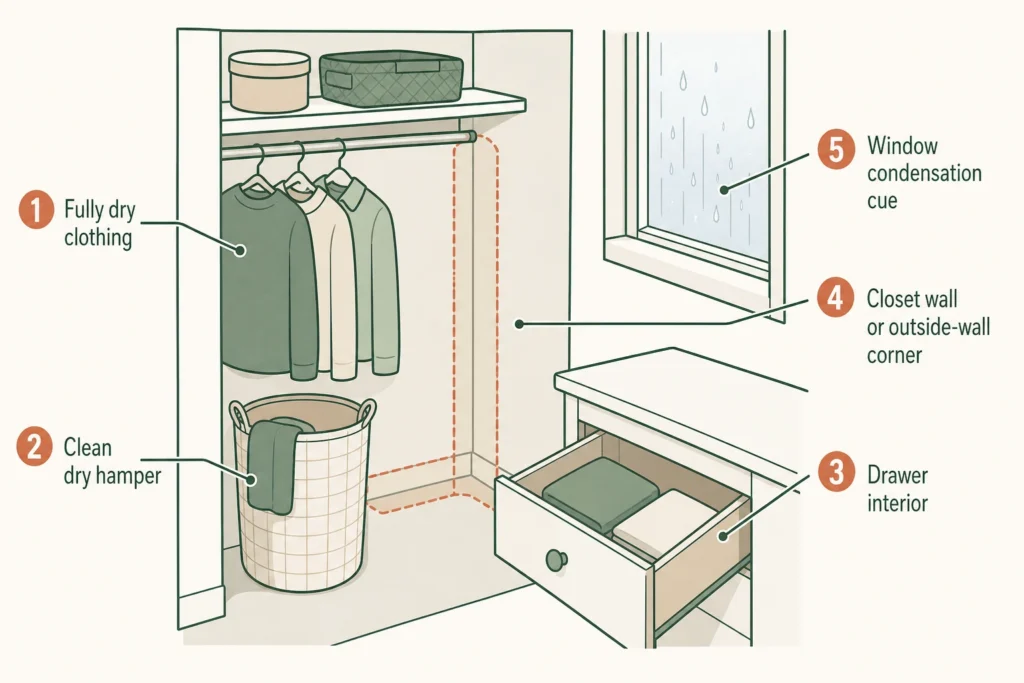
For a no-product comparison, put one fully dry item in the usual drawer or closet and keep a comparable item in an open, dry place. If only the stored item develops the odor, the space is reproducing the problem. The test is deliberately boring, which is precisely why it helps: nothing else changed.
Reset the load after you identify the likely handoff
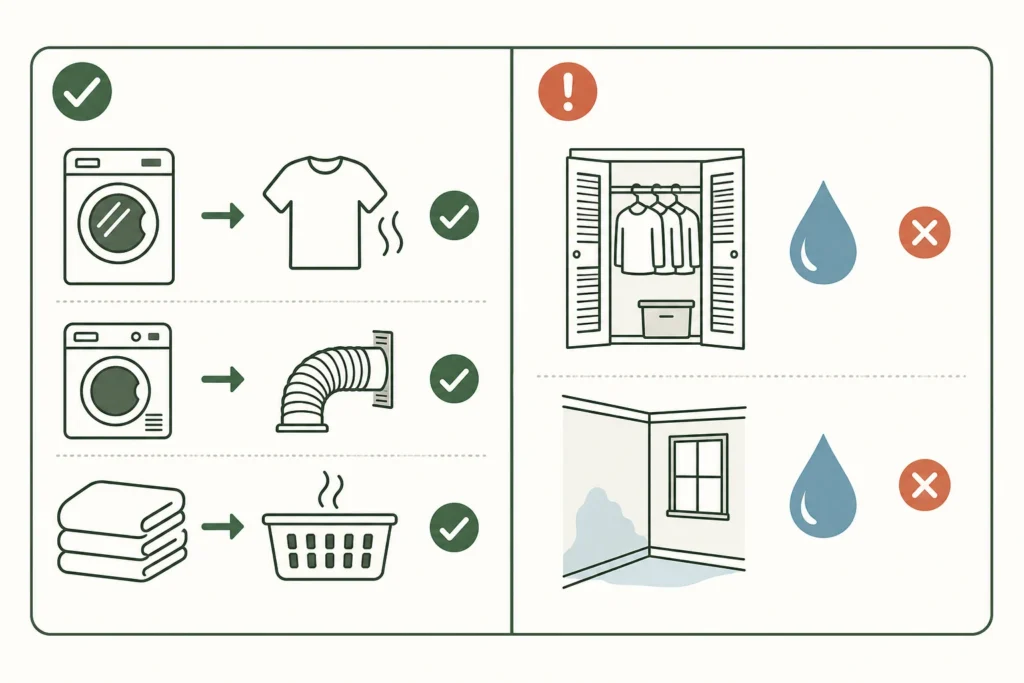
- Rewash affected clothes using the method permitted by their care labels, then dry them completely. Do not prescribe high heat to every fabric; the label determines the safe method and temperature.
- Correct the suspected handoff before returning the clothes. That may mean cleaning the basket, separating damp items, or choosing another storage location.
- Test one comparable item or load. A neutral-smelling result that stays neutral is more useful than a strong fragrance, which can conceal the same failure.
- If a normal cycle suddenly leaves clothes damp or takes much longer, clean the lint screen and confirm that an accessible exterior vent exhausts while the dryer runs. A check-vent alert, poor airflow, or an inaccessible duct calls for model-specific guidance or service, not endless extra cycles.
When the storage space, not the laundry routine, is the problem
Odor concentrated in one closet or drawer, especially with recurring condensation, damp walls, or water staining, shifts the problem toward room moisture. EPA guidance recommends keeping indoor relative humidity below 60%, ideally between 30% and 50% when possible. An improperly vented dryer can also add moisture to the room.
Renters should photograph recurring dampness, staining, condensation, or visible growth and report the underlying condition. Repeatedly deodorizing the clothes at this point is busywork, not a repair.
Keep the prevention small
Before folding, let the load cool and check thicker seams, pockets, waistbands, and towels for lingering dampness. Keep clean laundry out of baskets holding damp items, and do not close it into a storage space that already smells musty. If that space reproduces the odor, act on the moisture finding rather than buying another scented product.
Sources and references
- Federal Trade Commission: FTC care-label guidance
- Whirlpool: Whirlpool garment odor and drying guidance
- GE Appliances: GE Appliances dryer vent support
- U.S. Consumer Product Safety Commission: CPSC overheated clothes dryer safety alert (2012-02)
- U.S. Environmental Protection Agency: EPA Mold House Tour (2026-01-15)
- U.S. Environmental Protection Agency: EPA mold cleanup guidance