

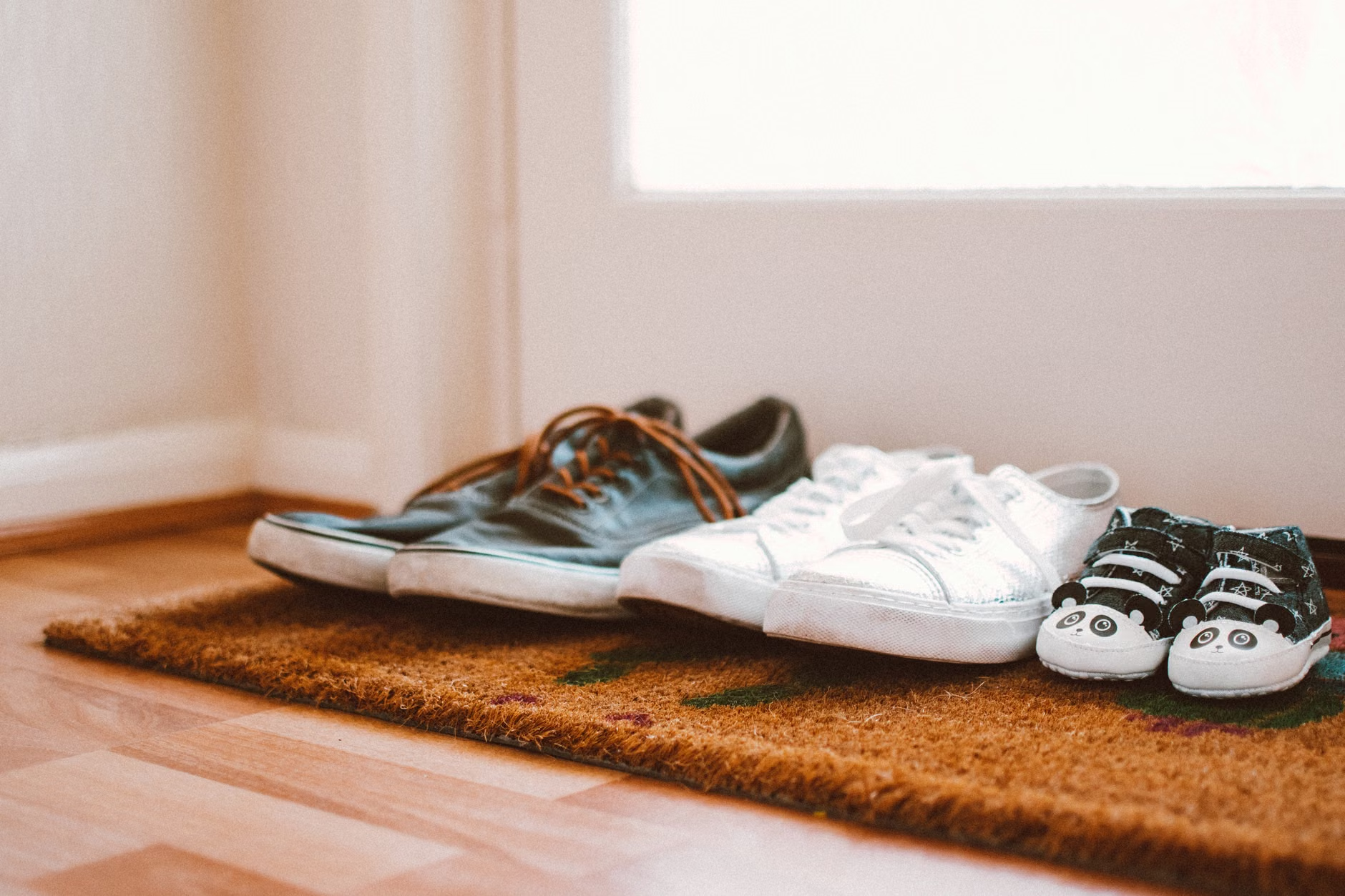
The floor was clean this morning. By evening, a faint trail of grit runs from the door toward the kitchen, damp paw marks have dried into smudges, and sweeping again feels like admitting that the first round did not count.
This is the irritating part: the floor cleaning probably worked. The mess simply crossed the threshold afterward and traveled through the house before anyone had a reason to stop it. More frequent mopping treats the long trail. A better entry routine shortens the trail in the first place.
The leak happens in the first few steps
Shoes, paws, stroller wheels, bags, and wet gear arrive carrying different messes, but the route is usually the same. They move from outdoor contact to the first indoor step, then cross the main floor while someone decides what to do with them. If that decision happens several feet inside, the dirt has already been handed to the rest of the house.
- Find the first surface that touches shoes, paws, or wheels after they leave the outdoors.
- Notice where people naturally pause to close the door, put something down, or remove footwear.
- Identify where wet or dirty items finally land.
- Mark the first point where that route crosses the floor you are trying to keep clean.
The useful fix belongs before that clean-floor crossing. It does not require a perfect foyer or a ceremonial shoe-removal policy. It needs an obvious place where outdoor mess changes status from traveling to contained.
Give every arrival three small jobs
- Intercept loose debris. Use the first appropriate surface to catch sand, dried mud, leaf fragments, and moisture before they reach the main traffic path. An exterior wiping point can help where one is allowed, while an interior mat catches what remains.
- Create a pause. The first indoor step should make wiping, checking paws, or removing shoes feel like the natural next action. Placement matters more than decoration. A mat sitting beside the route is just watching the dirt go past.
- Contain what is still dirty. Wet boots, muddy shoes, umbrellas, pet towels, and similar items need a nearby landing place. A washable mat, shallow tray, old towel, or other existing container can do the job if it stays within the arrival route.
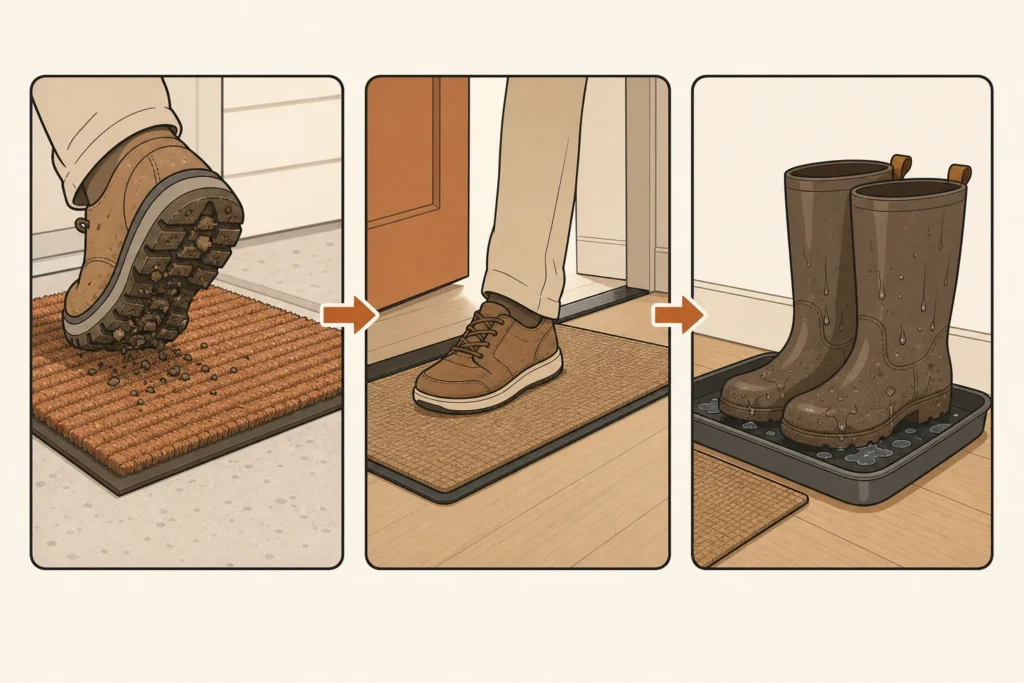
In a very small home, one surface can handle more than one job. A washable runner might catch debris, define the pause, and hold the dirty pair at its far edge. The nice part is that the system can be physically small as long as the handoff is clear.
Choose the smallest boundary that fits your doorway
| Entry type | Workable setup | Failure to watch for |
|---|---|---|
| Apartment or door into living space | One interior landing mat plus a nearby spot for the dirty pair or wet item | Door catches the mat, or the natural first step misses it |
| Entry with some indoor and outdoor room | Outdoor wiping point, indoor mat, and footwear parking beside the route | Shoes must cross the clean floor before being parked |
| Wet weather, children, or pets | Two-stage walk-off path, contained wet landing, and towel kept at the door | Wet gear overflows, or the towel lives too far away to be used |
Shoe removal is optional. If shoes come off, park them within the boundary rather than beyond it. If shoes stay on, allow enough landing space for a deliberate wipe before anyone steps onto the main floor. A rule the household ignores is less useful than a modest setup people can follow while carrying groceries, managing a child, or holding a dog leash.
A mat only contains what it can still hold
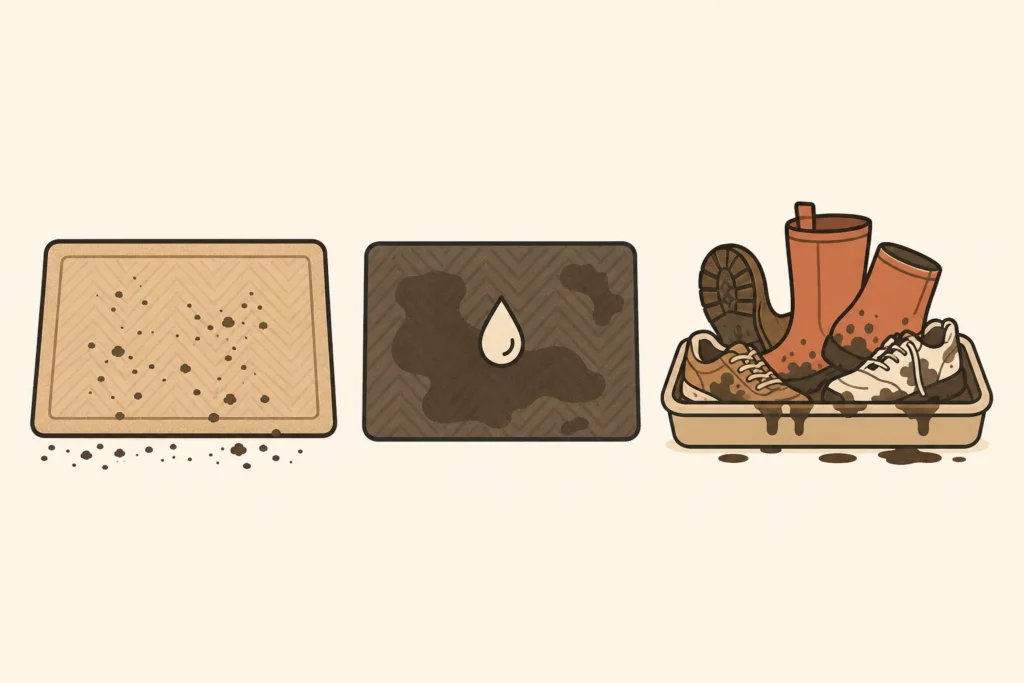
This is where a good idea quietly turns against itself. A mat loaded with grit can release debris onto the next pair of shoes, and a saturated mat can spread moisture instead of containing it. Mat maintenance is not a separate housekeeping hobby. It is what keeps the boundary working.
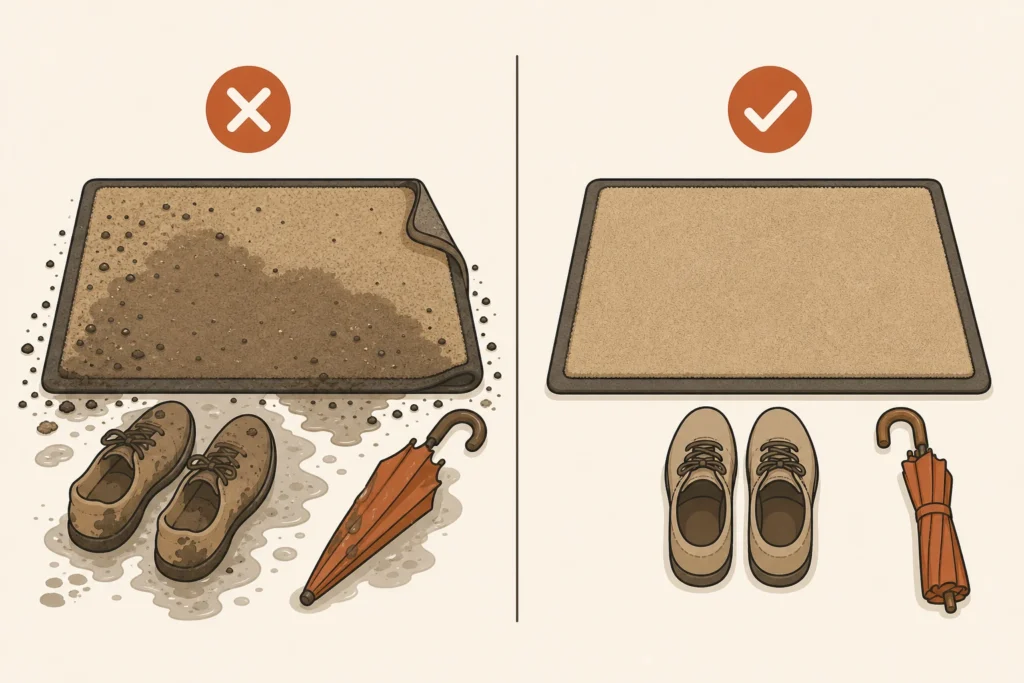
- Visible grit sits on the surface or collects around the edges.
- The mat remains damp after traffic and weather have passed.
- It begins to smell, curl, slide, or leave too little usable landing space.
- Shoes and wet items are spilling beyond their assigned area.
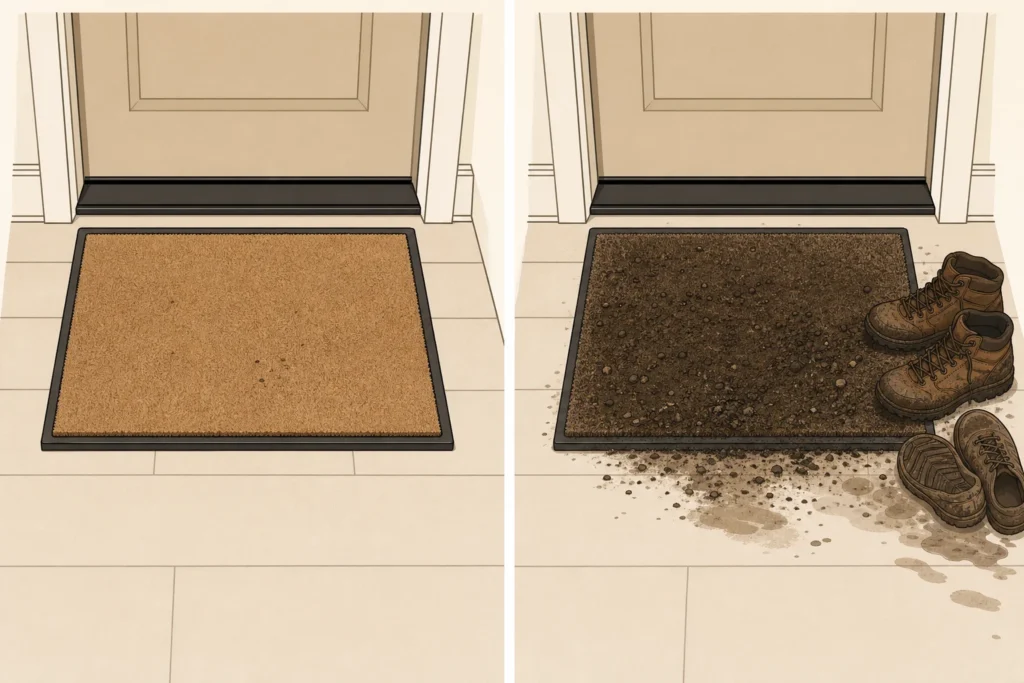
Lift the mat and remove debris from beneath and around it, because grit has an impressive talent for migrating under the exact object meant to catch it. Shake a movable mat outdoors, vacuum a suitable dry mat, or wash one designed to be washed. Let a wet-cleaned mat dry completely before returning it, and dry the supporting floor too.
Reset the boundary when the household is already there
Attach the reset to an arrival moment that already happens, such as after the last school pickup, after the evening dog walk, when shoes are put away, or before the door is locked for the night. The minimum version should take less effort than discovering the grit later in three different rooms.
- Clear shoes and gear out of the walking path.
- Remove loose grit from the mat and the first stretch of floor.
- Empty, wipe, or dry the wet-item landing area when it has reached capacity.
During muddy, snowy, or unusually busy stretches, reset the entry sooner rather than escalating to repeated whole-house mopping. The entry will look dirtier than the rooms beyond it, and that is not a failed system. It is evidence that the dirt stopped where it was quickest to remove, leaving tomorrow’s cleaning smaller.
Sources and references
- U.S. Environmental Protection Agency: EPA entry mat barriers guidance
- 3M: 3M Nomad matting maintenance and cleaning guidance (2011)
- Karndean Designflooring: Karndean U.S. vinyl-floor cleaning and maintenance guidance
- Pergo Flooring: Pergo flooring cleaning and care guidance