

Most weekly cleaning plans fail for a simple reason: they are built for an imaginary week. They assume a free Saturday, unlimited energy, and a home that somehow stays manageable until cleaning day arrives. A realistic routine works differently. It separates the few tasks that keep daily life functional from the tasks that can rotate through the week, and it leaves room for ordinary disruption.
The goal is not to keep every corner guest-ready at all times. The goal is to keep the kitchen usable, the bathroom respectable, the floors under control, and the whole home from tipping into catch-up mode.
TL;DR
- Start by deciding what actually makes your home feel dirty fastest, rather than copying a generic checklist.
- Use three categories: reset tasks, rotate tasks, and a rescue version for chaotic weeks.
- Keep truly weekly work limited to hygiene, food-prep, floor, and comfort tasks; move slow-buildup jobs to a monthly or seasonal list.
- Choose a schedule that fits your energy and time pattern, whether that means one cleaning block or several short sessions.
- Routine cleaning is enough in most homes; sanitize or disinfect more strategically when food contamination, illness, or higher-risk household members are involved. (cdc.gov)
Begin with a clear definition of “clean enough”
A sustainable routine starts with standards, not supplies. In one home, “dirty” means crumbs on the counter and toothpaste in the sink. In another, it means pet hair on the sofa, fingerprints on glass, and a bathroom floor that needs attention twice a week. Neither standard is wrong. The mistake is building a routine around someone else’s tolerance, home size, or lifestyle.
- Which surfaces get unpleasant fastest: kitchen counters, the sink, the toilet, entry floors, or the coffee table?
- Which tasks affect hygiene or food prep if they are delayed?
- Which messes create visual stress out of proportion to the time they take to fix?
- Which chores become much harder if they are skipped for two weeks?
This short diagnosis matters because weekly routines break when they try to solve every cleaning problem at once. They work when they target the messes with the highest payoff. It also helps to separate clutter from dirt. A pile of mail, backpacks near the door, or clean laundry on a chair can make a home feel messy even when the surfaces are not especially dirty. If picking up objects is always the thing that blocks actual cleaning, the routine needs a short reset built into it instead of pretending clutter does not exist.
Use the Reset, Rotate, and Rescue method
A simple weekly routine becomes much easier to manage when every task belongs to one of three buckets. This is not an official industry system. It is a practical editorial method for keeping the plan small enough to survive real life.
Reset tasks keep the home functional
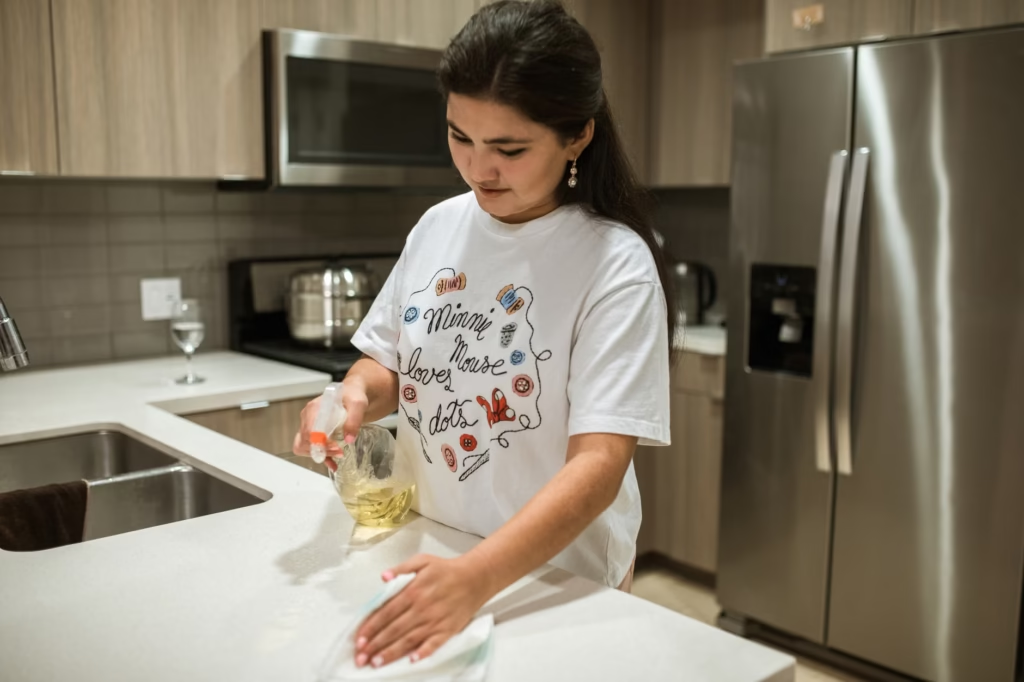
Reset tasks are the chores that stop the house from sliding into chaos between weekly sessions. They are usually short, repetitive, and tied to the most-used areas of the home. Typical examples include dishes, wiping the main kitchen work surface, a quick clutter pickup, and taking out trash or recycling when it is full. These are not “extra” chores outside the weekly routine. They are the support system that keeps weekly cleaning from turning into an exhausting recovery job.
Rotate tasks handle the real weekly cleaning
Rotate tasks are the ones that benefit from a weekly cadence but do not need to happen every day: cleaning bathrooms, vacuuming or sweeping, changing bed linens, dusting the surfaces that actually collect dust, and mopping the places that show footprints or cooking residue. These tasks can be split across the week or combined into one larger session. The important point is that they stay limited. If the rotate list grows until it includes the inside of cabinets, every window track, and the top of every shelf, the routine is no longer weekly. It is a deep-clean plan wearing a weekly label.
Rescue tasks protect the routine when the week goes sideways
Rescue tasks are the minimum version of the routine for bad weeks. Think of them as the list that prevents a total reset next weekend. In many homes, that means dishes, kitchen surfaces, the toilet and bathroom sink, visible crumbs on the floor, and laundry that affects the next day. Rescue tasks matter because consistency is often more important than completeness. A routine that survives busy weeks will beat a perfect plan that collapses every month.
If only the rescue version gets done during a stressful week, the routine is still working. The point is to reduce recovery time, not to maintain perfection.
Put each task in the right frequency bucket
One of the most useful decisions is not what to clean first, but what should not be on the weekly list at all. The table below helps sort tasks by return on effort rather than habit or guilt.
| Frequency bucket | What belongs here | Why it belongs here | A sign the frequency is about right |
|---|---|---|---|
| Daily reset | Dishes, main kitchen wipe-down, quick clutter pickup, trash as needed | These tasks prevent buildup in food-prep areas and stop visible mess from spreading through the home. Food-contact surfaces and frequently used kitchen items need regular attention. (cdc.gov) | The sink is usable most days, and the kitchen never turns into a half-hour recovery project. |
| Weekly core | Bathrooms, vacuuming or sweeping, changing linens, dusting the surfaces that actually collect dust, mopping trouble spots | These tasks affect comfort, smell, hygiene, and how the home feels during an ordinary week. | Skipping one week is noticeable, but doing them weekly keeps the home from feeling out of control. |
| Monthly rotation | Cabinet fronts, inside the microwave, baseboards in main areas, under sofa cushions, appliance exteriors | Dirt builds more slowly here, so weekly attention usually gives poor return on time. | If these tasks are skipped for one week, almost nothing changes in day-to-day function. |
| Seasonal or occasional deep clean | Oven interior, windows, grout scrubbing, behind furniture, inside the refrigerator, full decluttering sessions | These are heavier jobs that usually make more sense on a calendar or as-needed basis than in a weekly loop. | They matter, but not enough to compete with bathrooms, floors, or food-prep cleanup every week. |
| Situational sanitize or disinfect | After raw meat contamination, illness in the home, or when a higher-risk household member needs extra protection | CDC says routine sanitizing or disinfecting is generally not needed in most homes unless someone is sick; food-contact contamination and higher-risk situations are different. Clean first, then sanitize or disinfect as appropriate, and follow product labels and contact time. (cdc.gov) | It is done because of a specific risk, not because the calendar says so. |
This is where many routines become unrealistic. They confuse “important eventually” with “important every week.” Windows, baseboards, ceiling corners, and the inside of the oven matter, but they usually do not belong in the same cycle as toilets and kitchen cleanup. Moving slow-buildup jobs out of the weekly plan instantly makes the routine feel lighter without making the home dirtier in any meaningful day-to-day way.
Build the schedule around your real week, not your ideal one
A good routine fits the shape of the week. Some people have one reliable block of time. Others do better with short sessions that match different energy levels. Neither structure is automatically better. The practical test is simple: which format is most likely to happen three ordinary weeks in a row?
- Do a quick walk-through and write down the five to seven things that make the home feel dirty or stressful fastest.
- Pick three or four reset tasks that need to happen repeatedly to keep the week stable.
- Choose a limited weekly core: usually bathrooms, floors, linens, and one or two visible surfaces that collect dust or grease.
- Decide on a format: one longer session, several short sessions, or a hybrid.
- Place supplies where they are used so setup does not become a barrier.
- Write a rescue version on paper or in a notes app so there is a fallback plan when the schedule breaks.
If product overload is part of the problem, simplify that too. Most homes do not need a separate cleaner for every small variation of surface. A basic kit often covers routine cleaning: dish soap or a general cleaner for washable surfaces, cloths, a toilet cleaner, a floor tool, and laundry essentials. For people who want help identifying products with safer ingredient screening, EPA’s Safer Choice label can be useful; EPA also uses the Design for the Environment label on certain antimicrobial products such as disinfectants and sanitizers. (epa.gov)
- One cleaning block works well when setup time is the biggest obstacle and there is one dependable window for housework. The downside is that if that block disappears, the whole routine may disappear with it.
- Split sessions work well when attention and energy are better in short bursts. The downside is that vague plans like “clean something Thursday” tend to be skipped unless the task is clearly defined.
- A hybrid often works best: short reset tasks most days, plus one stronger weekly session for bathrooms, floors, or laundry.
A realistic example of a weekly routine
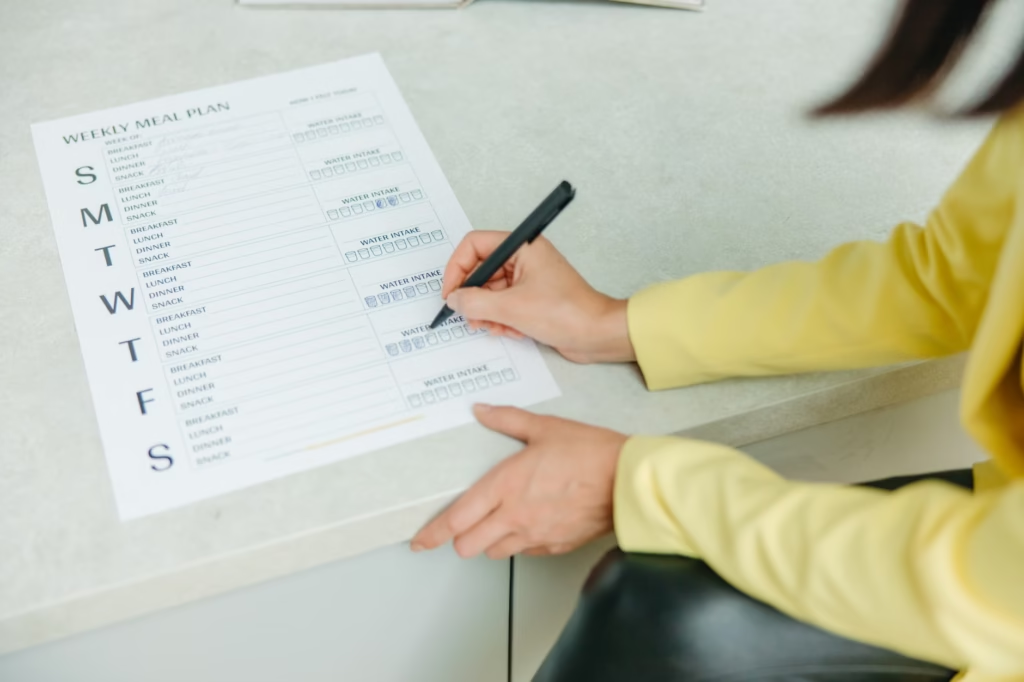
Here is a hypothetical example for a busy household in a small- to medium-size home. This is not a universal template, but it shows what “simple and realistic” looks like in practice: a plan that protects the high-impact tasks and leaves lower-value jobs for later.
- Daily reset: dishes, clear the main counter, five-minute pickup in the living area, trash if full.
- Monday: change bed linens and start laundry.
- Tuesday: clean the bathroom sink, toilet, mirror, and the most-used floor area.
- Wednesday: vacuum or sweep high-traffic floors.
- Thursday: wipe appliance fronts, microwave interior, and one dusty surface that is always visible.
- Friday: mop the kitchen and bathroom floors, or spot-mop if the rest of the floor is still fine.
- Weekend rescue option if the week was chaotic: kitchen reset, toilet and sink, visible crumbs, laundry needed for Monday.
Notice what is missing: no baseboards, no window washing, no organizing every drawer, no guilt-loaded “whole house deep clean.” The routine stays small on purpose. That keeps the home functional, and it preserves enough margin to deal with a late workday, a sick child, guests, or simple fatigue. If energy is higher one weekend, it is easy to add a monthly task. The reverse is much harder: trimming a bloated routine once it starts failing.

Know when routine cleaning is enough and when to step up
Routine cleaning, sanitizing, and disinfecting are not the same thing. CDC says regular cleaning removes dirt and other impurities from surfaces, and that routine sanitizing or disinfecting in the home is generally not needed unless someone is sick. Food-contact situations are different: kitchen tools and surfaces should be cleaned after use, and surfaces contaminated by raw meat, poultry, seafood, eggs, or their juices need more careful attention. (cdc.gov)
- Clean first. If a surface is dusty, greasy, or visibly dirty, soap or detergent and water come before sanitizing or disinfecting. CDC and EPA both emphasize that cleaning is the first step. (cdc.gov)
- Use disinfectants more strategically when someone in the home is sick or when a household member is at higher risk because of a weakened immune system. (cdc.gov)
- For food-prep areas, wash surfaces and utensils after use, especially after contact with raw meat, poultry, seafood, or eggs. (foodsafety.gov)
- If a disinfectant label lists a contact time, the surface needs to stay visibly wet for that full period to work as intended. The label also tells you where the product is approved to be used. (epa.gov)
- Not every wall, floor, or low-touch surface needs routine disinfectant use. EPA notes that many general-purpose cleaning tasks do not typically require disinfectants. (epa.gov)
Never mix cleaning chemicals unless the product directions specifically allow it. If using a disinfectant, read the label, ventilate the space if needed, and keep the surface wet for the listed contact time. (cdc.gov)
Why routines collapse: the most common failure patterns
- The weekly list is overloaded. If the routine includes both toilet cleaning and scrubbing inside the oven every single week, it is not a weekly routine anymore. It is a rotating deep-clean plan disguised as maintenance.
- Tasks are too vague. “Clean kitchen” is easier to postpone than “empty sink, wipe counters, clean stovetop.” Specific wording reduces friction.
- There is no minimum version. Without a rescue list, one missed day becomes a missed week, and the routine starts from zero again.
- Cleaning starts before pickup. Wiping around clutter is slow and demoralizing. A short reset often saves more time than it costs.
- Supplies live in one inconvenient place. If every bathroom clean begins with a trip across the house, the routine becomes harder to start.
- The plan ignores energy. Putting the hardest chores on the most exhausting day of the week is a recipe for drift, even if the schedule looks neat on paper.
A sustainable routine is usually a little boring. It repeats the same useful tasks, uses a small number of tools, and avoids heroic catch-up days. That can feel less satisfying than an occasional dramatic deep clean, but it is far better at preventing the kind of buildup that makes cleaning seem overwhelming in the first place.
Review the routine after two weeks and adjust by signal, not guilt
No first draft of a cleaning routine is perfect. The useful question is not whether the plan looks balanced on paper. It is whether the home feels meaningfully easier to maintain. After two weeks, look for specific signals.
- If the counters are sticky or crowded long before the next cleaning session, the reset is too weak or too inconsistent.
- If one task rolls over every week, it may be assigned to the wrong day, be too large, or belong in a lower frequency bucket.
- If the whole routine only works on unusually calm weeks, it needs a stronger rescue version and fewer weekly expectations.
- If floors are the main thing that makes the home feel dirty, shift time toward sweeping, vacuuming, or entry cleanup and away from low-impact detail work.
- If the bathroom still feels unpleasant despite regular cleaning, narrow the focus to the highest-payoff surfaces first: toilet, sink, mirror, and the floor area around them.
- If visual mess is the problem more than grime, the routine may need a short decluttering reset rather than more chemical cleaning.
The routine should also change with the season and the household. Muddy entryways, shedding pets, pollen, holiday cooking, school schedules, a new baby, or temporary illness can all shift which tasks deserve weekly attention. A realistic routine is not static. It is stable enough to repeat and flexible enough to edit.
A good routine is the one that survives an ordinary week
The simplest way to build a weekly cleaning routine is to stop asking it to do everything. Decide what truly needs regular attention, keep the weekly list small, protect a few reset tasks, and write down a rescue version for difficult weeks. That is what makes a routine realistic. Start with one pass through the house, choose the chores with the highest payoff, and test the plan for two weeks before changing it. Clean enough, repeated consistently, is far more useful than perfect once in a while.
Is it better to do one big weekly cleaning session or several short ones?
Neither format is automatically better. One larger session reduces setup friction and can feel more satisfying. Shorter sessions are often easier to sustain on busy schedules. If one format keeps getting skipped, switch to the other instead of assuming the problem is motivation.
Do most homes need weekly disinfecting?
Usually not. CDC says routine sanitizing or disinfecting in the home is generally not needed unless someone is sick. Routine cleaning is often enough, with more targeted sanitizing or disinfecting used for specific risks. (cdc.gov)
What should get priority in the kitchen?
Food-contact areas should come first: dishes, utensils, cutting boards, counters, and the sink. FoodSafety.gov advises washing kitchen surfaces and utensils after each use, especially after they have held raw meat, poultry, seafood, or eggs. (foodsafety.gov)
How do I know whether a task belongs weekly or monthly?
A simple rule works well: if skipping it for one week changes hygiene, smell, food prep, or daily comfort, keep it weekly. If it mostly affects appearance on close inspection, it is a better candidate for a monthly rotation.
What if I miss a full week of cleaning?
Restart with the rescue version, not with a marathon. Focus on dishes, kitchen surfaces, the bathroom sink and toilet, visible floor debris, and the laundry needed for the next few days. Once the home is functional again, resume the normal cycle.
How should reusable cleaning cloths fit into the routine?
Treat them as part of the system, not an afterthought. FoodSafety.gov recommends washing dish cloths often in the hot cycle of the washing machine. If dirty cloths pile up, the routine becomes harder to repeat. (foodsafety.gov)
References
- CDC – When and How to Clean and Disinfect Your Home – https://www.cdc.gov/hygiene/about/when-and-how-to-clean-and-disinfect-your-home.html
- US EPA – What’s the difference between products that disinfect, sanitize, and clean surfaces? – https://www.epa.gov/coronavirus-and-disinfectants/whats-difference-between-products-disinfect-sanitize-and-clean
- US EPA – Selected EPA-Registered Disinfectants – https://www.epa.gov/pesticide-registration/selected-epa-registered-disinfectants
- FoodSafety.gov – 4 Steps to Food Safety – https://www.foodsafety.gov/keep-food-safe/4-steps-to-food-safety
- US EPA – Identifying Greener Cleaning Products – https://www.epa.gov/greenerproducts/identifying-greener-cleaning-products