

Test the cleaning method approved by the paint maker on an inconspicuous spot. Check the color and gloss level when dry. Rubbing may increase the gloss of paint through burnishing and not actually remove the paint. Whether a scuff mark disappears is not the only factor. You want to make sure it stays the same when dry. If you don't know what paint it is, use gentler methods of removal instead of applying more force or harsher cleaner.[1][5][6]
1. Identify the paint and existing damage
Find the name of the paint maker and line of paint used, what gloss it was applied in and how long ago, not just what color. Research how long that paint needs before it can be washed, what cleaners are safe and what type of applicators can be used. This will help you determine if you can wash it and what to test.
The higher the gloss, the easier it will usually be to clean. But this isn't an accurate specification. There are flat paints made to be washed many times, such as Benjamin Moore's Scuff-X Matte paint. Just because a wall has a high gloss doesn't mean it's ok to scrub it. Always check what product you're dealing with before deciding to clean a flat, eggshell or satin wall.[3][4][5]
Also test your paint if it's new. How many days it takes before you can wipe off dirt varies by manufacturer. Two weeks and 30 days are some general guidelines. Don't pick one as your go-to time. Know what your paint allows you to wash it with. If you don't know and it's newly painted, wait.[2][3][5]
Look at your mark dry before you attempt to wipe it. It could be something that rubbed onto your wall from another surface. You won't know by looking. If there is a chipped piece of paint or a missing layer, that needs to be repaired, not wiped away. If the area is already shiny, it could be from furniture or previous attempts to wipe the area. Cleaning it more won't fix that.[1]
2. Test a gentle method and let it dry
Pick a small area that goes unnoticed on your wall. Use the mildest method allowed. Usually water will work with a clean cloth or non-abrasive sponge. Make sure your cloth or sponge is wrung out well and apply light pressure. If your wall is older and you have no info on what it can be cleaned with, using water will be your safest option to test.[3][5][6]
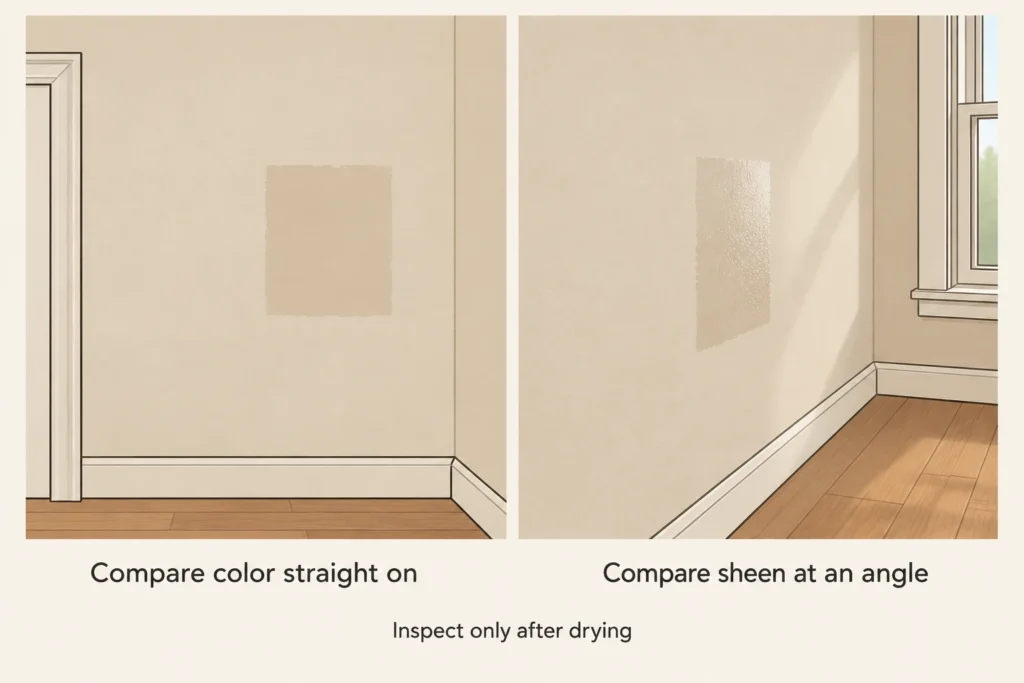
Try the whole process using the liquid, rag, amount of moisture and how you rub. Even an appropriate cleaner can give you a bad result if you use an abrasive rag or scrub too hard. An eraser-type melamine foam should NOT be your next step in the gentle progression. Benjamin Moore tells you not to use abrasive erasers after painting walls.[1][2][6]
Use another damp cloth wrung out with just water to wipe off any cleaner according to instructions. Pat the area dry instead of buffing the area. Once dry, inspect the spot. You can't tell if there is a problem by looking at it while it is wet. The spot could be darker or shinier and still be ok or not.[2][6]
Compare to the surrounding area that you have not cleaned using the same lighting and angles as you did before you cleaned. Only continue if you don't see any shine, fading, water marks or lack of finish. Doing this on a hidden spot is best practice but it doesn't always mean the area you want to clean will behave the same way. There could be previous repairs, sun damage, etc.[6]
3. Treat the mark and assess
Using your approved method, try to clean your mark with the same amount of moisture and pressure that you used when testing. If the finish starts to rub off or streak, stop. Your rag may be dirty from your wall or from rubbing off the paint. If you think you are rubbing off wall color, stop and don't keep rubbing to prove whether you're right or wrong.
Wipe clean of residue and allow to dry then check again. If the mark is lighter and you have consistent finish then stop when you are satisfied with your results. If you only got water and the finish was ok you can try a lighter cleaner at manufactures suggestion. If they don't recommend a cleaner don't try to figure out how much you can mix. Or start scrubbing with more abrasive rags.[3][5][6]
If the mark looks better but you now have a shiny or faded area once dry you have failed the test. Do not continue to clean your wall. If renting take pictures once dry and show your landlord what you used on your wall. Ask them what paint it is and if there is a way they would like it repaired. It may not blend well with the rest of your wall even with touch up paint.[1][5]
Sources and references
- Sherwin-Williams: Burnishing (Shiny Area)
- Benjamin Moore: How to Clean and Maintain Freshly Painted Walls & Cabinets
- Benjamin Moore: How to Clean Walls Without Damaging Paint
- Benjamin Moore: Scuff-X Interior Paint, Matte
- Sherwin-Williams: Maintenance & Repair FAQs
- Sherwin-Williams: How to Clean Newly Painted Walls