

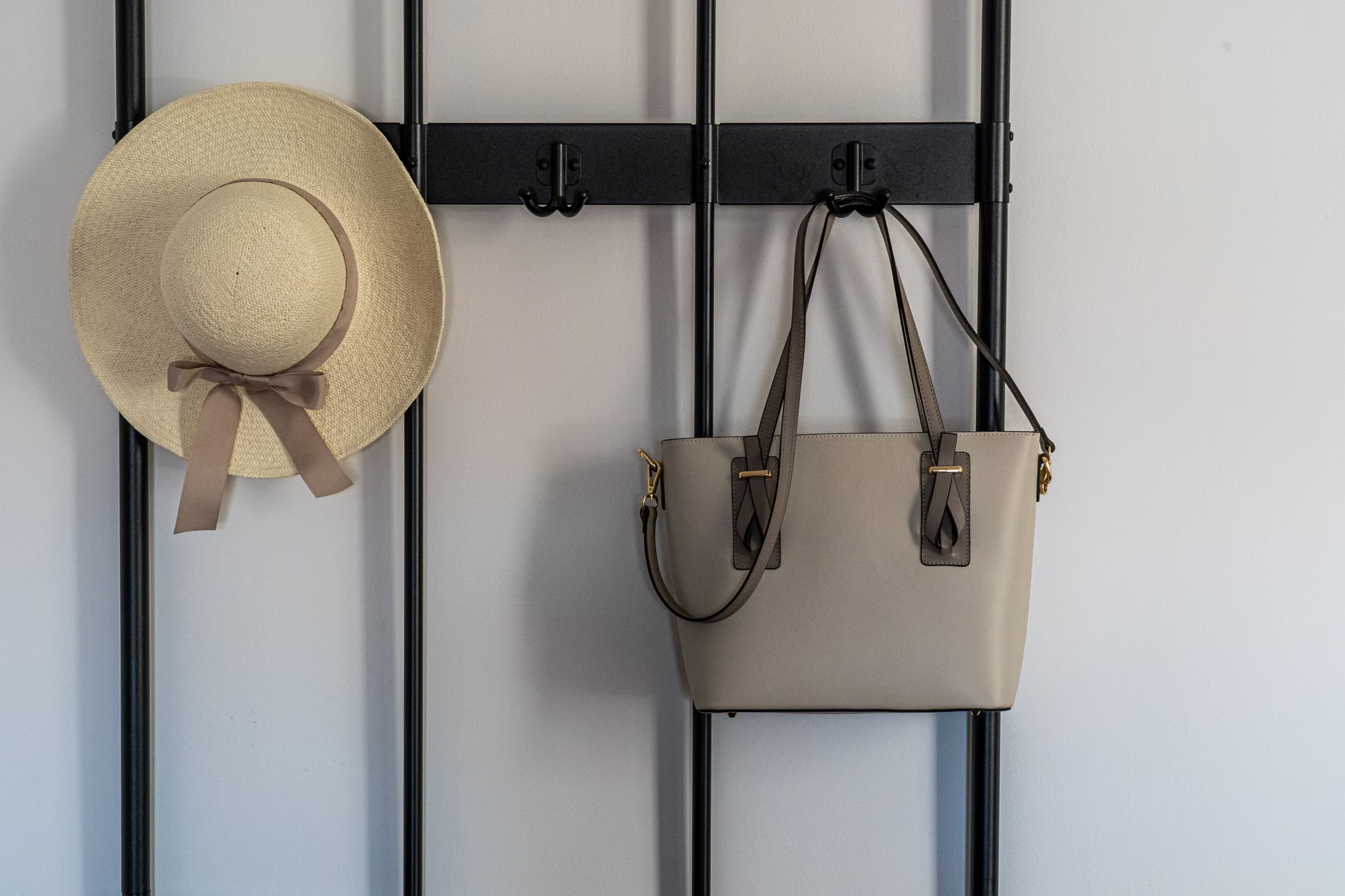
Small homes rarely become chaotic because there is no storage at all. More often, the problem is that too many things are competing for the same few surfaces, drawers, and corners. When that happens, every chair becomes a drop zone, every countertop turns into backup storage, and the room starts feeling smaller than it is.
The fix is not buying more bins right away. It is deciding what deserves easy access, what can live higher or lower, and what is simply taking up valuable room.
Start with the surfaces that make the room feel crowded
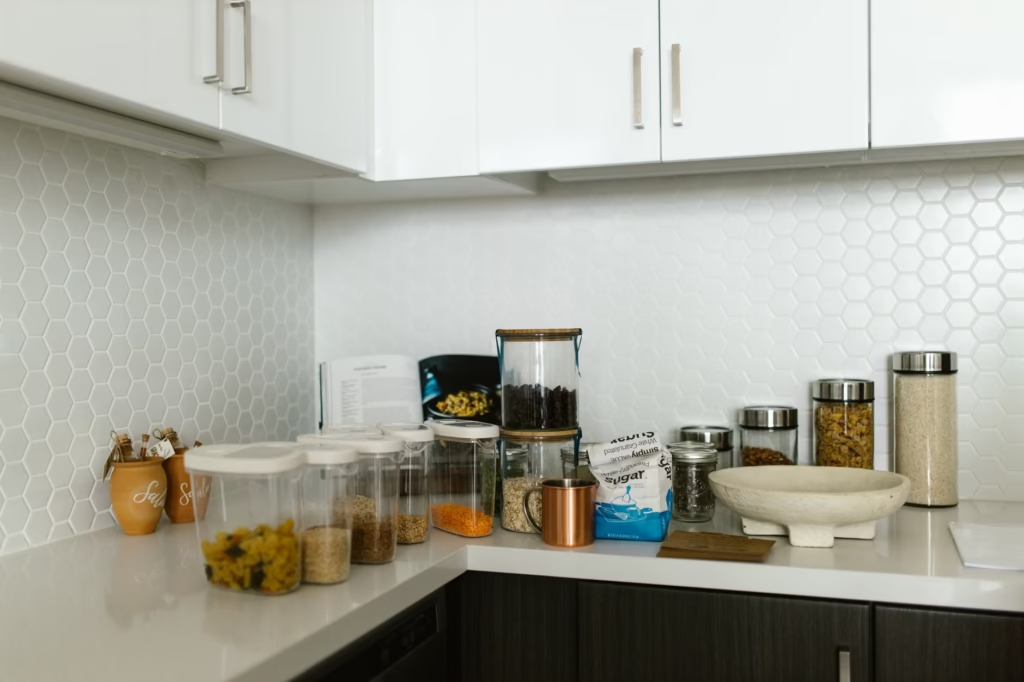
In a compact home, visual clutter matters almost as much as physical clutter. A room feels tight when the dining table is buried, the kitchen counter is full, or the floor has stacks that never quite leave. Start with the surfaces that affect daily life first, not with closed cabinets.
Clear one area completely, group similar items together, and decide which category is creating the jam. That is usually where the real problem is: too many mugs, too many beauty products, too many chargers, or too many paper piles.
- Pick one hotspot only: the entry bench, kitchen counter, bedside table, or dining table.
- Remove everything from that surface so the full amount is visible at once.
- Sort the items into four simple groups: keep here, keep elsewhere, donate, and trash or recycle.
- Return only what truly needs to stay in that exact spot.
- If the surface fills again within a few days, that category needs a better home or a smaller limit.
This is where many people get stuck. They try to organize without editing first. But in a small home, storage works only after the volume is under control. That does not mean aiming for an extreme minimalist look. It means being honest about duplicates, “just in case” items, and things kept out of habit instead of use. A small space punishes indecision more quickly than a large one.
Organize around how the home is actually used
A common mistake in small homes is organizing by furniture instead of behavior. The better question is not, “What fits in this cabinet?” but, “What happens in this spot every day?” Watch where things naturally land for a week. Shoes pile up by the door because there is no landing zone. Mail takes over the table because there is no paper routine. Clean laundry sits on a chair because the closet is too crowded to put it away quickly. Those patterns tell you what the room needs.
- Near the entry, keep only true arrival items such as keys, bags, shoes, and mail.
- In the kitchen, reserve the easiest shelves for daily dishes, pans, and food prep tools, not special-occasion pieces.
- In the living room, keep remote controls, chargers, and small electronics together instead of scattering them across multiple surfaces.
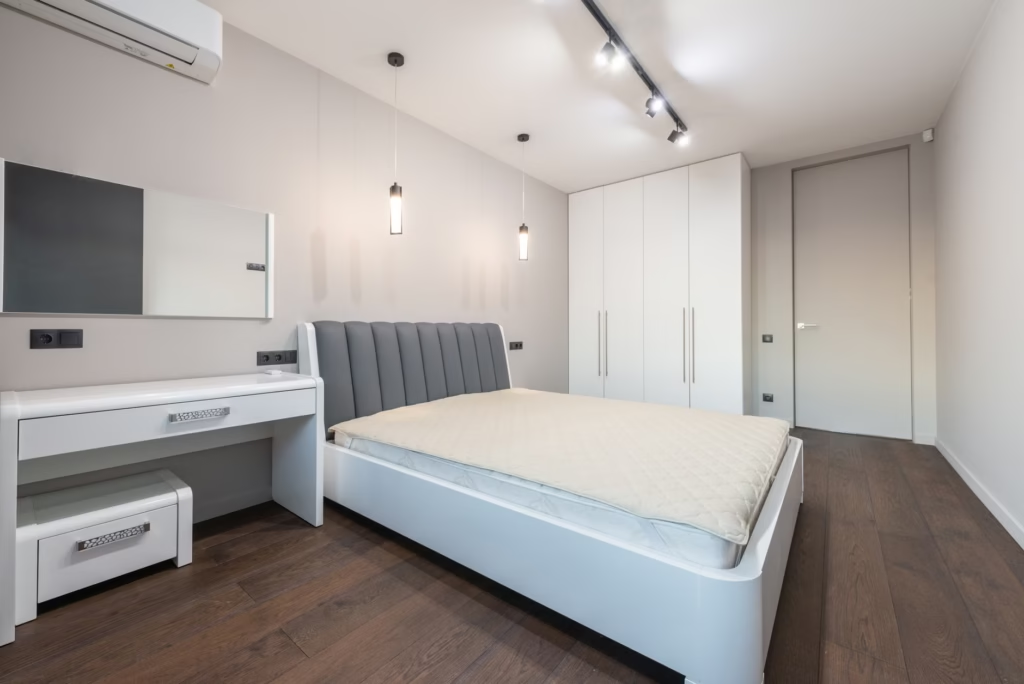
- In the bedroom, limit the nightstand to sleep-related essentials, not overflow from the rest of the home.
- In the bathroom, store backup products separately from daily-use items so the counter does not become a warehouse.
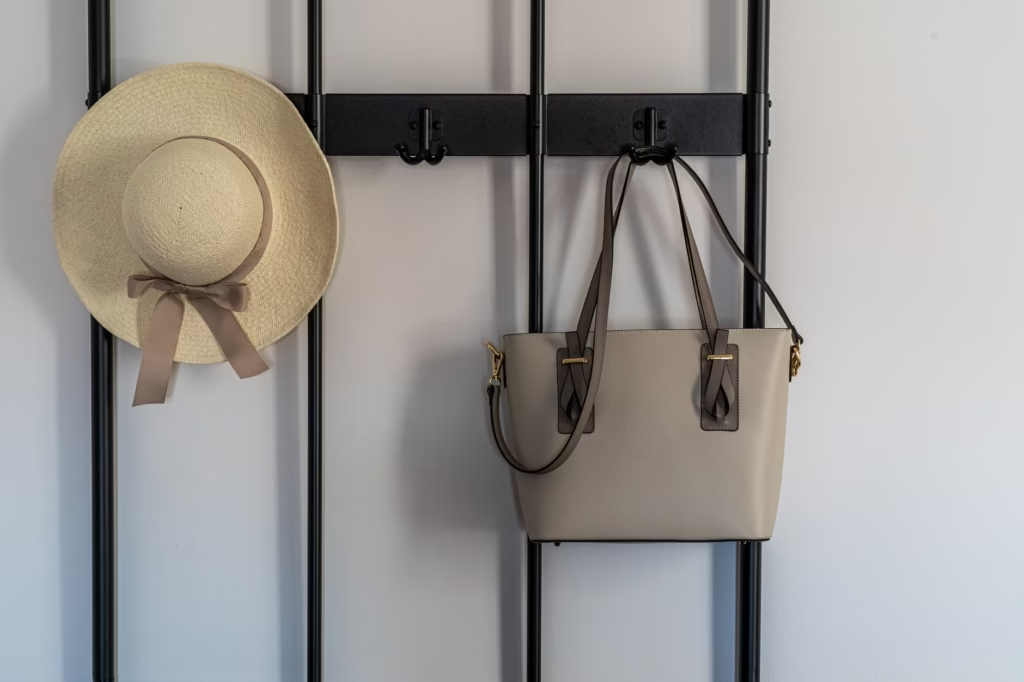
This is also why one piece of furniture often needs to do more than one job in a small home, but not every job. A bench with shoe storage can work well by the door. A bed with drawers can help in a small bedroom. But when every surface becomes mixed-use, the room gets harder to reset. Each zone needs one primary purpose, even if the furniture is flexible.
Use storage as a boundary, not as a hiding place
Good storage in a small home creates limits. Bad storage simply hides overflow until the next cleanup session. Open shelves, baskets, under-bed bins, over-the-door organizers, and vertical hooks can all help, but only if each one has a narrow purpose. A basket for blankets is useful. Five baskets of unsorted miscellaneous items are not.
The same goes for drawer dividers, storage carts, and stackable containers: they work best when they support a decision that has already been made.
Before buying any organizer, measure the space, choose the category it will hold, and decide its limit. If the container is bought first, it often becomes a magnet for random clutter.
It also helps to think vertically, but selectively. Use higher shelves for items that are light and rarely needed. Keep daily-use items between about knee and shoulder height so putting them away is easy. If accessing storage requires too many steps, things tend to stay out. Convenience matters more than squeezing every inch out of a wall.
- Give each category a physical boundary: one drawer, one bin, one shelf, or one basket.
- Use closed storage for visually messy categories such as paperwork, cables, and cleaning supplies.
- Do a five-minute evening reset by returning items to their zones before they spread.
- When a category outgrows its container, edit the contents instead of adding another container immediately.
A small home usually feels organized not because everything is hidden, but because the important things are easy to reach and the unnecessary things are no longer claiming space. Start with the surfaces that create stress, follow the clutter to its source, and use storage to enforce limits. That is what makes a compact home feel lighter, calmer, and much easier to maintain.