

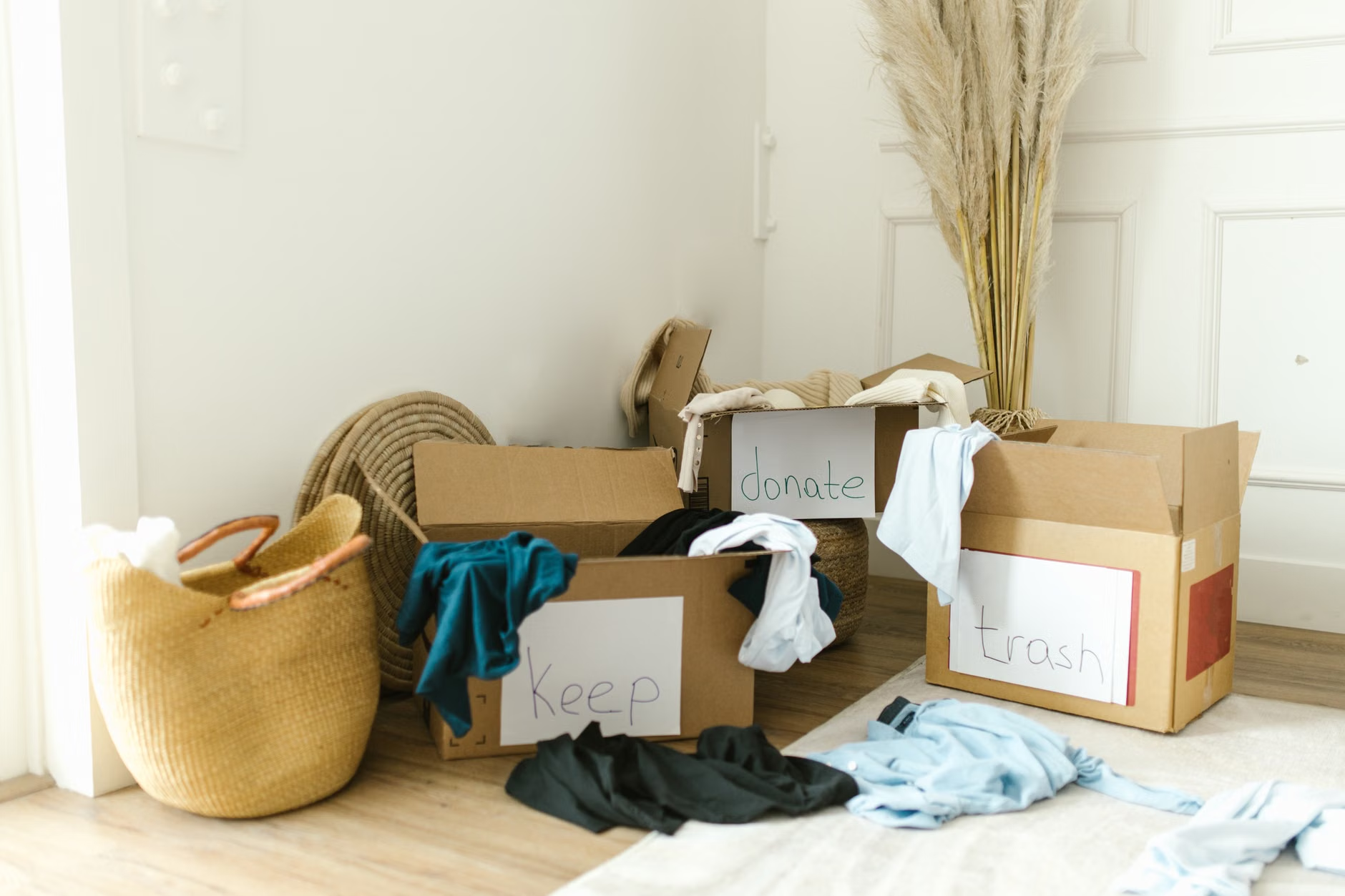
Most homes do not become disorganized because they lack shelves, baskets, or labels. They become disorganized because too many low-value items stay in circulation long after they stop being useful. A drawer with ten useful things is easy to maintain. A drawer with ten useful things plus twenty leftovers, duplicates, and “maybe someday” items creates friction: it is harder to find what matters, harder to clean, and harder to put anything away. The EPA’s waste hierarchy also places source reduction and reuse ahead of disposal, which is another way of saying that the cleanest organizing project usually starts by reducing volume first. (epa.gov)
The fastest way to make a house feel calmer today is not a full renovation or a weekend-long reset. It is a targeted first pass through the items that are easy to release right now: papers with no future use, expired products, broken duplicates, worn textiles, dead electronics, and visual clutter that nobody in the household even likes anymore. The goal is not to become minimalist overnight. It is to remove obvious drag.
TL;DR
- Start with items that are clearly expired, broken, duplicated, or incomplete. Those decisions create momentum.
- Use the Space Rent Test: if something is not useful, not used, and not worth the space it occupies, it is a candidate to leave.
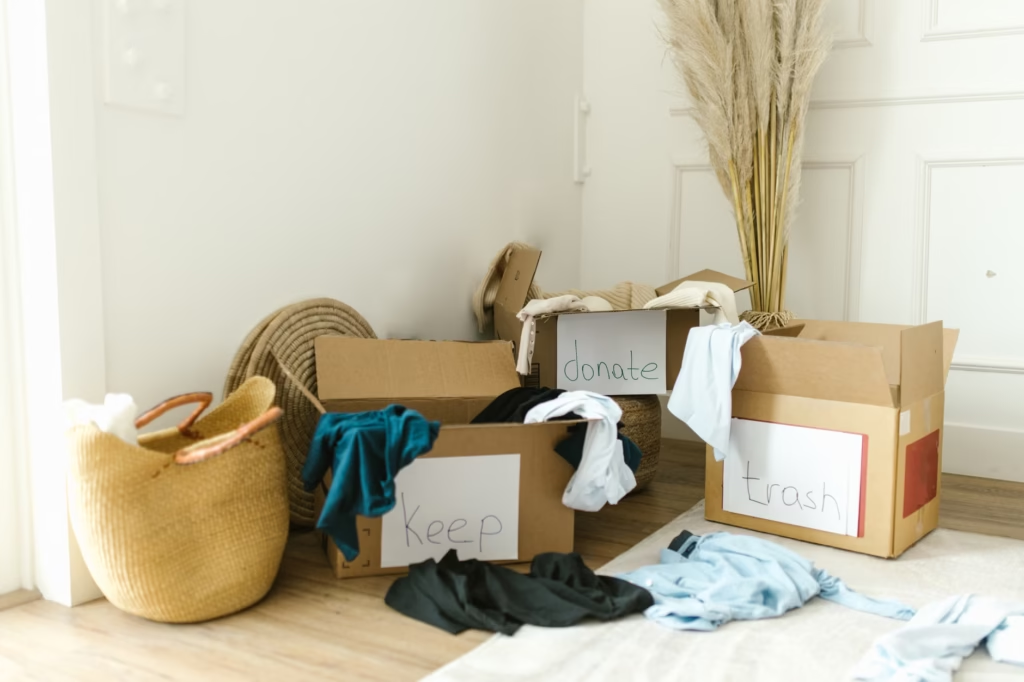
- Separate exits before you start: trash, donate, recycle, shred, and hazardous disposal.
- Be more careful with medicines, batteries, electronics, chemicals, and sensitive paperwork because those categories may need special handling.
Start with the Space Rent Test
Before touching a single drawer, use one simple rule: every item in the house should earn its space. This article’s practical method is the Space Rent Test. Ask whether the item does at least one of three jobs: it is used regularly, it solves a real problem, or it has clear sentimental value that the household still actively wants to keep. If it does none of those, it is probably occupying paid-for square footage for free.
- Would I notice this item was gone next week?
- Would I spend money to buy this exact item again today?
- Is this item easy to identify, store, and return to its place, or does it keep drifting?
- Am I keeping it because it is useful, or because deciding feels mildly annoying?
Do not use fast decluttering on anything that may involve legal retention, taxes, active warranties, personal records, prescription safety, or hazardous waste. Those items can still leave the house, but they need a separate decision and sometimes a separate disposal route.
20 things you can remove today
Use this list as a same-day sweep. The point is not to debate every possession. It is to identify obvious items that make cupboards, drawers, counters, and closets harder to manage than they need to be.
| Item | Why it creates clutter | Best next step |
|---|---|---|
| Junk mail and paper inserts | They pile up faster than almost any other category. | Recycle immediately. |
| Old receipts with no tax, return, or warranty purpose | They look important long after they stop being useful. | Shred if sensitive; recycle if not. |
| Instruction manuals for items you already know how to use | They occupy drawer space for information you may be able to find digitally. | Recycle unless tied to an active warranty or specialized equipment. |
| Dried-out pens and markers | They stay in rotation even though they no longer work. | Trash or use specialty recycling if available. |
| Mystery cables and chargers for devices you no longer own | They create technical clutter and decision fatigue. | E-waste recycle or donate if clearly usable. |
| Empty product boxes past the return window | They consume closet and shelf space for no current reason. | Recycle. |
| Chipped mugs and extra water bottles | Kitchen cabinets fill with duplicates and low-grade items. | Donate usable extras; discard damaged ones. |
| Food containers without matching lids | They make cabinets harder to open and stack. | Recycle or trash depending on local rules and condition. |
| Expired pantry items and stale spices | They take up useful kitchen space and complicate meal planning. | Compost or trash as appropriate. |
| Takeout condiment packets and disposable cutlery | They multiply quietly and crowd useful drawers. | Discard old packets; keep only a small defined backup. |
| Single-purpose kitchen gadgets you never reach for | They consume prime storage for occasional or imaginary use. | Donate or sell if working. |
| Expired or unused medicines | They can become unsafe or confusing to keep around. | Use take-back options or follow official disposal guidance. |
| Old makeup and half-used toiletries you dislike | Open products degrade and create bathroom clutter. | Discard old or unwanted opened items; donate only sealed items if accepted. |
| Unopened hotel minis you will not realistically use | They create false abundance without solving a real need. | Donate, place in a guest basket, or discard extras. |
| Worn towels, sheets, and pillowcases | Bulky textiles fill linen closets quickly. | Reuse as rags, donate if truly usable, or use textile recycling where available. |
| Orphan socks and worn-out underwear | They make laundry storage untidy and often have no realistic second life. | Use textile recycling if available; otherwise discard. |
| Decor kept out of guilt, not preference | Visual clutter is still clutter even when shelves look tidy. | Donate or sell. |
| Duplicate or nearly empty cleaning products | They crowd utility areas and can create safety risks if mixed or leaking. | Consolidate only when label directions allow; otherwise use up or dispose of safely. |
| Loose old batteries | They are easy to forget and may require special disposal. | Recycle or take to a proper collection point. |
| Old phones, small electronics, and dead gadgets | They collect dust, old data, and hidden disposal work. | Wipe data, remove batteries if possible, then donate or e-waste recycle. |
A useful pattern runs through this list: many of the easiest wins are not sentimental and not expensive. They are simply leftovers from earlier decisions. That is why discarding them creates such an immediate sense of order. You are not just removing objects. You are removing stalled decisions.
Paper and desk clutter usually deserves the first pass
Start at the front door, kitchen counter, or home desk, because paper clutter spreads quickly and makes a room feel messy even when the actual volume is small. Junk mail, flyers, expired coupons, product inserts, duplicate school notices, and old receipts are the lowest-risk decisions in the house. The only pause worth taking is for documents with tax, warranty, insurance, medical, or legal value. Everything else should leave immediately.
If a document contains personal or financial information, shredding is the safer default. The FTC’s disposal guidance is aimed at consumer-report information, but it also encourages similar protective measures for sensitive records more broadly. (ftc.gov)
Next, clear the desk drift that pretends to be useful: dried pens, dead markers, old notebooks with only a few pages used, mystery chargers, random USB cables, and manuals for products that left the house years ago. The mistake here is treating all small objects as harmless. They are not. Small, ambiguous items are exactly what make drawers frustrating. Keep the labeled charger that matches a current device. Release the cable you cannot identify. Keep the manual for a specialized appliance if it includes parts diagrams or warranty details. Recycle the rest.
The kitchen hides some of the easiest decluttering wins
Kitchen clutter is often disguised as preparedness. A cabinet full of chipped mugs, promotional tumblers, duplicate water bottles, travel cups without lids, and plastic containers without matches is not a supply system. It is a storage tax. Keep the best version of what the household actually uses. If there are six water bottles and only two people regularly carry one, the extras should leave. The same goes for mismatched food containers. A complete set is efficient. A pile of orphans is just friction.
Pantry decluttering needs slightly more judgment. Date labels are often misunderstood. The FDA says there is no uniform federally required system for most food date labels, and “Best if Used By” generally refers to quality rather than safety. That means an organizing session should focus on obvious no-go items first: stale spices that no longer smell like anything, opened products with an off texture or odor, duplicate bags of the same ingredient, and food the household repeatedly ignores. Use date labels as one clue, not the only one, except where a product has stricter safety rules. When in doubt on storage duration, a tool like FoodKeeper can help you check freshness and quality guidance rather than guessing. (fda.gov)
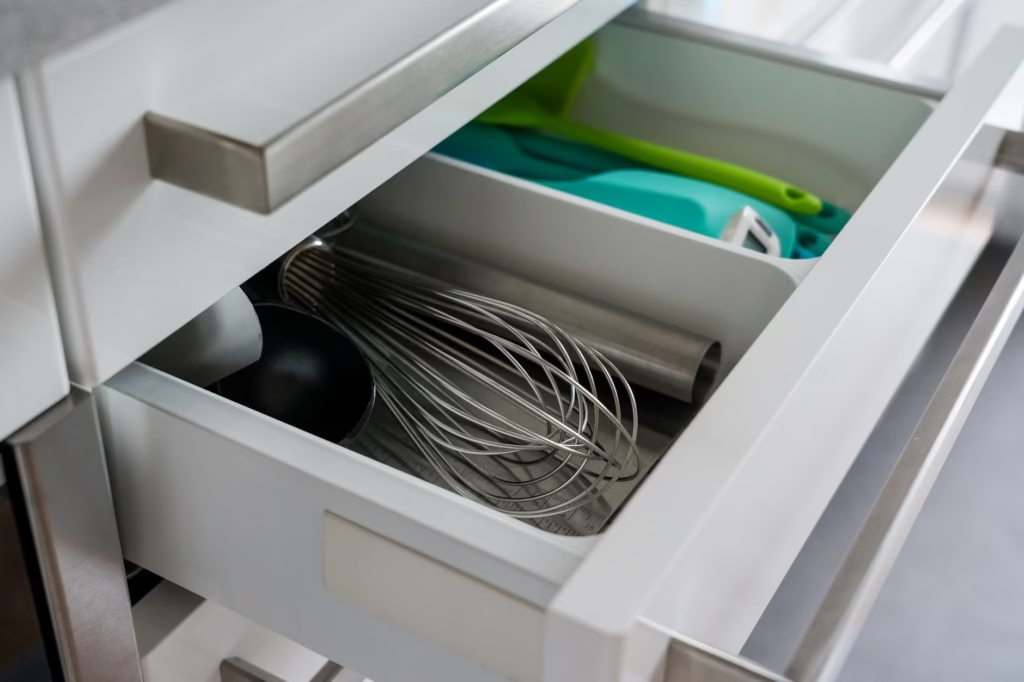
Then tackle the drawer nobody claims: takeout soy sauce packets, ketchup packets, disposable chopsticks, spare plastic cutlery, sauce tubs, and tiny napkin bundles. Keep a small backup only if it genuinely gets used. The same logic applies to single-purpose kitchen gadgets. If the avocado slicer, egg separator, novelty chopper, or duplicate can opener never gets chosen over the ordinary knife or tool already in the drawer, it is occupying premium real estate for a hypothetical life rather than the real one.
Bathroom shelves and linen closets collect slow-moving clutter
The medicine cabinet should be organized for clarity, not nostalgia. Expired or unused medicines are one of the highest-value categories to remove because they create confusion precisely where people need accuracy. The FDA says the best option for most medicines is a drug take-back program or mail-back option. If that is not available, most medicines can go in household trash if they are mixed with an undesirable substance and sealed first, while medicines on the FDA flush list follow different instructions. Do not guess. Read the label or check official guidance. (fda.gov)
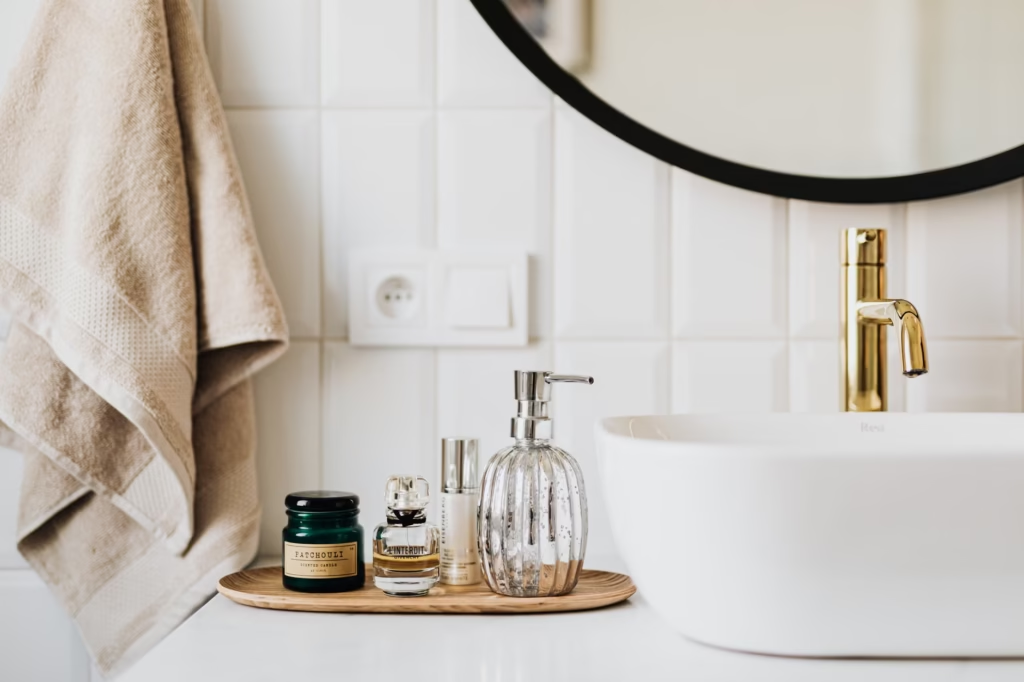
Old cosmetics and half-used toiletries deserve a more realistic lens. Many people keep them because throwing out beauty products feels wasteful. But bathroom products are especially prone to becoming visual clutter because they are small, expensive, and easy to accumulate through samples and wishful buying. The FDA notes that cosmetic shelf life varies by product, storage, and use, and repeated dipping into products can introduce microorganisms as preservatives break down over time. The practical lesson is simple: if a product smells wrong, has separated, irritates the skin, has dried out, or has not been chosen in many months, it should probably leave. Sealed products in good condition may be donatable if a local organization accepts them; opened items usually are not. (fda.gov)
Linen closets get bloated because textiles are bulky and emotionally easy to postpone. Keep enough towels, sheets, and pillowcases to support the household’s real laundry rhythm, plus one backup set if that genuinely helps. Beyond that, bulk is often just hidden clutter. EPA textiles data also shows that clothing and household linens are a significant part of municipal solid waste, so reuse or textile recycling is usually a better first thought than trash when items are still usable. Towels too worn for guests may still work as cleaning rags. Good sheets can be donated. Torn, stained, or thin textiles may need textile recycling where available. (epa.gov)
Closets and living spaces need harder judgment, not more bins
Two deceptively useful categories belong on the same-day list: orphan socks and worn-out underwear. They crowd drawers, interrupt laundry resets, and rarely improve with more sorting. The right question is not whether the household once paid for them. It is whether anyone would happily choose them tomorrow morning. If the elastic is gone, the fabric is uncomfortable, the sock lost its partner months ago, or the item would be embarrassing in an emergency, it is finished. That same honesty should extend to decor kept from guilt rather than enjoyment. A vase from a relative, a sign with a phrase nobody likes, or a side-table accessory that always looks dusty is still clutter if it no longer matches the home or the people living in it.
A realistic example: imagine a living room shelf filled with framed photos, candles, travel souvenirs, baskets, a decorative bowl, and seasonal pieces that never got put away. The shelf may not look packed, but if it takes several minutes to dust, if things get moved just to make room for new objects, or if nobody can quickly say what belongs there, the area is already over capacity. Releasing even three or four low-value objects can make the whole room feel more intentional without buying a single organizer.
Utility spaces hide the items that require safer exits
Cleaning products, leftover paint, pesticides, oils, solvents, aerosol containers, loose batteries, and damaged electronics should not be treated like ordinary decluttering. The EPA considers many common leftover household products with corrosive, toxic, reactive, or ignitable ingredients to be household hazardous waste, and it warns against pouring them down drains, onto the ground, or into storm sewers. Never mix partial containers just to “use them up,” and keep products in original labeled containers until disposal. This is one area where local collection rules matter. A fast organizing session should separate these items into a clearly marked box for household hazardous waste drop-off rather than making risky on-the-spot decisions. (epa.gov)
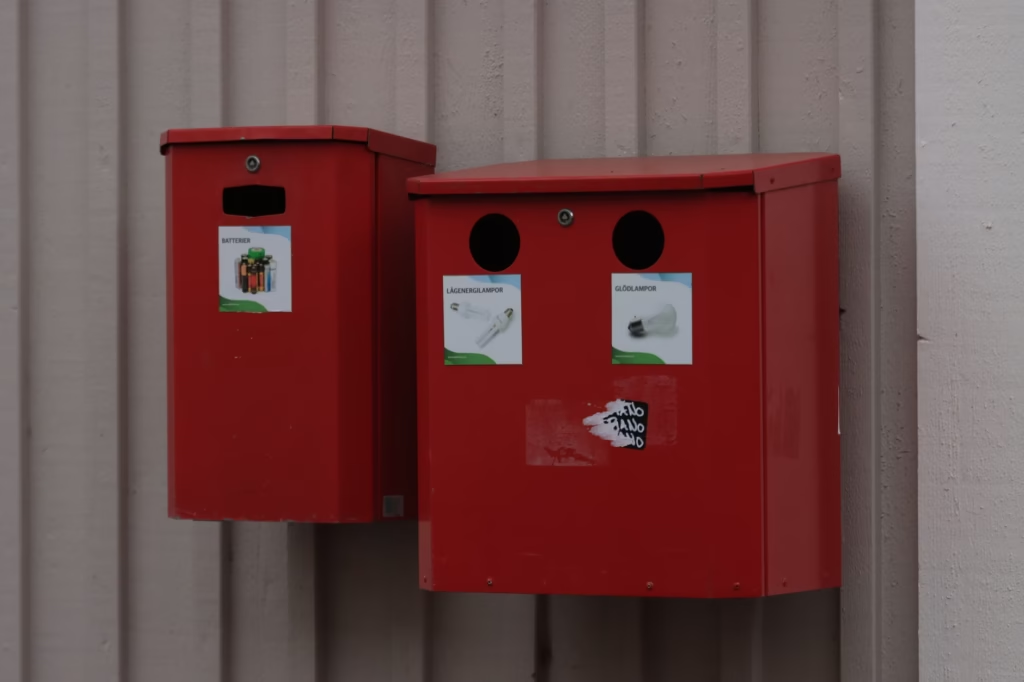
Batteries and small electronics deserve extra care. The EPA says rechargeable batteries and lithium-ion batteries should not go into household trash or municipal recycling bins, and electronics should be donated or recycled safely after personal data is removed. That means old phones, wireless earbuds, power tools, tablets, and half-dead gadgets should not sit in a “tech graveyard” forever. Label anything still being tested or repaired. Everything else should be wiped, matched with its charger if it still works, and sent to a proper recycler or donation channel. (epa.gov)
How to clear these 20 items in one afternoon
- Set up five exits before you begin: trash, recycle, donate, shred, and special disposal. If those exits are visible, decisions move faster.
- Start with the easiest rooms first: kitchen counters, entryway paper piles, bathroom shelves, then linen and clothing drawers. Early wins build speed.
- Use a timer for 20 to 30 minutes per zone. When the timer ends, move on. This prevents one drawer from taking over the whole session.
- Handle every item once when possible. If something clearly fails the Space Rent Test, do not return it to the shelf just because the donation bag is not full yet.
- Finish the exit process the same day. Bags left by the door often become a new category of clutter.
- Create one small maintenance rule afterward, such as a weekly paper reset, a one-shelf limit for mugs, or a two-set limit for bed linens.
Mistakes that make decluttering harder
- Buying bins first. Storage tools can make clutter look tidier without reducing it.
- Donating broken, stained, expired, or incomplete items. Donation should help the next user, not transfer the trash problem.
- Turning every object into a moral debate about waste. The better lesson is to buy more deliberately next time, not to let low-value items live in the house forever.
- Keeping duplicates without a quantity limit. Backups are useful only when the household defines how many are enough.
- Treating hazardous products, medicines, batteries, or data-bearing electronics like ordinary trash. Those categories need slower decisions and safer routes.
What not to discard in a rush
Fast decluttering works best on obvious clutter, not on high-consequence categories. Slow down around passports, birth certificates, tax records, medical records, insurance documents, active warranties, specialized tools that are rarely used but genuinely necessary, emergency supplies, family photographs, and deeply sentimental items. Those decisions deserve a separate session and, sometimes, a retention plan. Quick wins should create momentum, not regret.
A lighter home is easier to keep organized
If organizing has felt stuck, the problem may not be effort. It may be volume. Start with the 20 categories above, use the Space Rent Test, and aim for visible exits rather than perfect systems. A cabinet that closes easily, a drawer with only working tools, and a bathroom shelf without expired products all make the next organizing decision simpler. That is the real reward of decluttering: not just a neater house today, but a home that asks less from you tomorrow.
Frequently asked questions
Should I throw things away or donate them when possible?
If an item is clean, complete, safe, and realistically useful, donation is usually a better first option than trash. But do not let the hope of donating become a delay tactic. If the item is damaged, expired, stained, missing parts, or unlikely to be accepted, use the proper recycling or disposal route instead.
How do I know whether a cluttered item is actually worth keeping?
Run the Space Rent Test. If it is not used regularly, does not solve a current problem, and is not meaningfully sentimental, it probably does not deserve ongoing storage space. That is especially true for duplicates.
What if someone else in the household might want the item?
Use a short deadline. Put the item in a clearly labeled review box and ask for a decision within a set time, such as one week. If nobody claims it, the item leaves. Open-ended holding zones usually become permanent clutter.
Are expired pantry items always unsafe?
Not necessarily. Food date labels often relate to quality rather than strict safety, depending on the product. Use the date as one signal, then check whether the item is shelf-stable, how it was stored, and whether there are signs of spoilage. When there is uncertainty, especially with perishable foods, err on the side of caution.
What is the biggest reason people re-clutter after a successful cleanout?
They remove items once but do not set new capacity limits. Decluttering lasts longer when the household decides simple rules afterward, such as one drawer for cables, one shelf for drinking bottles, or a fixed number of towel sets per bed and bathroom.
References
- US EPA – Sustainable Materials Management: Non-Hazardous Materials and Waste Management Hierarchy – https://www.epa.gov/smm/sustainable-materials-management-non-hazardous-materials-and-waste-management-hierarchy
- US EPA – Household Hazardous Waste (HHW) – https://www.epa.gov/hw/household-hazardous-waste-hhw
- FDA – Where and How to Dispose of Unused Medicines – https://www.fda.gov/consumers/consumer-updates/where-and-how-dispose-unused-medicines?WT.ac=Nav%3AFoot%3AHelp%3ADisposalOfMeds
- FDA – How to Cut Food Waste and Maintain Food Safety – https://www.fda.gov/food/consumers/how-cut-food-waste-and-maintain-food-safety
- FoodSafety.gov – FoodKeeper App – https://www.foodsafety.gov/keep-food-safe/foodkeeper-app?os=app
- FDA – Shelf Life and Expiration Dating of Cosmetics – https://www.fda.gov/cosmetics/cosmetics-labeling/shelf-life-and-expiration-dating-cosmetics
- US EPA – Electronics Donation and Recycling – https://www.epa.gov/recycle/electronics-donation-and-recycling
- US EPA – Used Household Batteries – https://www.epa.gov/recycle/used-household-batteries
- Federal Trade Commission – Disposing of Consumer Report Information? Rule Tells How – https://www.ftc.gov/business-guidance/resources/disposing-consumer-report-information-rule-tells-how
- US EPA – Textiles: Material-Specific Data – https://www.epa.gov/facts-and-figures-about-materials-waste-and-recycling/textiles-material-specific-data