


Keeping a home organized with a packed schedule is usually not a storage problem. It is a systems problem. When the day is full, the house starts to fall apart in small ways: mail lands on the counter, shoes pile up by the door, clean laundry stays in a basket, and one messy surface makes the whole room feel worse than it is.
The fix is not to clean more often or aim for a picture-perfect house. It is to make daily upkeep easier than daily procrastination. That means fewer decisions, fewer steps, and a clear idea of what “organized enough” looks like on a normal weekday.
Set a realistic standard: organized means easy to reset
For a busy household, an organized home does not mean every drawer is labeled or every room is guest-ready. It usually means four simpler things: you can find what you need, key surfaces stay usable, the floor is mostly clear, and mess does not turn into a weekend crisis.
This distinction matters because many people try to maintain the whole house at the same standard. That rarely works when time is tight. Start with the high-friction zones instead: the entry, kitchen counters, dining table, bathroom sink, and the chair or corner where things tend to collect. If those spots stay under control, the home feels calmer even when other areas are not perfect.
A useful question is not “Is the house clean?” but “Could I reset this room in five minutes?” If the answer is no, the system is probably too complicated.
Use one short daily reset instead of marathon cleaning sessions
Long catch-up sessions can feel productive, but they often fail because they depend on finding a large block of free time. A short reset works better because it fits real life. Ten to fifteen minutes at the same point each day, often after dinner or before bed, is usually enough to keep the house from sliding backward.
- Start with trash, dishes, and obvious recycling. These create visual noise quickly and are easy wins.
- Return stray items to the right room, not necessarily to the perfect shelf or drawer. Room-level sorting is often enough on busy days.
- Clear one visible surface in each problem zone, such as the kitchen counter, dining table, or bathroom sink.
- Reset tomorrow’s main friction point: prep the coffee area, put lunch containers together, plug in devices, or place the work bag by the door.
- Stop when the timer ends. The goal is consistency, not finishing every task.
That last step is important. Many organizing routines collapse because they quietly turn into deep cleaning. If a 10-minute reset becomes a 45-minute project, it starts to feel optional. Keep it small enough that it survives a tiring Tuesday.

A simple hypothetical example: instead of telling yourself that Saturday will be for “getting the house back together,” spend 12 minutes each evening clearing dishes, putting away the obvious clutter, and setting up the next morning. The home may never look perfect, but it is far less likely to become overwhelming.
Reduce the mess that keeps coming back
Repeated clutter usually points to one of two issues: there is too much stuff for the space, or the item is stored in the wrong place. Organizing works better when it solves the reason a pile keeps forming.
- If an item is used daily, store it where it is used, not where it seems tidiest.
- If something lands in the same spot every day, that spot may need a container, tray, hook, or basket.
- If a drawer is jammed and nobody uses it correctly, it may have too many categories.
- If paper keeps spreading, create one inbox instead of several temporary piles.
- If you keep buying organizers before removing excess, pause. Containers do not fix overstuffed systems.
This is where a lot of well-meant advice goes wrong. People often try to organize everything they own instead of making sharper decisions about what deserves prime space. The items used every day should be easy to grab and easy to put back. Rarely used items can live higher, lower, or farther away.
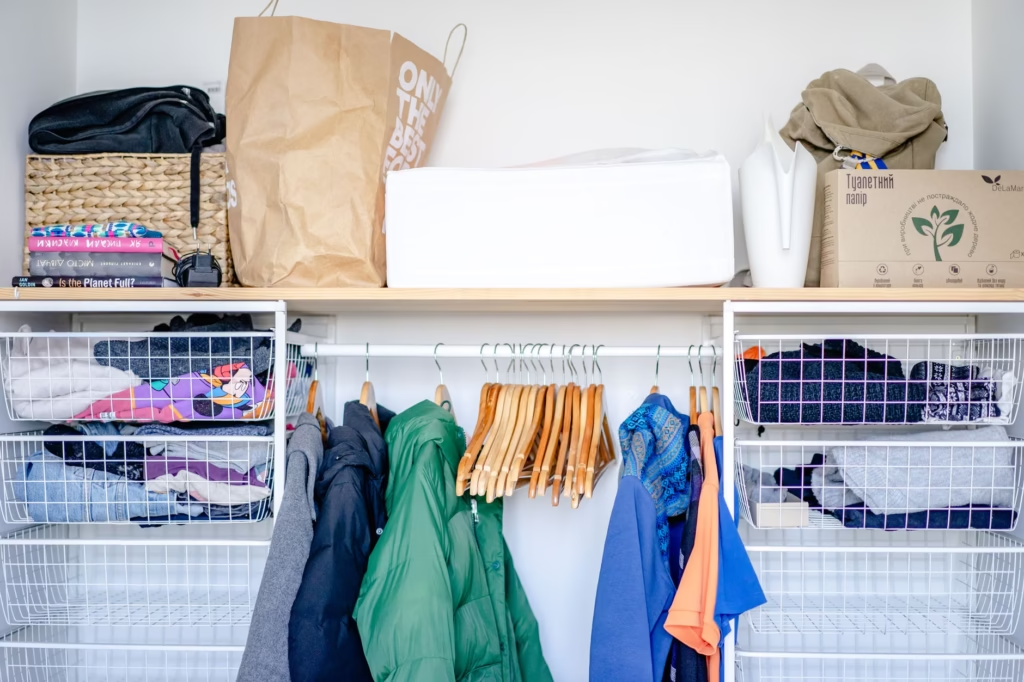
There is also a tradeoff to remember: the prettier the system, the more effort it may take to maintain. Open bins, labeled baskets, and a tray by the entry are often more sustainable than complicated folding methods or decorative storage that requires precision every time.
Make the system fit the household, not an ideal version of it
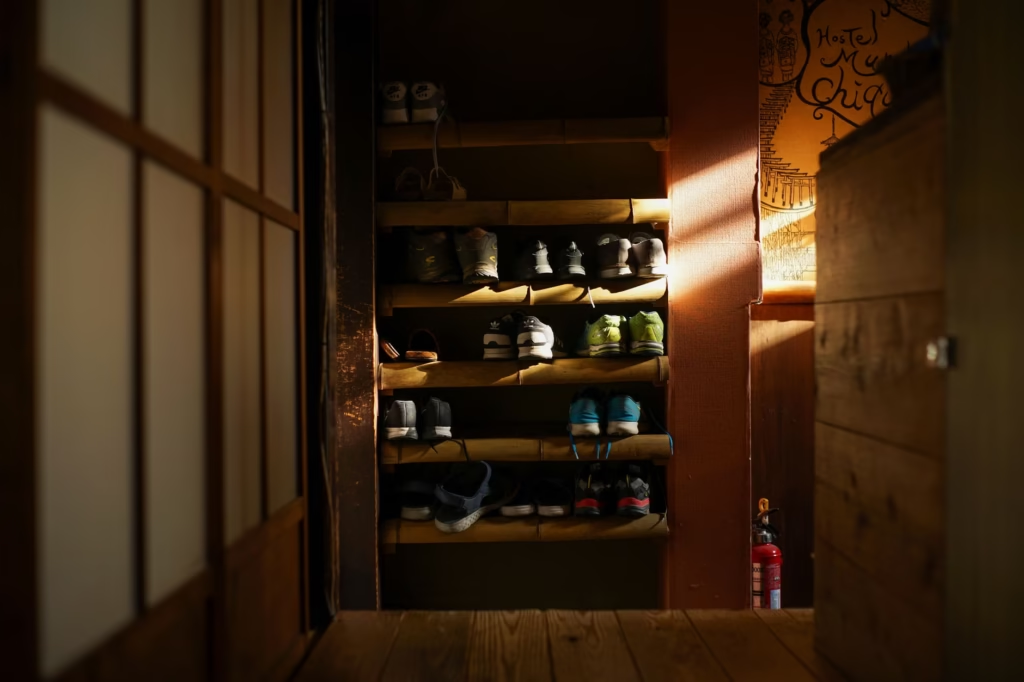
A home stays organized when the people living in it can actually follow the system. That is why unrealistic rules fail so quickly. If everyone drops shoes by the door, a shoe rack at the back of a closet is not a real solution. If mail comes in during a rushed evening, a sorting station in another room will probably be ignored.
Try giving each area one minimum standard instead of a long list of chores. The kitchen counter stays mostly clear. The entry gets reset before bed. Dirty clothes go straight into a hamper, not onto a chair. These rules are easy to remember and easier to repeat.
If clutter is blocking doors, preventing normal use of rooms, attracting pests, or creating safety problems, routine organizing tips may not be enough. In that case, outside help from family support, a professional organizer, or another qualified resource may be the better next step.
The most effective organizing habit is not a big seasonal overhaul. It is a home that is easy to put back together in small increments. If the system lowers effort, works on ordinary weekdays, and keeps the main stress points under control, it is doing its job.