


Most organizing plans fail for one simple reason: they try to tackle the whole house at once. Drawers get emptied, piles migrate from room to room, and by the second day the home looks worse than it did before. A room-by-room method works differently. It limits the mess, creates a visible finish line, and lets each space start functioning again before the next one is touched.
This seven-day plan is built for real homes, not photo shoots. The goal is not a perfectly styled house by next Sunday. The goal is a home where each room has a clear job, the things used there are easy to reach, and the room can recover quickly after everyday life happens.
- Work one room at a time so progress stays visible and the mess stays contained.
- Use the Reset Test: if a room cannot return to normal in five minutes, the system is too full, too scattered, or too fussy.
- Do not buy storage first. Reduce volume and fix categories before choosing containers.
- Finish the week by removing donations, resetting utility areas, and checking whether the house is easier to maintain two weeks later.
Why a room-by-room method is easier to finish
A room-based plan is especially useful when the house is actively in use, several people share the space, or motivation is limited. Instead of spreading decisions across the entire home, it gives each day a physical boundary. That matters because unfinished organizing creates its own clutter: open bins, half-sorted piles, and items temporarily living on the floor.
This approach also respects how most households actually function. Morning problems usually begin in the entryway, kitchen, bathroom, and bedroom, not in a theoretical category called “all personal belongings.” Category-based decluttering can be useful later, especially for clothing, books, or sentimental items. But when the home feels generally overloaded, restoring one room at a time usually creates faster functional relief.
Use the Reset Test before you buy storage
Before the daily plan begins, use one practical rule throughout the week: the Reset Test. It is not a formal professional standard. It is simply a way to judge whether a room is truly organized. Ask this question: after ordinary use, can this room return to normal in five minutes using the storage that already exists here? If the answer is no, the problem is usually one of four things.
- Too much volume: The room holds more than its shelves, drawers, or cabinets can handle without cramming.
- Wrong location: Items needed elsewhere are parked here out of habit.
- Mixed categories: The same kind of item is split into too many places, so nobody knows where it belongs.
- Overcomplicated storage: Lids, stacked bins, tiny subdivisions, or decorative containers make putting things away slower than leaving them out.
The Reset Test keeps the week focused on function. It also helps prevent one of the most common mistakes in home organization: trying to solve a volume problem with more containers. Storage can help, but only after each room has fewer items, clearer categories, and a layout that matches how the room is used.
Your 7-day map
| Day | Focus area | Main objective | Stop when… |
|---|---|---|---|
| 1 | Entryway and living room | Clear visible clutter and create a landing zone | Main surfaces are usable and daily carry items have a home |
| 2 | Kitchen and dining area | Restore food, prep, and cleanup zones | Counters are mostly clear and duplicates are contained |
| 3 | Bathroom and linen storage | Separate daily-use items from backups and expired products | The sink area is easy to wipe and essentials are easy to reach |
| 4 | Bedroom and closet | Fix clothing overflow and laundry friction | The floor is clear and current-use clothing fits comfortably |
| 5 | Paperwork and home office | Separate action papers from archive, reference, and shred piles | Important papers are sorted into clear categories |
| 6 | Secondary rooms and hidden storage | Define the room’s job and reduce overflow | Closets, shelves, and storage furniture can close normally |
| 7 | Utility zones, garage, and donation exit | Finish relocation, supplies, and final removal | The house can be reset with a short walk-through and donations leave the home |
A hypothetical example: in a one-bedroom apartment with no office or garage, Day 5 might cover a desk nook and household paperwork, Day 6 might focus on the bedroom closet and under-bed storage, and Day 7 might become the laundry area plus the final donation run. The order matters more than the exact room list. Start with visible shared spaces, move into private rooms, then finish with hidden and utility storage.
Set up the week so the plan stays practical
- Set a daily time cap. Sixty to ninety minutes is enough for most rooms if decisions stay focused. If a room is especially difficult, split it across two sessions instead of pretending it is a quick job.
- Prepare four simple containers: keep here, relocate, donate or sell, and trash or recycle. Cardboard boxes are fine. Fancy bins are unnecessary at this stage.
- Work shelf by shelf or zone by zone, not by emptying the entire room at once. Partial visibility is easier to manage than total disruption.
- Do a five-minute closeout at the end of each session. Return relocate items, tie up trash, and put donation items near the door or in the car.
- Take quick before-and-after photos or keep a short note about what changed. This helps when motivation drops in the middle of the week.
- If the home is shared, agree on a few basic rules early: where mail lands, where shoes go, where chargers live, and what counts as personal versus household storage.
Do not buy matching containers before the week is over. Storage should fit what survived the edit, not pressure you to keep more than the room can comfortably hold.
Pause the plan and address safety first if a room has blocked walkways, unstable furniture, pests, mold, water damage, exposed wires, or clutter that feels emotionally unmanageable. In some homes, slower pacing or professional support may be the more realistic path.
Day 1: Entryway and living room
Start where clutter is most visible. The entryway and living room shape the first and last moments of the day, and they often collect the widest variety of misplaced items. Begin by removing anything that obviously belongs elsewhere: dishes, laundry, unopened mail, toys from another room, stray tools, and old shopping bags. This creates instant visual relief without requiring hard decisions yet.
- Create a landing zone with only the essentials: keys, wallet, bag, sunglasses, outgoing mail, and perhaps shoes if that is where they naturally come off.
- Limit the coffee table and side tables to a few categories that are actually used there, such as remotes, current reading, or a small tray.
- Give blankets, chargers, game controllers, and pet items an obvious home near where they are used, not in a theoretically tidy spot across the house.
- Keep walkways clear. In homes where children live or visit, tall storage furniture should also be anchored according to current safety guidance.

Day 2: Kitchen and dining area
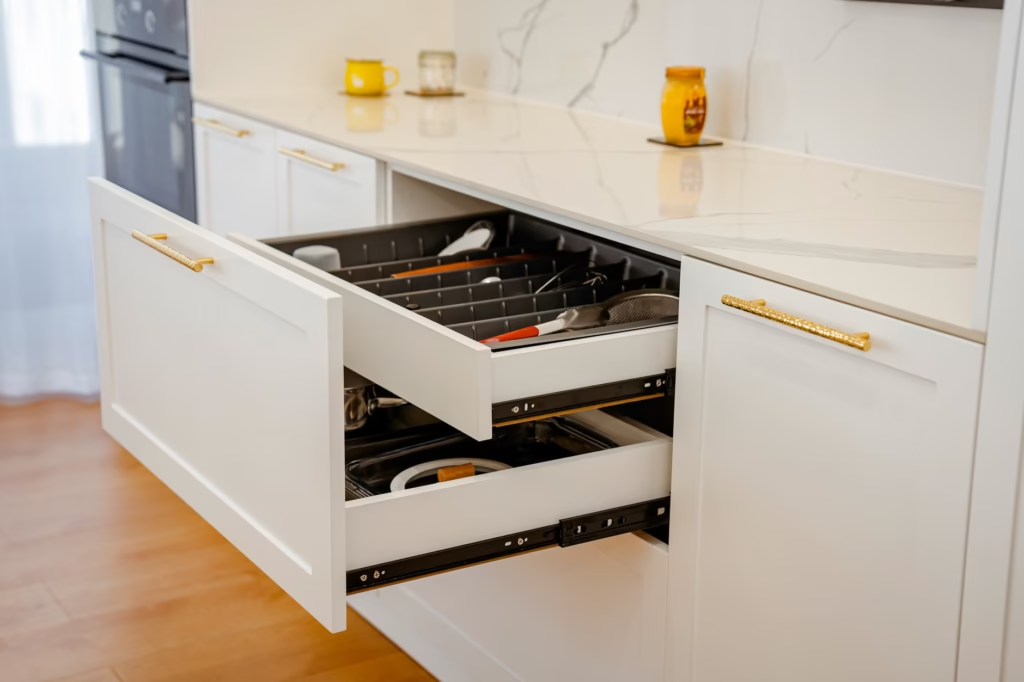
The kitchen is not one room so much as a group of work zones. Organize it that way. Think in terms of prep, cooking, cleanup, food storage, and grab-and-go eating. Much of the frustration in a kitchen comes from storing things by cabinet shape instead of by task. If the cutting boards live far from the prep area, or lunch containers are nowhere near the lunch supplies, the room will constantly look disorganized even when it has enough storage.
Pull one drawer or shelf at a time. Group duplicates, remove broken gadgets, and question low-value items that take up prime real estate. Clear the counters with intention, not minimalism for its own sake. The goal is to protect the surfaces needed for actual cooking. In the pantry and refrigerator, move older items forward, label leftovers if that helps your household, and use current USDA or FoodSafety.gov guidance when a food-storage question is really about safety rather than neatness.
Day 3: Bathroom and linen storage
Bathroom clutter builds fast because the room combines grooming, first aid, cleaning supplies, and backup inventory in a very small footprint. Start by clearing the counter until only daily-use items remain. Then sort by function: dental care, hair care, skincare, first aid, grooming tools, and backup stock. This makes it easier to see where quantity is the problem rather than storage design.
Do not assume the medicine cabinet is the right place for every medication. Follow the labeled storage instructions, keep medicines away from children and pets, and dispose of expired or unused products using current FDA guidance. Drug take-back options are generally preferred when available.
For towels and sheets, aim for retrieval over perfection. Fold sets in a way that makes sense to your household, and avoid packing the linen closet so tightly that removing one towel causes a collapse. If this room stores backups, define a limit. A bathroom that holds three open bottles of the same product usually does not have a storage problem; it has an inventory problem.
Day 4: Bedroom and closet
The bedroom often becomes a holding zone for postponed decisions: clothing that does not fit quite right, items to return, laundry that is clean but not folded, and objects with no obvious home anywhere else. Start with the floor, the chair, and the nightstand. Visible clutter in those three spots usually tells the truth about what is not working.
In the closet, sort by what you actually wear in this season and in this stage of life. Current-use clothing should get the easiest access. Occasion wear, sentimental garments, and “maybe later” categories can live higher, farther back, or in a separate bin. If drawers are overstuffed, reduce the volume before adding dividers. Then fix the laundry path: the hamper should sit where clothes are usually dropped, not where a perfect floor plan says it should go. In family homes, tall dressers should also be secured according to product safety guidance.

Day 5: Paperwork and the home office
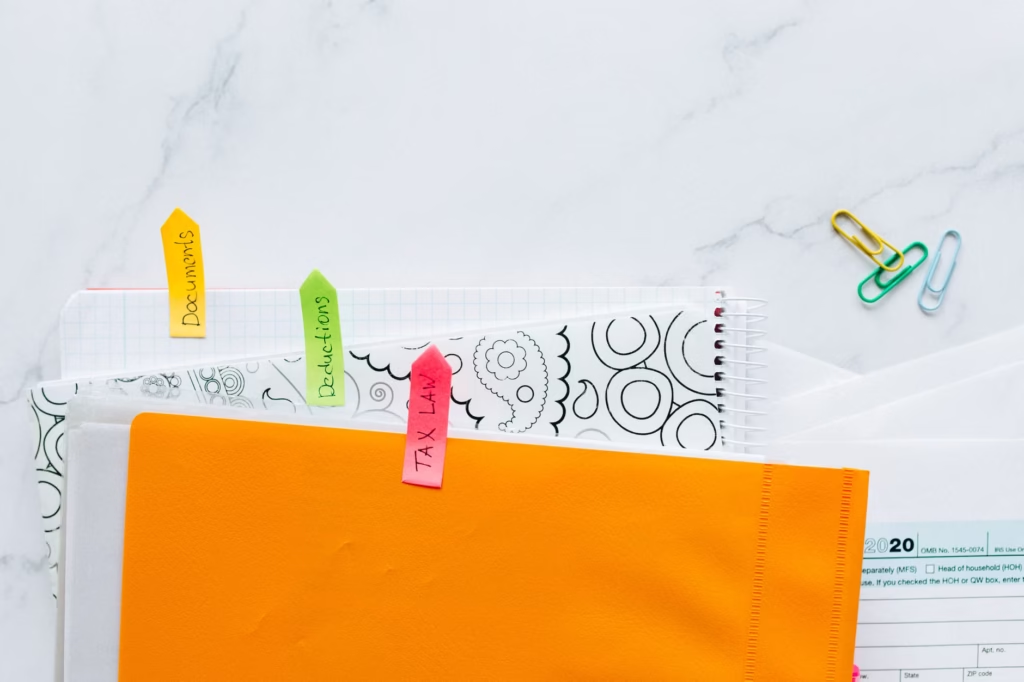
Paper creates stress because it mixes urgency with uncertainty. A bill, a school form, a warranty, an old tax return, and a random instruction manual can all look equally important in one pile. The fix is not a complicated filing cabinet. It is a simple separation between action, reference, archive, and shred.
- Action: items that require payment, signature, reply, scheduling, or follow-up soon.
- Reference: information you may need occasionally, such as current school calendars, insurance contact details, or appliance information.
- Archive: documents worth keeping longer, including records that matter for taxes, property, legal matters, or major purchases.
- Shred or discard: papers with personal information that no longer need to remain in household circulation.
If you are organizing records in the U.S., do not guess on retention periods for tax paperwork. IRS guidance varies by situation. Many records are commonly kept for at least three years, while some should be kept longer. For vital records and essential household documents, paper copies plus secure digital backups can be a sensible combination. The point is not to digitize every scrap. It is to make the important items findable when they are actually needed.
Day 6: Secondary rooms and hidden storage
This is the day for the spaces that quietly absorb overflow: the guest room, child’s room, hobby room, bookshelf wall, buffet cabinet, hall closet, or under-bed bins. Before touching the contents, define the room’s primary job in one sentence. A guest room is for hosting guests. A hobby room is for active projects. A child’s room is for sleep, play, and age-appropriate access to belongings. If the room is trying to be five things at once, clutter is almost guaranteed to return.
Then work storage by category and by limit. Shelves should not be packed so tightly that nothing can be removed without a chain reaction. Closed cabinets should open and close without pushing against their contents. If a spare room has become a delayed-decision warehouse, use this day to reduce it to what the room can honestly support. If you do not have an extra room, turn Day 6 into a catch-up day for the closet, bookshelf, or storage furniture that still fails the Reset Test.
Day 7: Utility zones, garage, and the donation exit
The last day is less glamorous, but it is what makes the first six stick. Utility closets, laundry zones, garages, and supply cabinets often hold the categories that keep a home running but also create hidden disorder: batteries, tools, extra lightbulbs, cleaning products, shipping supplies, paint, cords, pet extras, and random hardware. These spaces need categories and limits, not mystery bins.
- Group cleaning supplies by task or area, such as kitchen, bathroom, floors, or laundry, so the products travel less during routine cleaning.
- Store chemicals and specialty products according to their labels, and check local rules for paint, batteries, and other materials that may need special disposal.
- Create simple tool zones: hand tools together, measuring items together, hanging hardware together, seasonal supplies together.
- Finish the week by physically removing donations or scheduling pickup. A donation pile that stays in the house is still clutter, just pre-labeled.
How to tell whether the system is working
- You can put common items away without stopping to think about where they belong.
- Counters, nightstands, and entry surfaces stay mostly usable between resets.
- You are buying fewer duplicates because categories are visible and easy to check.
- Closets and drawers still close without forcing them.
- A ten-minute evening tidy makes a noticeable difference instead of barely making a dent.
- Other household members can follow the system without a long explanation.
Mistakes that undo a good organizing week
The most common failure pattern is creating a beautiful arrangement that is slightly harder than everyday life. A home stays organized when putting something away is almost as easy as setting it down. That is why overly sorted drawers, bins with tight lids, and storage placed far from the point of use often backfire.
- Buying storage before decluttering, which hides the true quantity problem.
- Giving premium space to rarely used items while daily items stay inconvenient.
- Keeping large “just in case” reserves in the main room instead of in one clearly defined backup zone.
- Creating a donation pile but not moving it out quickly.
- Expecting children, guests, or partners to maintain a system that depends on perfect folding or exact placement.
- Treating sentimental items as if they belong in every room rather than giving memory items a deliberate, limited home.
The goal is not perfection. It is a room that can recover.
A successful seven-day organizing plan does not leave the house frozen in showroom condition. It leaves the home easier to live in on a normal Tuesday. If each room has a clear purpose, the things used there are accessible, and the reset takes minutes instead of an hour, the method worked. Start with the most visible room, keep the rules simple, and let function decide what stays close, what moves, and what can finally leave.
Frequently asked questions
Is organizing by room better than organizing by category?
It depends on the problem. If the house feels broadly messy and daily life is getting harder, room-by-room organizing usually gives faster relief because it restores functional spaces one at a time. Category-based organizing can be useful later for clothing, books, craft supplies, or memorabilia that are spread across several rooms.
What if there is only 20 or 30 minutes available each day?
Stretch the plan across two or three weeks and keep the sequence. In a short session, choose one zone inside the day’s room, such as the entry shelf, the utensil drawer, the medicine basket, or the desk surface. Finishing a small zone cleanly is more useful than scattering effort across a whole room.
Do matching bins and labels make a big difference?
They help only after the room has been edited and categories are stable. A label is useful when several people share the space or when the container is opaque. Matching bins are optional. What matters more is that containers fit the shelf, open easily, and hold a realistic amount.
What should be done with sentimental items that keep slowing everything down?
Do not let them block the whole plan. Set them aside in one temporary memory box and finish the practical rooms first. Later, review sentimental items when there is enough time and attention to make better decisions. Memory items deserve a deliberate process, not rushed, guilt-based choices in the middle of a closet cleanout.
References
- U.S. Environmental Protection Agency – Reducing and Reusing Basics – https://www.epa.gov/recycle/reducing-and-reusing-basics
- U.S. Consumer Product Safety Commission – Prevent TV and Furniture Tip-Over Deaths – https://www.cpsc.gov/safety-education/safety-guides/furniture-furnishings-and-decorations/prevent-tv-and-furniture-tip
- U.S. Food and Drug Administration – Where and How to Dispose of Unused Medicines – https://www.fda.gov/consumers/consumer-updates/where-and-how-dispose-unused-medicines?WT.ac=Nav%3AFoot%3AHelp%3ADisposalOfMeds
- FoodSafety.gov – FoodKeeper App – https://www.foodsafety.gov/keep-food-safe/foodkeeper-app
- Internal Revenue Service – How long should I keep records? – https://www.irs.gov/businesses/small-businesses-self-employed/how-long-should-i-keep-records