


Most closets do not feel small because the footprint is impossible. They feel small because prime space is being used by the wrong things. Daily clothes sit behind occasionwear, sweaters hang when they would work better folded, the floor becomes a shoe drop zone, and off-season pieces never leave. The fastest way to gain room is not to buy more containers first. It is to decide what deserves easy access, what can move, and how each item should actually be stored.
TL;DR
- Sort by real category first, not by color.
- Keep only in-season, high-use items in the easiest-to-reach zone.
- Use the Use-Season-Shape method to decide whether an item should hang, fold, or move out of the active closet.
- Treat rod space as premium real estate, not the default home for every garment.
- Store off-season clothing only when it is clean, fully dry, and protected from moisture and pests. (epa.gov)
Why a closet feels full long before it is truly full
A closet loses usable capacity when retrieval becomes hard. If hangers cannot slide, shelf piles collapse after one item is removed, or accessories spread across every surface, the closet starts wasting space even when there is still volume left. Organization is really about lowering friction: making it easy to see what is there, take one thing out, and put it back without disturbing everything else.
- Active clothes and inactive clothes are sharing the same zone.
- Too many categories are being hung instead of folded or boxed.
- Upper shelves are acting as a storage attic for random overflow.
- Shoes, bags, and linens are competing with everyday clothing.
- Dirty or damp storage conditions create a hidden second problem: odor, mold risk, and clothing-pest risk. (epa.gov)

Do a reset before you buy organizers
Bins, shelf dividers, and slim hangers can help, but they only help after the closet has a clear layout. If the categories are mixed, even the nicest organizer simply makes confusion look tidier. Start by rebuilding the closet from decisions, not from accessories.
- Empty one zone at a time so the project stays manageable: one rod, one shelf bank, or one drawer section.
- Sort into real categories such as work shirts, casual tops, jeans, dresses, sweaters, gym wear, sleepwear, shoes, and bags.
- Create four decisions right away: keep active, store seasonally, repair or alter, and leave the closet.
- Vacuum shelves, corners, baseboards, and floor edges before anything goes back. Regular cleaning matters because lint, hair, and debris can support clothes-moth activity. (extension.psu.edu)
- Measure rod length, shelf depth, and the space below hanging clothes before buying any insert, box, or rack.
- Rebuild the closet based on how often an item is worn, whether it is in season, and what kind of support the garment needs.
Use the Use-Season-Shape method for every item
A closet works better when placement follows a simple rule. The Use-Season-Shape method is a practical way to assign each item a home without overthinking every sweater and blouse. Instead of asking where there is room, ask what the garment needs and how often it earns the space.
- Use: Daily and weekly items belong in the easiest-reach zone, usually between shoulder and knee height. Rarely worn pieces can live higher up, farther back, or outside the main closet.
- Season: Current-season clothing stays active. Off-season coats, beachwear, and event outfits should not take up daily-access space all year.
- Shape: Structured garments usually justify hanger space. Bulky knits often do better folded. Fragile, heavily embellished, or weak garments need more supportive storage and less strain from hanging or sharp folds. (nps.gov)
In a small reach-in closet, this method might mean hanging only current-season shirts, jackets, dresses, and trousers that truly benefit from it; folding jeans and sweaters; and moving guest blankets, resort wear, and special-occasion pieces to a clearly labeled secondary area. The closet has not grown, but the active wardrobe has stopped competing with storage.
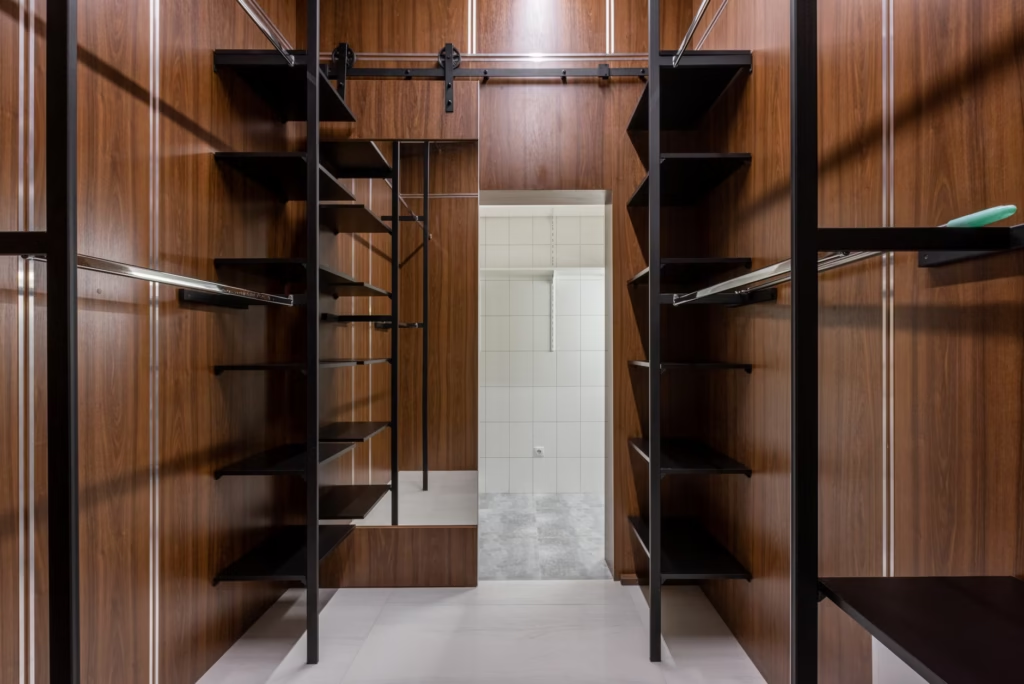
Store each category by what it needs, not by what looks neat
The biggest space gains usually come from changing storage style by category. A closet looks organized when everything matches. It stays organized when each category is stored in a way that is easy to maintain.
| Category | Best default storage | Why it helps | Common failure point |
|---|---|---|---|
| T-shirts, tanks, athletic tops | File-fold in drawers or bins | Makes the full category visible and protects rod space | Tall stacks that hide half the items |
| Sweaters and heavy knits | Fold on shelves or in drawers | Cuts bulk on the rod and is gentler on shape | Hanging every knit year-round |
| Button-downs, blazers, dresses | Hang on slim matching hangers | Fast access and better support for structured pieces | Bulky mixed hangers and overcrowding |
| Jeans and casual trousers | Fold on a shelf or assign a small trouser section | Keeps basics together without swallowing rod space | Giving every pair full hanging space |
| Special-occasion clothing | Secondary rod, upper zone, or garment cover | Frees prime space without losing track of the item | Keeping rarely worn pieces in the daily zone |
| Shoes | Low rack, cubbies, or labeled bins for seasonal pairs | Recovers floor space and keeps pairs together | A loose pile on the closet floor |
| Bags and accessories | Shelf dividers, hooks, or upright bins | Stops small items from spreading across wider shelves | Saving oversized boxes that store mostly air |
| Delicate or heirloom textiles | Supported, breathable, low-stress storage | Reduces strain, dust, light exposure, and moisture swings | Attic, basement, or tight plastic storage when condensation is a risk |
The main lesson is that rod space is premium real estate, not a universal destination. Every category that works just as well folded creates breathing room for categories that truly benefit from hanging. And for fragile pieces, more support matters more than visual neatness. (nps.gov)

How to create more room inside the closet you already have
Once the categories are right, small structural changes usually add the most practical space. The goal is not to fill every inch. It is to make every inch easy to use.
- Reserve the easiest-to-reach zone for the clothes worn most often this month.
- Add a second hanging rod only beneath short items such as shirts or folded pants, not beneath long dresses or coats.
- Use one hanger profile throughout the closet so spacing stays predictable.
- File-fold where possible. Vertical visibility usually beats horizontal stacking.
- Split wide shelves with dividers or bins so one sweater pull does not collapse the whole pile.
- Give the top shelf one role only, such as seasonal storage or occasionwear, instead of random overflow.
- Move luggage, paperwork, empty shopping boxes, and spare bedding out of the clothing closet if another home is available.
- Let the floor do one job, usually shoes or a slim hamper, not everything that has no place elsewhere.
If hangers do not slide easily or a folded stack tips after one item is removed, that zone is already overfilled. A little open space is not waste. It is what makes the system usable.
Off-season storage can save space or quietly ruin clothes
A closet should not just be organized. It should also be a safe storage environment. EPA guidance says indoor humidity should stay below 60 percent and ideally between 30 and 50 percent, and wet materials should be dried within 24 to 48 hours after a leak or spill. If a closet smells musty, shows condensation, or sits against a damp wall, solve that first before packing away clothing. (epa.gov)
Cleanliness matters just as much as layout. Clothes-moth larvae, not the adult moths, are the damaging stage. Extension guidance notes that they target animal-based fibers such as wool, fur, and feathers, often in hidden areas like cuffs, collars, and folds. Some plant-based or synthetic fabrics can also be attacked if they are stained with food or body oils. Vacuuming and laundering or dry cleaning vulnerable items before storage reduces the risk. (extension.psu.edu)
Container choice depends on what is being stored. For ordinary seasonal garments that are fully clean and dry, clean airtight storage can help exclude egg-laying moths. But Smithsonian guidance for antique textiles warns against sealing fragile fabrics in ordinary airtight plastic because condensation and aging plastics can damage fibers. National Park Service guidance also favors supportive, minimal-stress storage for delicate or embellished textiles. In practice, everyday off-season clothes and heirloom pieces should not be treated as the same storage problem. (extension.psu.edu)
- Wash or dry clean before storing, especially wool, cashmere, felt, and blends.
- Make sure every item is fully dry before it is boxed or bagged.
- Label bins by category and season so nothing is forgotten and repurchased by accident.
- Keep storage off the floor if the closet has any history of dampness or leaks.
- Inspect stored items at season change for odor, moisture, webbing, cases, or unexplained holes. (epa.gov)
Mistakes that make a closet feel organized for a week and chaotic after that
- Organizing by color before organizing by category and frequency of use.
- Buying bins, drawers, or hanging shelves before measuring the closet.
- Treating every garment as if it deserves hanger space.
- Using vacuum bags for everything, including garments that need shape, support, or breathability.
- Creating folded stacks that are too tall to survive daily use.
- Saving packaging, empty boxes, and backup bedding in the same zone as everyday clothes.
- Assuming cedar alone will solve moth problems. Utah State Extension says cedar-lined closets have limited value because repellent levels are hard to maintain over time. (extension.usu.edu)
Many closets fail because the return path is harder than the setup. If putting away laundry requires perfect folding, exact color sequencing, and four hands to lift a stack without toppling it, the system will slowly collapse. A durable closet is usually a little less pretty and a lot easier to maintain.
A maintenance routine that keeps the space from collapsing
- Once a week, spend five minutes returning obvious strays: shoes, laundry, bags, and the chair-pile category.
- Once a month, choose one shelf or one drawer and remove anything that no longer belongs in that zone.
- At each season change, rotate current-season clothes forward and move inactive pieces out.
- Keep a small exit bag or donation box elsewhere in the bedroom so doubtful items can leave the closet without stalling the reset.
- Twice a year, inspect for musty odor, moisture, lint buildup, and signs of fabric pests in hidden areas. (epa.gov)
Do not wait for a complete meltdown to reorganize again. Reassess sooner if the rod jams, the floor disappears, shelves slump, or you notice musty odor, webbing, case-like debris, or holes in wool and other animal-fiber items. Those are not just clutter signals. They can also be storage-condition signals. (epa.gov)
When more storage is not the answer
Sometimes a closet is organized and still not enough because it is being asked to do the wrong jobs. If it is storing office supplies, archived paperwork, luggage, guest linens, hobby materials, and keepsakes, the problem is not wardrobe organization alone. It is storage zoning across the room or the home. And if the active wardrobe still exceeds the closet after a smart reset, the answer may be a dresser, an under-bed system, or a secondary wardrobe, not more compression inside one overworked space.
The most effective closet organization is not the one with the most products. It is the one that makes daily clothes easy to reach, easy to see, and easy to return. Start with categories, assign space by use and season, store each garment the way it needs to be stored, and treat moisture and pests as part of organization rather than a separate issue. That is how a closet actually gains space and keeps it.
FAQ
Should jeans and sweaters hang or fold?
In most everyday closets, fold them. Jeans and heavy knits usually do not need prime rod space, and folding them often makes the closet easier to use. Structured pieces like blazers, dresses, and many button-downs usually benefit more from hanging. For fragile or weak garments, supportive flat or minimally folded storage can be safer than hanging. (nps.gov)
Are plastic bins okay for seasonal clothes?
For ordinary clothing, they can work well if the garments are clean and completely dry before storage. For antique, fragile, beaded, or heirloom textiles, Smithsonian and National Park Service guidance points toward more breathable or archival, well-supported storage rather than ordinary airtight plastic. (extension.psu.edu)
How do I stop a closet from smelling musty?
Treat it as a moisture problem before treating it as a fragrance problem. EPA recommends keeping indoor humidity below 60 percent, ideally between 30 and 50 percent, and drying wet materials within 24 to 48 hours after a leak or spill. Condensation, damp walls, and moldy odor are signs to fix the environment first. (epa.gov)
Does cedar prevent moths on its own?
Not reliably. Utah State Extension says cedar-lined closets have limited value because it is hard to maintain repellent concentrations over time. More dependable prevention comes from cleaning vulnerable items, vacuuming lint-prone areas, and using clean sealed storage when appropriate. (extension.usu.edu)
References
- U.S. Environmental Protection Agency – A Brief Guide to Mold, Moisture and Your Home – https://www.epa.gov/mold/brief-guide-mold-moisture-and-your-home
- Smithsonian Institution – How do I store antique textiles at home? – https://www.si.edu/faqs/antique-textile-storage
- National Park Service – Appendix K: Curatorial Care of Textile Objects – https://www.nps.gov/subjects/museums/upload/MHI_AppK_TextilesObjects.pdf
- Penn State Extension – Clothes Moth – https://extension.psu.edu/clothes-moth
- Utah State University Extension – Clothes Moths – https://extension.usu.edu/pests/research/clothes-moth.pdf
- National Museum of African American History and Culture – Tips for Preserving Your Family Treasures – https://nmaahc.si.edu/explore/stories/tips-preserving-your-family-treasures