

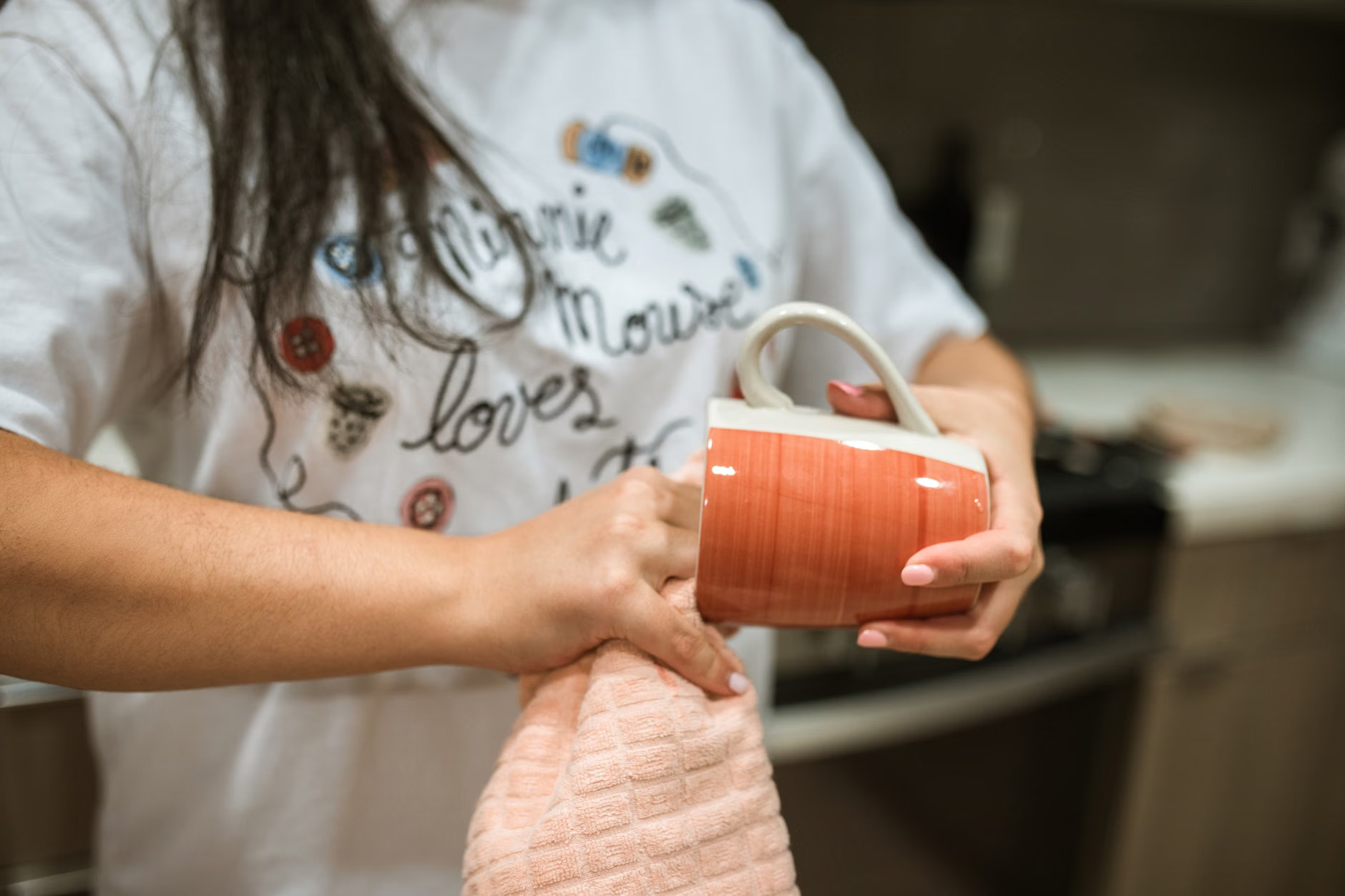
A useful Sunday clean is not the kind that leaves the whole house sparkling for two hours and the person who did it completely drained by dinner. It is the kind that makes Monday simpler. The sink is usable. The bathroom feels fresh. Laundry is moving instead of piling up. The entry is not a dumping ground. Breakfast, work bags, and basic clothes are not a last-minute scramble. That is the real purpose of a Sunday cleaning routine: not perfection, but less friction for the next seven days.
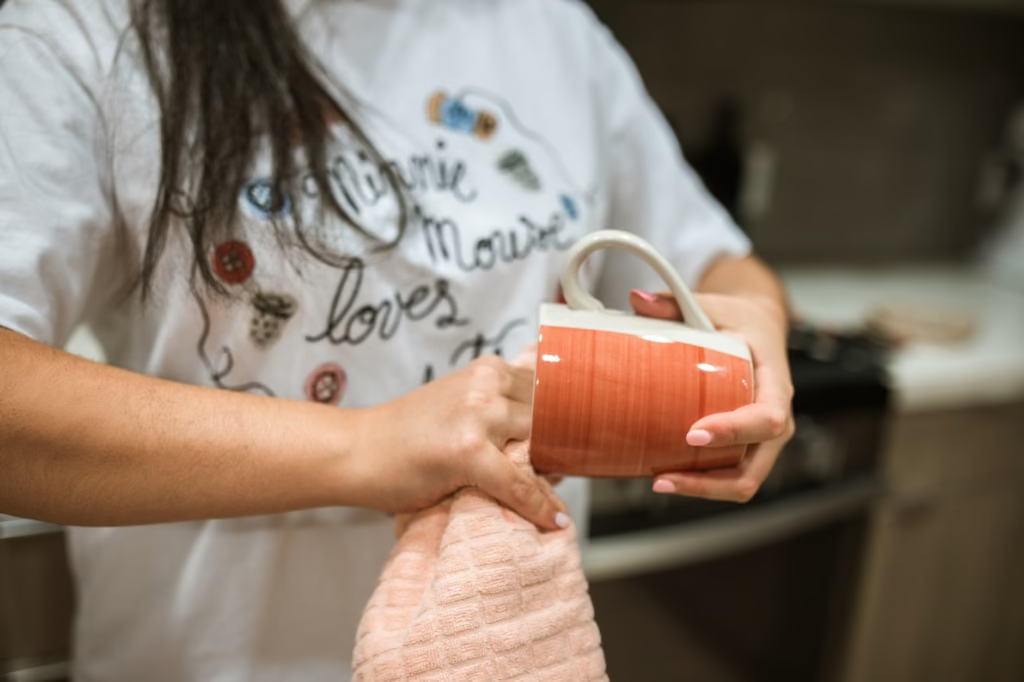
A good Sunday clean is a weekly reset, not a mini spring-cleaning
Many Sunday routines fail because they try to do two jobs at once. A weekly reset should restore order, hygiene, and basic comfort. Deep-cleaning jobs such as washing baseboards, organizing the pantry, scrubbing grout, or emptying every kitchen cabinet belong on a rotation, not on the mandatory weekly list. The moment Sunday becomes a marathon, it stops being a routine and starts becoming something people avoid.
A practical test is simple: by Sunday night, the home should feel easier to live in, not merely nicer to look at. If the routine helps the first workday start smoothly, it is doing its job.
- The kitchen is ready for the first meal of the week, not blocked by dishes or sticky counters.
- The bathroom has clean touch surfaces, fresh hand towels, and enough basic supplies.
- Dirty clothes are at least sorted and started, even if every load is not fully folded yet.
- The main floor paths feel clean enough that dust and crumbs are not the first thing anyone notices.
- Monday’s first hour requires fewer decisions because bags, keys, lunch containers, or work clothes are already handled.
Use the three-layer Sunday reset
One of the easiest ways to stop Sunday cleaning from expanding endlessly is to separate it into three layers. This is an editorial method, not an official cleaning standard, but it works well because it forces priorities. Finish Layer 1 before touching Layer 2, and finish Layer 2 before adding optional chores.
- Layer 1: Remove friction. Put dishes where they belong, take out trash and recycling, collect laundry, return obvious clutter, and clear surfaces that cannot be properly cleaned while covered in stuff.
- Layer 2: Restore hygiene. Wipe kitchen counters, clean the sink, reset the bathroom sink and toilet area, and deal with the surfaces people touch and use every day.
- Layer 3: Prepare momentum. Replace towels if needed, set up the week’s essentials, restock basics, and make Monday morning easier than it would have been otherwise.
This structure matters because disorder often masquerades as dirt. A counter buried under unopened mail, chargers, receipts, and grocery bags does not need a stronger cleaner first. It needs space. Once the visual and functional clutter is reduced, the actual cleaning goes faster and the results last longer.
If time and energy are still available after the three layers, add one rotating task. That might be wiping cabinet fronts this week, vacuuming under the sofa next week, or cleaning out the fridge shelves the week after. The rotation keeps the house moving forward without turning every Sunday into a whole-house overhaul.
Follow an order that protects your energy
Before starting, gather supplies into one caddy or basket and open windows or increase airflow if practical. The EPA says ventilation during and after cleaning helps reduce exposure to cleaning products and byproducts, and it also advises following product labels and avoiding extra outdoor air when pollution is high or weather conditions make the home too hot, cold, or humid. (epa.gov)
- Start machines early. Run the dishwasher, begin the first laundry load, or both. Passive time is part of the system, so let appliances work while you clean.
- Do a fast whole-home pickup. Spend 10 to 15 minutes gathering trash, cups, laundry, mail, toys, and anything that clearly belongs somewhere else.
- Clean the wet work zones first. Kitchen counters, sink, stove splatters, bathroom sink, mirror, and toilet area usually produce the biggest sense of relief for the least time.
- Dust or wipe visible surfaces next. Focus on tables, nightstands, desks, and entry surfaces that collect the week’s visual mess.
- Vacuum or sweep high-traffic floors, then mop only where it matters most. Kitchens, bathrooms, and the main walking paths usually matter more than guest-room corners.
- Finish with the launch tasks. Rehang clean towels, reload toilet paper, reset the coffee area, put tomorrow’s bag by the door, and leave one calm room behind you.
This order works because it avoids a common waste of effort: cleaning around mess instead of removing it first. It also keeps floors until later, so crumbs and dust knocked down from counters or furniture are dealt with once rather than twice. In most homes, sequence matters almost as much as effort.
What to prioritize in the kitchen, bathroom, bedroom, and entry
Kitchen: aim for usable, not showroom-perfect
The kitchen usually sets the emotional tone for the week. A sink full of dishes can make the whole home feel behind, even if the rest of the rooms are decent. On Sunday, focus on the sink, counters, table, obvious stovetop residue, and the refrigerator’s most visible problem areas. Throw out expired leftovers, wipe the handle area, and make sure breakfast and lunch prep surfaces are ready. A good sign that the kitchen reset is done is that someone could walk in on Monday morning and make coffee, toast, or a basic lunch without first having to clean.
Bathroom: clean the touch points and moisture zones
A Sunday bathroom reset does not require a full scrub of every tile line. It does require attention to the sink basin, faucet, mirror, toilet seat and surrounding surfaces, hand towel, trash, and floor around the toilet and vanity. These are the spots that affect how the room feels and functions every day. The American Cleaning Institute also recommends keeping bathroom and kitchen surfaces as dry and clean as possible to help control moisture-loving bacteria, mold, and mildew. (cleaninginstitute.org)
Bedroom and laundry: prevent a midweek clothing crisis
Laundry is often the difference between a home that feels reset and one that feels like it is only pretending to be reset. The goal is not necessarily to wash every fabric item in the house each Sunday. The goal is to remove the most likely sources of weekday stress: work clothes, school basics, socks, underwear, towels, and bed linens if they are due. The American Cleaning Institute recommends laundering sheets weekly and washing towels and bathmats once a week, while also checking garment care labels and separating colors from whites or heavily soiled items from lighter loads. (cleaninginstitute.org)
That does not mean every home must wash sheets on Sunday specifically. If bed linens were changed on Thursday, there is no virtue in stripping them again just to match a routine. Weekly cleaning works best when it follows actual use, not arbitrary guilt.
Living room and entry: reduce visual noise and Monday friction
The living room and entry often accumulate the least urgent mess and therefore the most annoying kind. Blankets, delivery boxes, charging cables, shoes, unopened mail, and reusable bags can make a house feel permanently unsettled. Clearing these zones matters because they are the first spaces people see when they enter and the last ones they battle when rushing out. ACI notes that keeping clutter to a minimum makes cleaning easier and gives dust and allergens fewer places to collect. (cleaninginstitute.org)

What to do when time is tight
A Sunday clean should scale. If the routine only works on ideal weekends, it will collapse during busy ones. The better approach is to decide in advance what counts as enough for different amounts of available time.
| Time available | Do this first | What can wait | Result by Monday |
|---|---|---|---|
| 30 minutes | Dishes, trash, laundry pickup, kitchen counters, bathroom sink, toilet touch points, quick floor sweep in the main path | Dusting, folding everything, deep bathroom scrub, less-used rooms | The home is not fully clean, but it is functional and not chaotic |
| 60 minutes | Everything in the 30-minute reset, plus one laundry load, mirror wipe, vacuum or sweep the busiest areas, fresh towels | Detailed mopping, closet organization, decorative styling, rotating deep-clean task | Most daily stress points are handled |
| 90 minutes | Everything above, plus bedroom reset, more complete floor care, fridge leftovers check, entry setup for Monday | Large decluttering projects, cabinet interiors, baseboards | The house feels genuinely reset rather than simply rescued |
| 2 hours or more | All core weekly tasks plus one rotating deep-clean job | Trying to do every postponed project from the month | The home improves without sacrificing the entire day |
This is where consistency beats intensity. A reliable 45-minute reset every week usually helps more than an occasional four-hour cleaning burst followed by two neglected Sundays.
Clean, disinfect, or just leave it for later?
This distinction matters more than many routines suggest. CDC guidance explains that cleaning removes most germs, dirt, and impurities from surfaces, while disinfecting kills most germs left behind after cleaning. CDC also says routine home disinfection is generally not needed unless there are sick people in the home; regular cleaning is often enough in most situations. (cdc.gov)
- Choose regular cleaning for ordinary weekly maintenance, especially on counters, tables, floors, and most everyday surfaces.
- Consider disinfecting high-touch surfaces more deliberately when someone in the household is ill, when visitors have been frequent, or when vulnerable household members need extra caution. CDC notes that homes with young children or people with weakened immune systems may need more frequent cleaning and may also choose to disinfect. (cdc.gov)
- Clean first before sanitizing or disinfecting. Dirt and residue can interfere with the product reaching the surface effectively. (cdc.gov)
- If a surface is not visibly dirty, not frequently touched, and not affecting the week ahead, it may be perfectly reasonable to skip it until the next rotation.
Safety matters more than speed. Follow product label directions, use any recommended gloves or eye protection, ventilate while cleaning, and do not mix household cleaners. CDC warns that household ammonia can release gas if mixed with certain cleaning products, and EPA advises against mixing cleaning or disinfecting products unless the label specifically directs it. (cdc.gov)
Mistakes that make Sunday cleaning harder than it needs to be
- Starting with floors. If counters, shelves, and laundry are still shedding crumbs and clutter, floor work done first will have to be repeated.
- Turning cleaning into emotional decluttering. Sunday is usually the wrong time to decide the fate of old paperwork, sentimental clothes, or mystery storage bins.
- Cleaning every room to the same standard. Guest rooms, formal spaces, and rarely used corners do not deserve the same weekly attention as the kitchen, bathroom, and entry.
- Using too many products. More bottles do not automatically mean better results, and they increase the chance of product misuse.
- Skipping the preparation step. A house can look cleaner and still leave Monday difficult if towels, work items, lunches, and laundry are not actually ready.
- Treating folding as the only definition of finished laundry. Washed, dried, and sorted is already a major gain in many homes, especially on busy weeks.
A realistic 90-minute example
Imagine a two-person apartment that has had a busy week: dishes in the sink, one full laundry hamper, crumbs in the kitchen, and shoes and bags scattered near the door. A useful Sunday reset might look like this:
- Minutes 0 to 10: Open windows if conditions allow, gather supplies, start the dishwasher, and begin one laundry load.
- Minutes 10 to 25: Do a whole-home pickup. Trash out, laundry gathered, dishes loaded, blankets folded, random items returned to the rooms where they belong.
- Minutes 25 to 45: Clean the kitchen. Counters, sink, table, stovetop splatters, and a quick leftovers check in the refrigerator.
- Minutes 45 to 60: Reset the bathroom. Sink, mirror, toilet, hand towel, trash, and a quick sweep or wipe of the floor if needed.
- Minutes 60 to 75: Vacuum the living room, bedroom paths, and entry. Switch the laundry and set out the next load only if it is essential.
- Minutes 75 to 90: Finish the launch tasks. Replace towels, restock toilet paper, clear the entry, set coffee or breakfast basics, and put work bags or Monday clothes where they can be reached without thinking.
Notice what this example does not include: reorganizing drawers, washing windows, cleaning the oven, or alphabetizing the pantry. Those are not bad tasks. They are simply different tasks. Mixing them into the weekly reset is how a helpful habit becomes an exhausting event.
How to keep the routine sustainable
The easiest Sunday routine to maintain is the one that requires the fewest decisions. Keep a small supply kit ready. Decide which chores are non-negotiable and which are rotational. If more than one person lives in the home, assign ownership rather than vague help: one person handles kitchen closeout, another manages laundry, another takes the trash and resets the entry. The American Cleaning Institute notes that housework runs more smoothly when responsibility is shared and tasks are matched to the people in the household. (cleaninginstitute.org)
It also helps to pay attention to the conditions that quietly make a home feel dirtier than it is. Damp towels left bunched up, bathroom moisture, dirty cleaning cloths, and an overfilled hamper can all create a sense of staleness that no fast wipe-down fully solves. EPA guidance for indoor air quality recommends controlling moisture and keeping indoor humidity below 60%, ideally between 30% and 50%. (epa.gov)
Finally, give the routine a clear end point. A weekly reset should finish while there is still enough day left to rest, cook, or enjoy the evening. If the system regularly steals the entire Sunday, the system needs revision more than the house needs extra scrubbing.
A strong Sunday cleaning routine is less about doing more and more about doing the right things in the right order. Clear what blocks the space. Clean what people actually use. Prepare what the week will demand first. If that becomes the standard, Monday tends to feel calmer before it even begins.
Frequently asked questions
Should every room be cleaned every Sunday?
No. Weekly cleaning works better when it focuses on impact rather than equality. Kitchens, bathrooms, laundry, and the entry usually affect daily life more than formal or rarely used rooms. Those lower-impact areas can be rotated.
Do I need to disinfect the bathroom every week?
Not necessarily. CDC says regular cleaning is often enough in most homes, and routine disinfection is generally not needed unless someone is sick in the home or there is another reason for extra caution. Clean first, then disinfect only when it is actually warranted. (cdc.gov)
Is Sunday the best day for this routine?
Sunday is useful because it sits just before the workweek, but the best day is the one that matches the household’s rhythm. A shift worker, restaurant employee, or parent with packed Sundays may get better results from a Friday or Monday reset. The method matters more than the calendar label.
What laundry belongs in a weekly reset?
Usually the most time-sensitive basics: underwear, socks, work or school clothes, towels, and bed linens when they are due. ACI recommends washing towels and bathmats weekly and laundering sheets weekly, while also checking care labels and sorting loads appropriately. (cleaninginstitute.org)
What if I only have 20 minutes?
Treat it as a rescue reset. Clear dishes, take out trash, gather laundry, wipe the kitchen counter and bathroom sink, and set up one thing for Monday morning. A short reset done consistently is more valuable than waiting for the perfect weekend.
References
- CDC – When and How to Clean and Disinfect Your Home – https://www.cdc.gov/hygiene/about/when-and-how-to-clean-and-disinfect-your-home.html?CDC_AAref_Val=https%3A%2F%2Fwww.cdc.gov%2Fhygiene%2Fcleaning%2Fcleaning-your-home.html
- US EPA – Is ventilation important for indoor air quality when cleaning and/or sanitizing for COVID-19 indoors? – https://www.epa.gov/indoor-air-quality-iaq/ventilation-important-indoor-air-quality-when-cleaning-andor-sanitizing
- US EPA – What can I do to improve indoor air quality in my home? – https://www.epa.gov/indoor-air-quality-iaq/what-can-i-do-improve-indoor-air-quality-my-home
- American Cleaning Institute – Cleaning 101 – https://www.cleaninginstitute.org/home/cleaning-101
- CDC – Ammonia: Chemical Fact Sheet – https://www.cdc.gov/chemical-emergencies/chemical-fact-sheets/ammonia.html