


The room smells neutral while the window is open, then the same stale note returns that evening. That short-lived freshness does not mean the cleaning was pointless, but it does mean the useful clue is in the return, not in how thoroughly you treated the room.
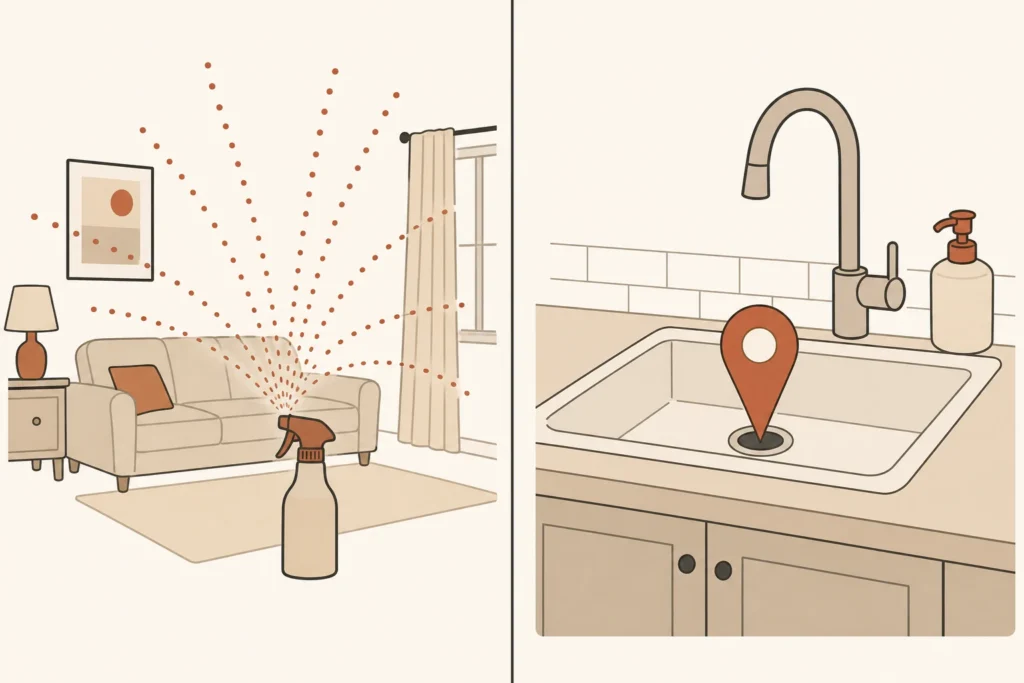
I find the usual response, more cleaner followed by more fragrance, especially frustrating because it erases the comparison you need. Fragrance can make a room easier to occupy for a while, but it cannot tell you whether the odor is strongest at the hamper, sink, appliance, doorway, or damp wall.
The smell is not the diagnosis
An odor can direct your attention, but it is not a reliable measure of indoor-air quality, and people differ in what they detect and how strongly they react. Use the smell to decide where and when to look next, not to declare that the room has mold, contamination, or a particular repair fault.
A musty or stale description is enough reason to look for condensation, damp materials, leak history, or visible water damage. It does not confirm mold by itself, so the observation that matters is whether the odor repeatedly arrives with moisture or whether it stays attached to one washable object or accessible surface.
Capture one return before treating the whole room
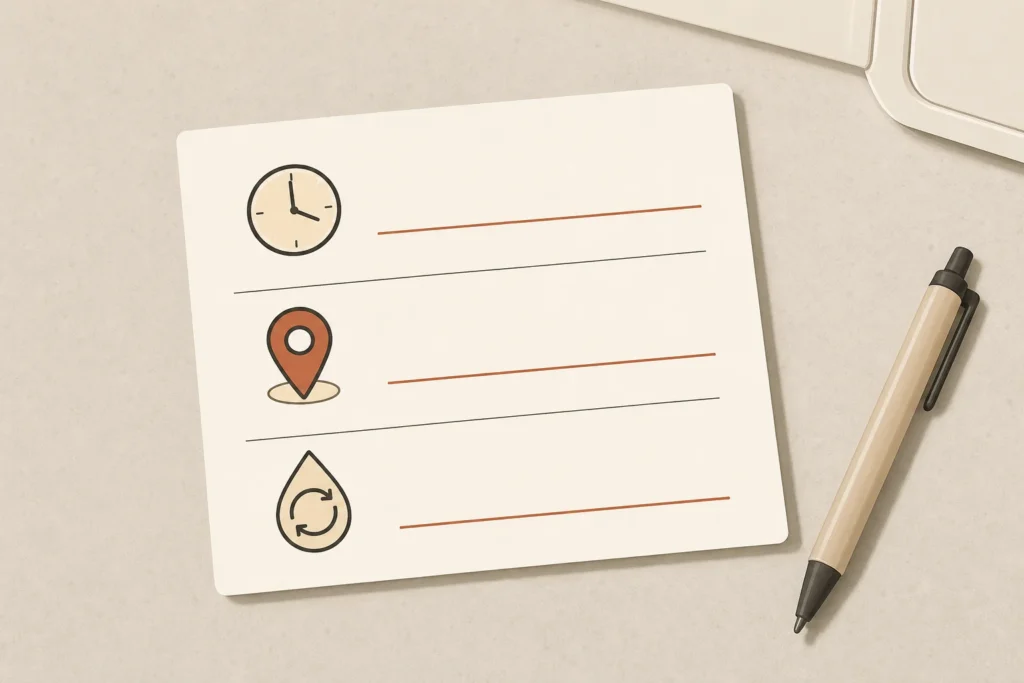
Wait for one normal recurrence and write down three observations. Keep them plain and event-based, because “after the shower” is more useful than debating whether the smell is earthy, sour, or merely odd.
- Return moment: after a shower, dishwasher cycle, HVAC cycle, rain, closed-up afternoon, or damp laundry sitting.
- Strongest location: beside one object, at an appliance opening, near a fixture, along a damp material, or at a supply or return grille.
- Immediate condition: water was used, the machine finished, humidity rose, the room stayed closed, or airflow started.
I once kept misting room spray near a doorway because that was where I first noticed an odor, then caught myself trying to compare the sink and washing machine through a cloud of lavender. Pausing the spray for one ordinary return window made the location comparison possible.
That pause is only a practical comparison across locations, not an air-quality test.
Once you find the strongest repeat pattern, change only that category first and wait through the usual trigger. Cleaning the floor, washing every textile, opening the windows, and deodorizing the drain at once may improve the room, but it leaves you with no idea which change mattered.
Let timing choose the next category
These patterns select the first bounded check, not a final diagnosis. Air movement can shift where an odor is noticeable, so give more weight to a location that becomes strongest under the same condition more than once.
| Return pattern | First bounded check | Stop routine cleaning when |
|---|---|---|
| One bin, hamper, textile, spill zone, or upholstered item | Remove or wash that source and wipe the surface beneath it. | The strongest point moves. Map that location instead of expanding to the whole room. |
| A washer or dishwasher opens, or a cycle ends | Remove visible debris and clean only visibly routine-accessible areas. Wipe accessible gaskets or seals without removing them. | Standing water, poor drainage, leakage, or the same odor remains after routine care. |
| A fixture is used | Clear debris from a removable stopper, strainer, or other surface-access part. | Drainage is slow, water backs up or leaks, or the odor repeats after water use. |
| Showers, rain, humidity, or a closed room | Check for condensation, damp materials, pooled water, and visible damage. | Dampness, condensation, or water damage returns under the same condition. |
| HVAC operation begins | Confirm the timing across two normal cycles and rule out nearby objects or damp areas. | The odor repeatedly follows system operation after nearby sources are ruled out. |
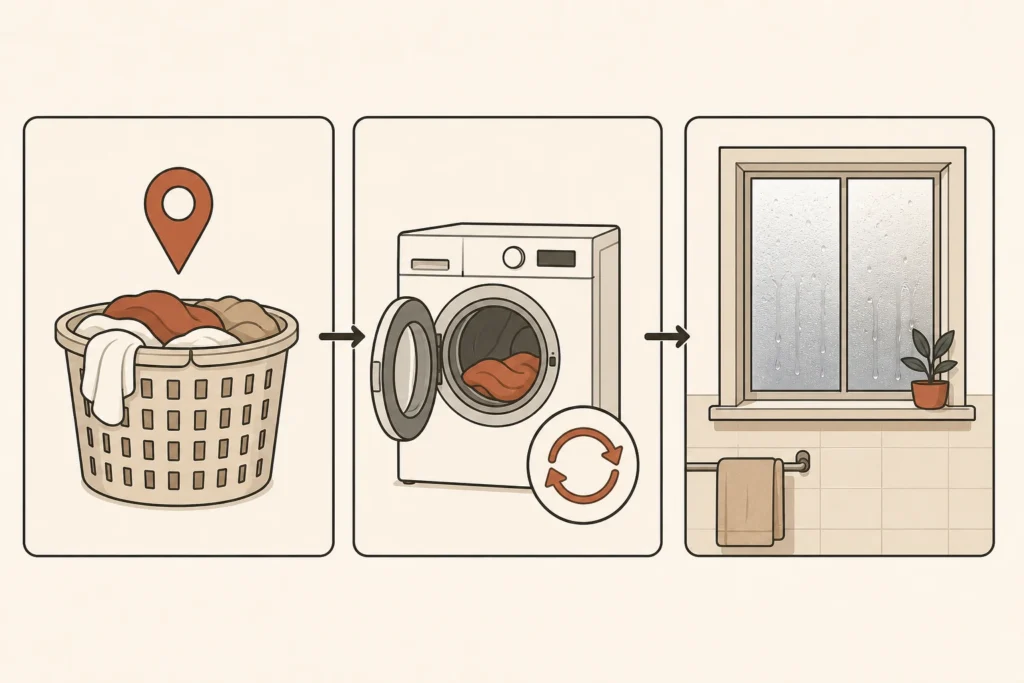
I like this kind of one-variable check because it gives an ordinary cleaning task a stopping point. If washing the hamper liner keeps the room neutral through the next closed-door period, you have an answer, but if the odor returns only when the washer opens, the room itself no longer deserves the blame.
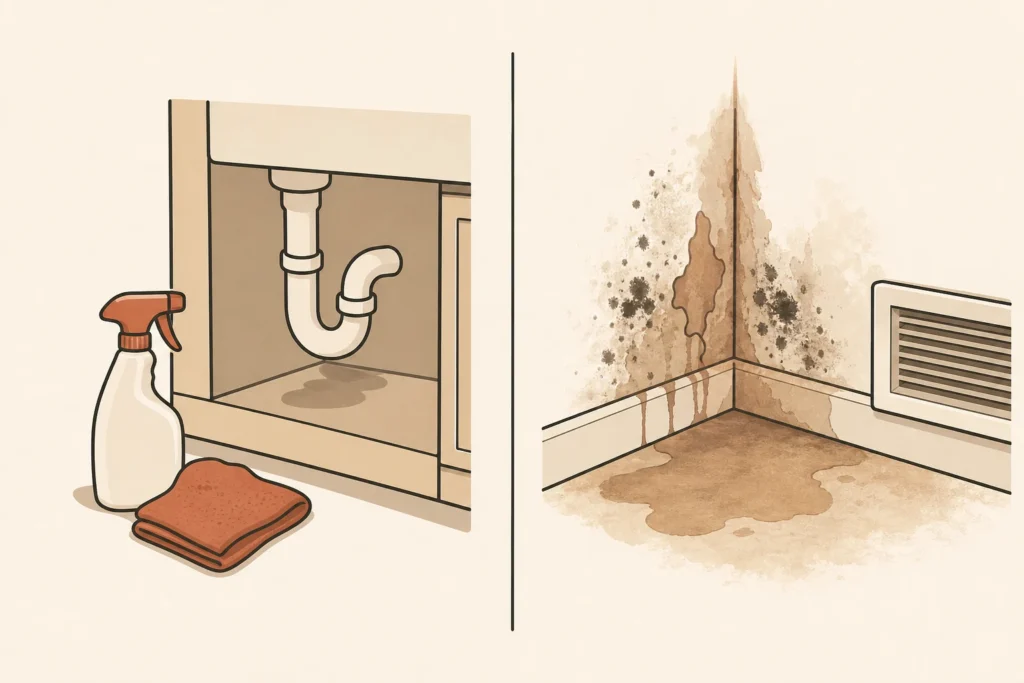
With appliances, stay with debris and components intended for routine access. If reaching the suspected area would require moving the machine, removing a panel, or disconnecting a hose, the map has already done its job by identifying a machine-linked issue rather than a general housekeeping failure.
Know where routine cleaning stops
Routine cleaning stops at a visible change of category: slow drainage, backup, standing water, leakage, recurring condensation or dampness, visible water damage, or the same HVAC tie across normal cycles. Record the location, trigger, date, and visible condition, then stop deodorizing or widening the cleaning area while that water, drainage, appliance, ventilation, or building issue remains. In a rental, those details make the condition specific enough to report without relying on a subjective smell label.
- Water-damaged areas and items should be dried within 24 to 48 hours, while the leak or moisture source is addressed.
- Visible mold means the water source needs attention. Growth covering more than about 10 square feet exceeds a straightforward household cleanup.
- An odor without visible moisture or damage does not establish mold, so do not use the size threshold based on smell alone.
Keep the three-field note only until one targeted change holds through the usual trigger. The satisfying result is not a permanently perfumed room, but a room that recovers after normal use and no longer sends you back into another all-surface cleaning campaign.
Sources and references
- U.S. Environmental Protection Agency: EPA odor guidance
- U.S. Environmental Protection Agency: EPA mold and moisture guide
- U.S. Environmental Protection Agency: EPA indoor-environment guidance
- Whirlpool Corporation: Whirlpool front-load washer odor care
- Whirlpool Corporation: Whirlpool dishwasher odor care
- U.S. Consumer Product Safety Commission: CPSC gas-leak safety guidance