

When the dryer stops, the hard part seems over, yet a finished load can take over a room in under a minute. Set it on the bed with no next address and the bed becomes a sorting surface, then at bedtime the load moves to a chair and quietly acquires residency.
I used to put a warm load on the bed “for ten minutes,” then transfer it to the chair when I wanted to sleep. What annoyed me wasn’t the unfolded clothing so much as handling the same clean shirts repeatedly without moving them any closer to a drawer.
Find the first missing handoff
Look at where the load stalls. Clothes left in the dryer may need an unloading cue, more time, or an available holding place, while clothes moved to a chair lack a defined clean zone, a basket parked outside the bedroom lacks a transport cue, and a shared load that everyone ignores lacks ownership of the final trip. Fix the first missing decision rather than redesigning the entire laundry routine.
A chair, shelf, or open basket can work temporarily, but only when the clothing’s status is obvious and there is an exit plan. Once freshly washed clothes mix with rewear items, every piece needs another sniff, inspection, or decision before it can be put away, which is exactly the friction the handoff should remove.
Protect the few items that benefit from a fast exit
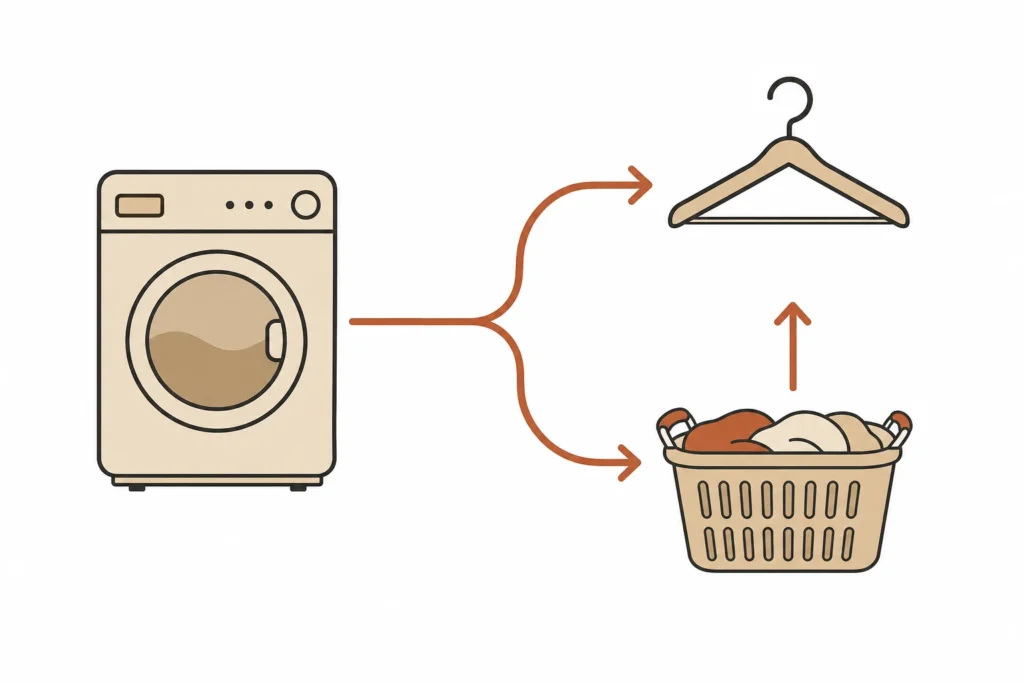
At unloading, make one quick pass rather than beginning a full folding session. Pull out garments you normally hang, clothing needed the next day, and any item with special care requirements, then hang, fold, or reshape those pieces before dealing with towels, underwear, sleepwear, and other items that can tolerate a controlled wait. Prompt removal can reduce wrinkling, but wrinkle sensitivity varies, so familiar garment behavior and the care label matter more than a broad rule about fabric type.
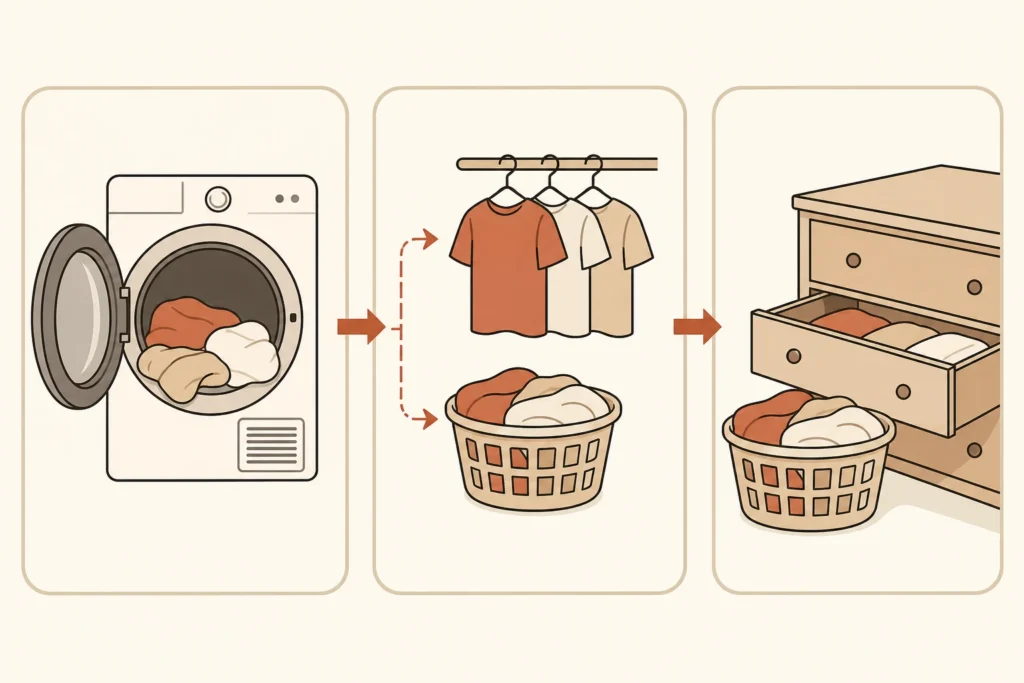
If your dryer has a wrinkle-reduction option that tumbles clothing periodically after the cycle, it can provide a short delay when immediate unloading is impossible, and I like that breathing room on an interrupted evening. What it can’t do is give the load a destination, so treat the feature as a brief buffer rather than permission to forget the dryer until tomorrow.
A waiting place needs a limit and an exit
“Fold later” becomes workable once later has a physical boundary. Use something that already exists, such as one current-load basket, part of a shelf, or a clear section of a closet, rather than spreading the load across whatever furniture happens to be empty.
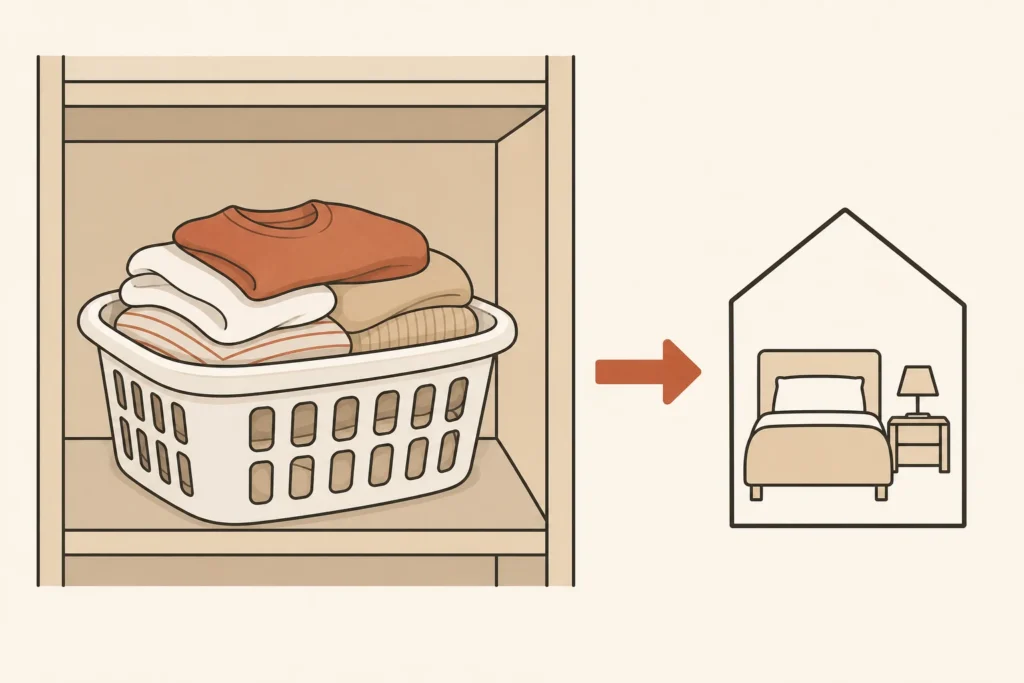
- It holds only known-clean clothing that is fully dry.
- Its capacity stops at one current load or one room’s share, not an expanding backlog.
- Everything inside has a named destination, such as the main bedroom, the kids’ room, or the linen shelf.
Keep rewear clothing elsewhere, even if the separation is visually plain, because status matters more than appearance. I find a modest carrier far more useful than a generous basket that quietly becomes permanent storage, so if it is still full when you need it for the next dry load, narrow the destination or give the route a more dependable exit.
Choose a handoff that fits the trip you actually make
| Situation | Practical handoff | Avoid |
|---|---|---|
| Dryer near bedrooms | Hang priority items, then return easy categories directly to drawers or closets. | Creating a large sorting surface just because one is available. |
| Dryer far from storage | Make room-bound carriers and take one on the next natural trip. | Waiting for a separate whole-load folding session. |
| Almost no staging space | Use hangers and direct drawer returns first, with one carrier for the remainder. | Treating the bed, floor, or chair as overflow. |
| Shared household load | Agree who takes each room-bound carrier, whether that is the unloader, the recipient, or the person making the next room trip. | Assuming “someone” will finish the clean pile. |
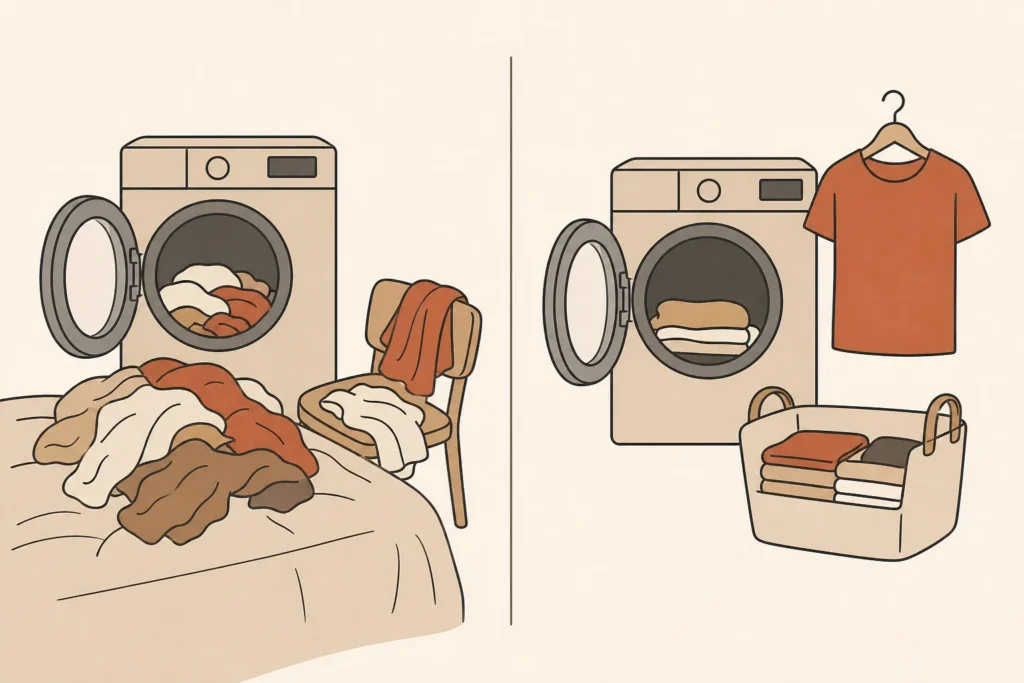
Choose the route that reduces how often clean clothing must be picked up, moved aside, and reconsidered. I’m unimpressed by a generous folding surface if it merely lets one load expand into a landscape, while a modest room-bound carrier that travels once is doing genuinely useful work.
Attach the last move to a trip already happening
Give each holding route one if-then cue tied to ordinary movement through the home. “If I go upstairs after dinner, the bedroom laundry carrier comes with me” is easier to act on than “I’ll fold everything tonight,” while “When I hang tomorrow’s shirt, I return the towel stack to the linen shelf” uses a task that is already happening.
Cue-linked plans have broad evidence behind them as a way to support follow-through, although that research is not a direct test of laundry routines. Try one cue for a week, and if the carrier remains full, change the cue, divide the load by destination, or shorten the trip before deciding the problem is motivation.
On a busy night, completion can be smaller than folding
Sources and references
- American Cleaning Institute: Laundry Basics (2026-03-10)
- American Cleaning Institute: Laundering Problems & Solutions
- Whirlpool: Owner’s Manual: Dryer Use and Care Guide
- European Review of Social Psychology: The when and how of planning: Meta-analysis of the scope and components of implementation intentions in 642 tests (2024-03-27)
- Canadian Conservation Institute: Basic Care, Textiles