

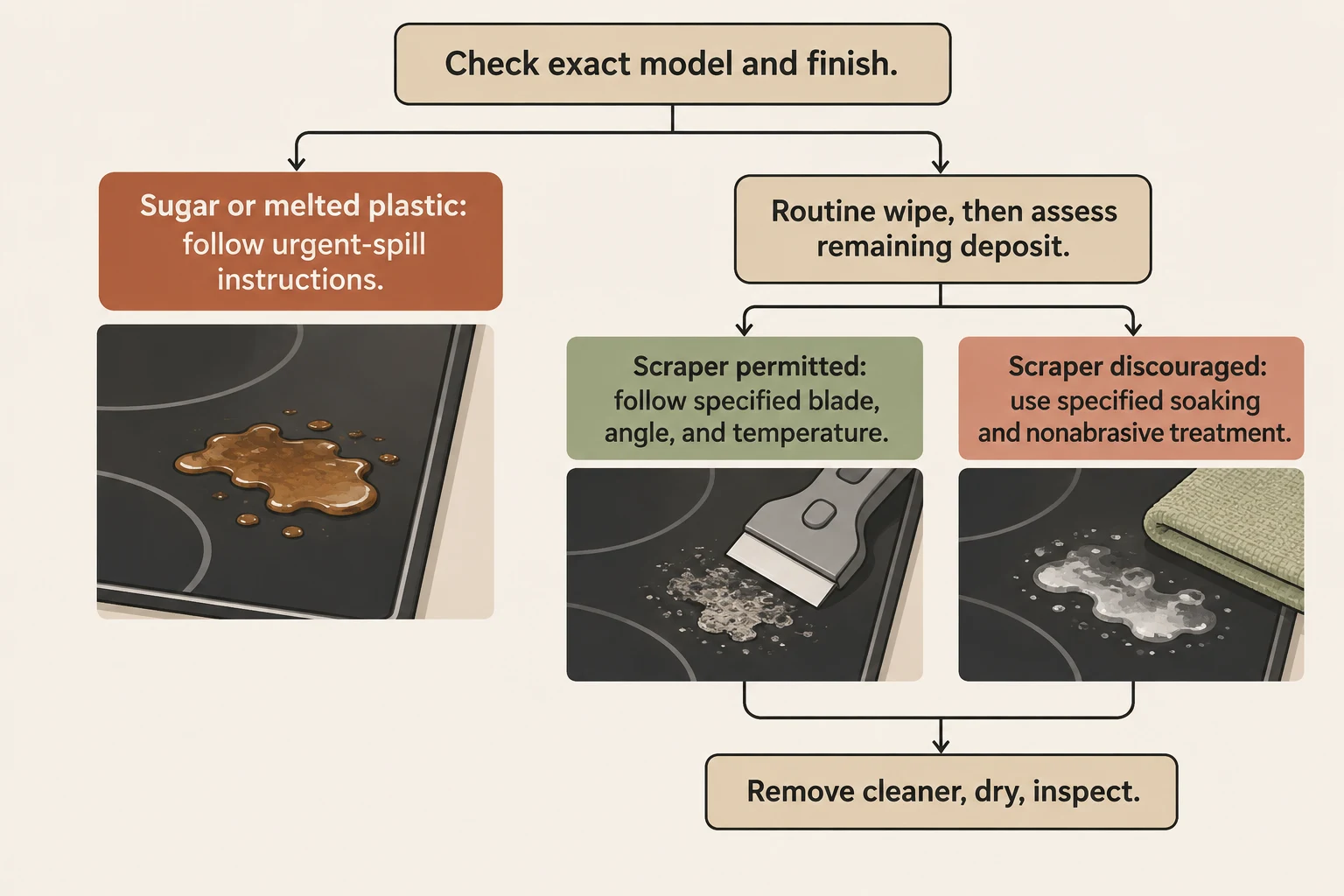
Use your model's recommended cleaner, applicator and temperature and, if allowed, a scraper. Begin with normal wiping methods and address the deposits left behind. There are two conditions that will alter this process. If the spill is sugar or melted plastic, it may require immediate attention. Some surfaces do not allow for the use of a scraper.[1][3]
1. Check the spill and model
Switch off your cooking appliances. Know what you have spilled before assuming it needs to cool down. Check your model's emergency spill instructions if you have spilled sugar or anything with high sugar content or melted plastic. It may require immediate steps that differ from those for regular food or grease.[1][2]
GE states that you should turn off your surface, clear hot cookware from the surface, use an oven mitt and take a fresh sharp scraper and clear any sugar or melted plastic to a cooler area of your stove top. Leave the rest to cool down as this can create pits. The Whirlpool manual I found referenced cleaning sugar once it has slightly cooled while still warm. Always check your specific instructions; this is not a recommendation to scrape a hot cooktop.[1][2]
Know what your model number is and find its information on how to care for your surface. Know your finish type and what cleaner and applicator to use. Know if you are allowed to use a scraper and at what temperature. If your finish type is unknown to you or you cannot find instructions, do not assume how to treat your hot cooktop. Contact your manufacturer and ask them what to do for that specific spill and surface type. Never heat up a spill that has already cooled to mimic hot spill instructions. Once you know what steps and supplies to use, continue on.
2. Wipe away ordinary loose soil
Once your surface has reached its temperature for cleaning, pick up any loose crumbs and debris. Do not rub them into the cooktop with your applicator. You can create scratches by doing this even if your applicator is acceptable. If you notice your applicator picking up debris, wipe it clean or replace it.[6]
Wipe up any grease and debris that is not stuck to your cooktop using your normal cleaning methods. Use water and soap or cooktop cleaner if allowed. Clean up according to the manufacturer's instructions. If you have grease that will wipe off and are left with a crusty spot, use your methods to remove deposits only where needed.[1][3][6]
3. Treat deposits with permitted tools
Use your cleaners, applicators, soaking method or cooktop scraper to remove the stuck deposit. Not all cooktops can be scraped. Whirlpool does not recommend the use of a scraper on their WipeClean cooktop as it can remove the finish. They tell you to start with water on your cooled surface and let it soak for at least five minutes, longer if necessary, then escalate to their nonabrasive cleaner.[3]
If your cooktop allows for a scraper, use the one recommended. Make sure you have a good hold and a clean scraper that is not chipped. Use the degree and temperature specified in your instructions and use a cleaner if instructed to do so. There is no one degree that will work on all surfaces. As you can see, the Whirlpool manual calls for roughly 45 degrees on a warm surface. Bosch recommends a colder surface and a lower angle of 20-30 degrees. When scraping burnt-on residue, GE tells you to use their cooktop cream. Never test your hot cooktop with your hand.[1][2][4][6]
A dull finish does not always mean no scraping. According to SCHOTT's Matte Line instructions, you can use a scraper that is appropriate for the job. Just don't rub or burnish one spot too hard. See if your deposit will get smaller or lift off without marking the surface. If you begin to mark your surface, stop and make sure your scraper is clean and undamaged and follow the correct procedure.[6]
4. Inspect the dry surface
When you are done, clean up any excess and dry as instructed. Look at your mark and see if it has improved from its previous state. If yes, continue using that method. If it does not improve, you can stop here. This is not a surefire way to know if something is wrong. But if something is bonded to your cooktop or you have discolored your cooktop, you may need to call your manufacturer.
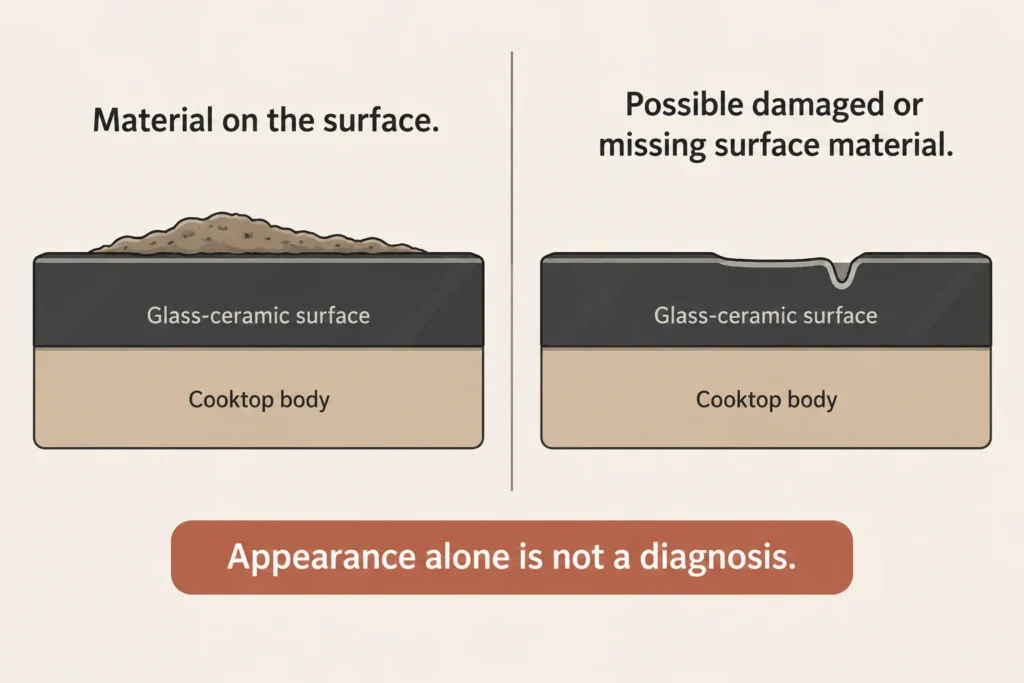
As you can see there are many things that can leave white marks on your cooktop. Some of these can be scrubbed away. Scrubbing will not remove a scratch. Don't try and remove every scratch that you think you see. SCHOTT does not recommend polishing scratches. If you feel like you may have removed some of your cooktop surface contact your manufacturer. GE will want you to contact service if your cooktop has become pitted or indented. Do not use a cooktop that is cracked or broken until repaired.[1][5]
Sources and references
- GE Appliances: Electric Range & Cooktop, Glass Cooktop Cleaning Instructions
- Whirlpool: Owner's Manual W11362923, Revision H
- Whirlpool: WipeClean Glass Cooktop Cleaning
- Bosch: How to Clean Bosch Induction & Electric Cooktops
- SCHOTT: Everything You Need to Know, SCHOTT CERAN Service
- SCHOTT: CERAN Matte Line, Instructions for Care