

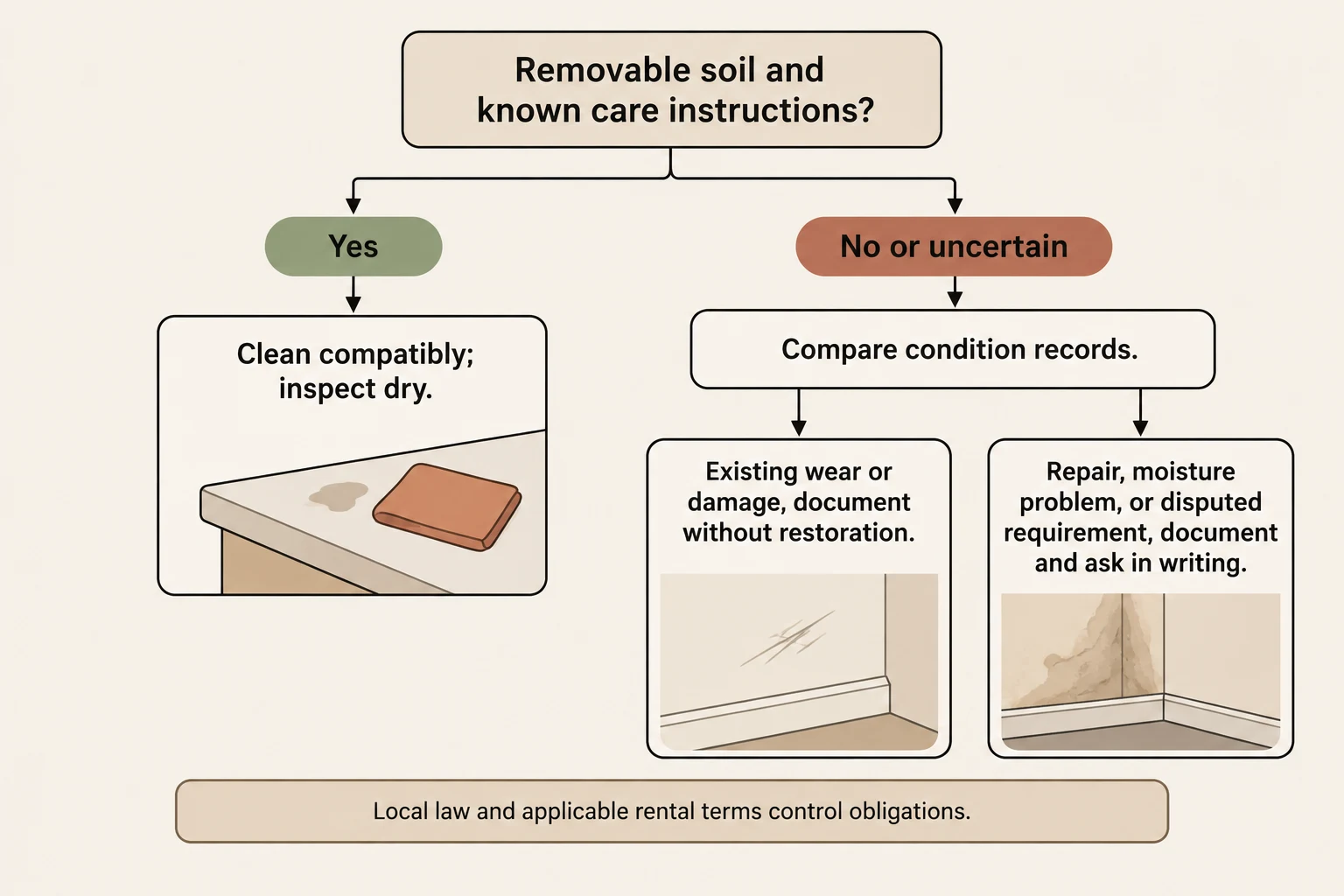
Cleaning when you move out does not require everything to be perfect. Clear out your things, garbage and common dirt that can be removed. Follow any requirements from your rental that are within your local laws. Take pictures of the unit once it's empty and ready to be handed back. Leave any deterioration and things you are unsure how to treat or repair as is while you figure out who is responsible. Don't leave it to the landlord's move-out checklist to dictate what you need to do.[1][2]
1. Check your rental’s cleaning requirements
Get your lease, unit-specific move-out instructions, move-in condition report, pictures and any repair emails. Your lease will tell you what you agreed to. Unit instructions will tell you what your property manager wants you to do. Know your local laws to see what they allow. Your condition report and pictures can also help prove what was there when you moved in. Check with your local government or legal aid for tenants' rights info for your state/city.[1][2]
California will only deduct cleaning charges to make your unit as clean as it was when you moved in. They will not charge you for damage or normal wear that you found when you moved in. Minnesota tenants' rights tell you that charging you to repaint automatically can be illegal. These laws are not applicable to all US rentals.[1][2]
If they want you to have your carpets professionally cleaned, repaint, have holes filled or replace anything, ask your property manager what section of your lease tells you to do this and what they want done or will accept. Ask if you can do a move-out inspection before your last day. It may not show everything but according to California's law you can have stuff in your unit that you can't show them. And if something happens after you clean they can hold you responsible. So you should have a list of what you need to clean and questions to ask.[1]
2. Separate soil from repair questions
Go through your home room by room using your move-in condition report. You want to remove food particles and dust that has settled on surfaces. Paint chipping, cupping on cabinets, worn floors, caulk and broken fixtures need to be documented, and you should ask your property manager if they're your responsibility. Just because you can see it doesn't mean you can remove it. Take pictures of anything you plan to try and clean or anything you don't know was already damaged when you moved in.
If you know you can wash the paint on your walls, try a mild cleaner that you know will not scratch your walls in a spot you won't notice. Make sure to look at it when it's dry. According to Sherwin Williams, using strong or scratchy cleaning agents can damage your paint. If your paint rubs off on your cloth or starts to look different or feels mushy, stop and ask your property manager what kind of paint your walls have and what they recommend cleaning it with.[3]
Don't try to fill in holes, repaint, caulk, replace fixtures or move any appliances around. If you see any water damage or think there might be mold, take a picture and report it to your property manager. According to the EPA, you shouldn't paint or caulk over mold and should make sure to fix the water issue. If there is heavy water damage or dirty water, that's not something you should be dealing with. At this point you should have pictures and questions for anything you are unsure about.[5]
3. Clean spaces as belongings leave
Clean any shelves, drawers or closets you have to open up while you are packing. Make sure they are clear when you're done. Don't throw your cleaning supplies on your truck. Finish off your kitchen and bathroom when you are done using them. The last thing is to mop your floors after all of your furniture is out of your house and you're not walking through the unit anymore. Give everything time to dry before you show your unit and take pictures so you know if there is anything left behind.
| Area | Useful finished condition |
|---|---|
| Kitchen | No food scraps, crumbs, spills, or removable grease on accessible counters, sink, backsplash, and cabinet surfaces. |
| Appliance interiors | Food and loose residue removed from the refrigerator, oven, and other supplied appliances using their permitted cleaning methods. |
| Bathroom | Hair and removable soap or toothpaste residue cleared from fixtures and accessible surfaces; toilet cleaned. |
| Empty storage | Cabinets, drawers, closets, and shelves free of belongings, garbage, and loose debris. |
| Floors and accessible ledges | Grit and moving debris vacuumed or swept; compatible hard floors cleaned; accessible sills and baseboards cleared of dust. |
Make sure you know what you can and can't do when cleaning your appliances, what you can remove and what cleaners to use. When washing the glass on your fridge, Whirlpool says to not use warm water on cold shelves because they can break. Allow your fridge shelves to warm up and don't assume they are dishwasher safe.[4]
Carpet should just need to be vacuumed. If you decide to have it shampooed or have stains removed, know what you need to do and if it's right for your carpet. Don't spend money on something because it's listed on a general move-out checklist. Once you've completed these steps, your home should be clear of visible dirt and trash. You should have nothing left to move out and your home should be dry.
4. Document condition and return keys
Once you've finished your unit take pictures of every room. You should also take pictures of the inside of your appliances, cabinets and any bathrooms and lastly any defects you couldn't fix. By taking wide shots you can show what's in each room and close ups can give you more detail on what may not be seen in your first picture. This will be your last chance to take pictures of your home before you hand it back. You can't prove that anything was already there if you didn't have pictures.[2]
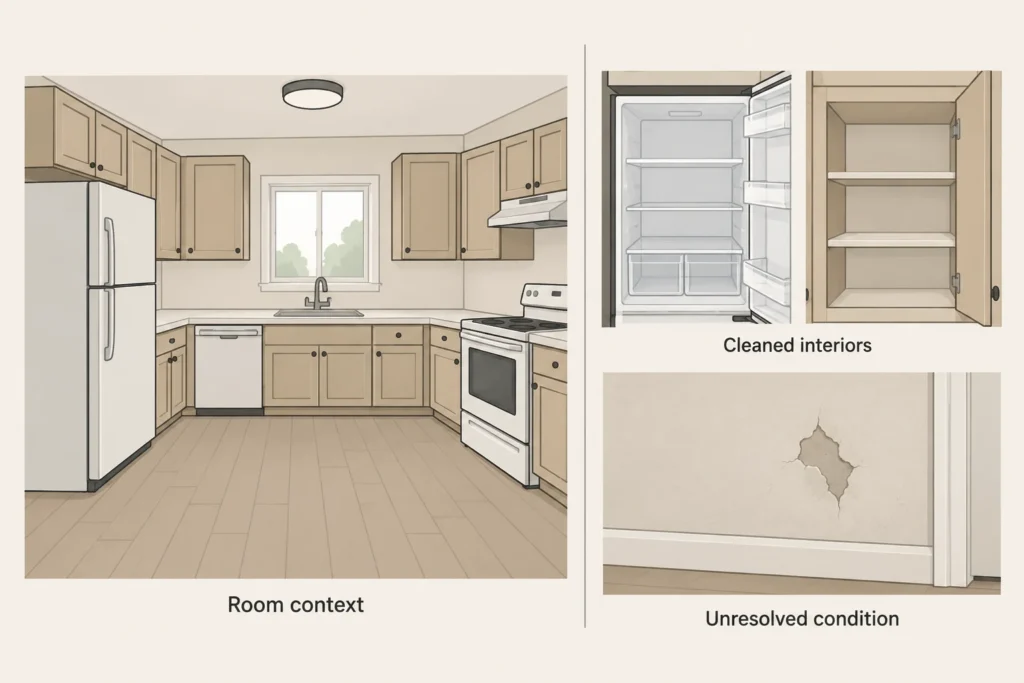
Store all of your original pictures with your move in condition report and any emails or receipts you may have received from your property manager. Make sure you return your keys how they ask you to and get a confirmation that you did and what date you did it. Have a place that you can find all of your information after you move out. This will not prove who is at fault or get your full deposit back.[2]
Sources and references
- California Department of Real Estate: California Tenants guide: Moving Out
- LawHelp Minnesota / Mid-Minnesota Legal Aid: Security Deposits
- Sherwin-Williams: Maintenance Frequently Asked Questions
- Whirlpool: Cleaning the Interior
- US Environmental Protection Agency: A Brief Guide to Mold, Moisture and Your Home