

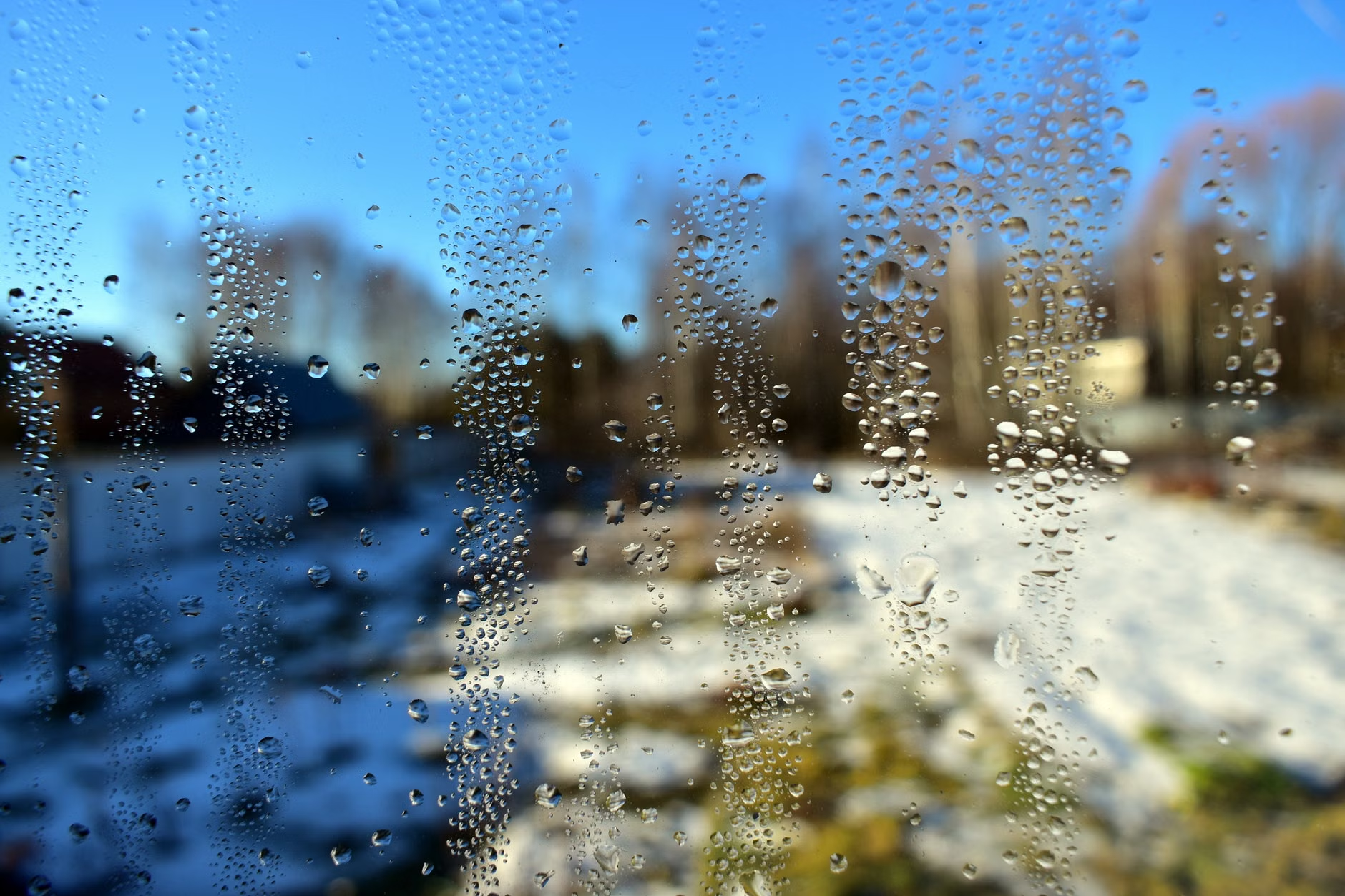
Window condensation in the morning happens when the temperature of the glass allows moisture in the air around it to form droplets. Where it's located will dictate what action to take. Dry off and assess moisture on the room side, most likely ignore outside dew and have a professional inspect the unit if moisture is found within the insulated unit. Keep your interior materials dry first and don't automatically think your entire house has too much moisture just because you have wet windows.[3][4][7]
Where the water is changes the response
Take pictures of your windows before you wipe them off. Wipe a small area on the room side that you can reach with a clean soft rag. If you are able to remove the droplets, you now know that the moisture is on that side. If not, it could still be on the outside, be residue or be within the window. Only check the outside if you can safely do so; do not stick your head out a window to check.[4]
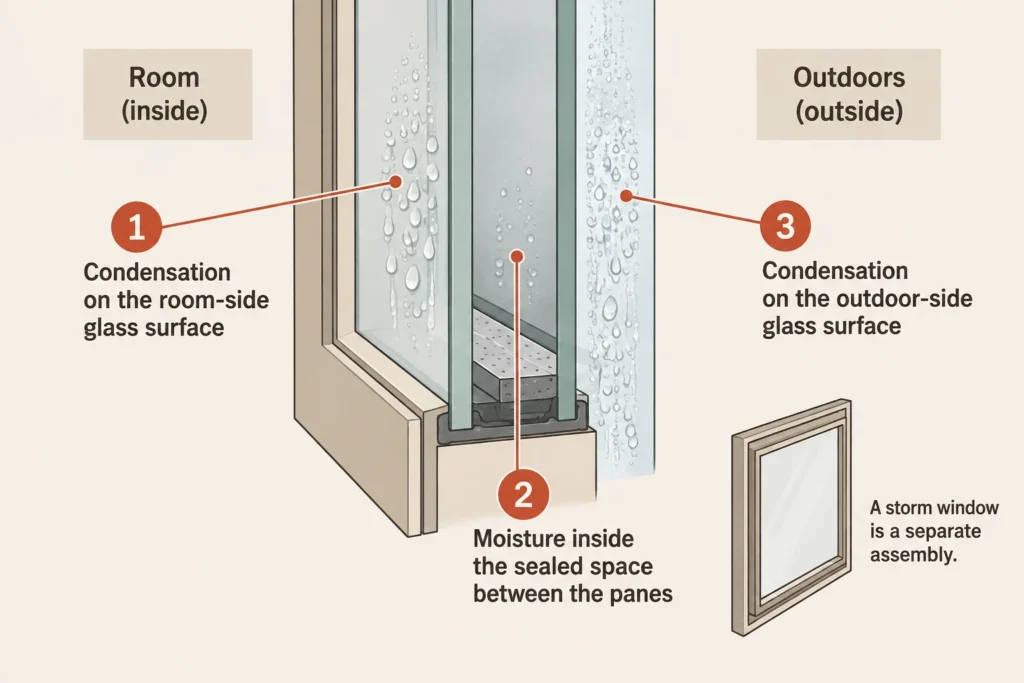
| Moisture location | What it suggests | Appropriate response |
|---|---|---|
| Room-facing glass | The local glass temperature is low enough for indoor moisture to condense. | Dry interior surfaces; compare room humidity, weather, and airflow around the glass. |
| Outdoor-facing glass | Exterior dew, especially after a cool, calm night. | Observe whether it clears during the day. Indoor humidity changes generally do not address it. |
| Inside a sealed double- or triple-pane unit | Possible insulating-glass seal failure, once accessible surface moisture or deposits are excluded. | Request glazing assessment rather than increasing room ventilation. |
| Between a separate storm window and the main window | Moisture in a separate window assembly, not automatically a failed sealed unit. | Identify the assembly and report persistent wetness for assessment of its ventilation and drainage arrangements. |
Windows that are energy efficient can get dew on the outside because less heat is being transferred to the outside of the window. During cool nights with little wind you will see more exterior dew and it will usually dissipate once the weather changes throughout the day. You may only see it on some of your windows as well due to different exposure to the elements. Dew on the outside of your window does not indicate high moisture inside your home or that your windows are performing extremely well.[7]
Why ordinary room humidity can wet cold glass
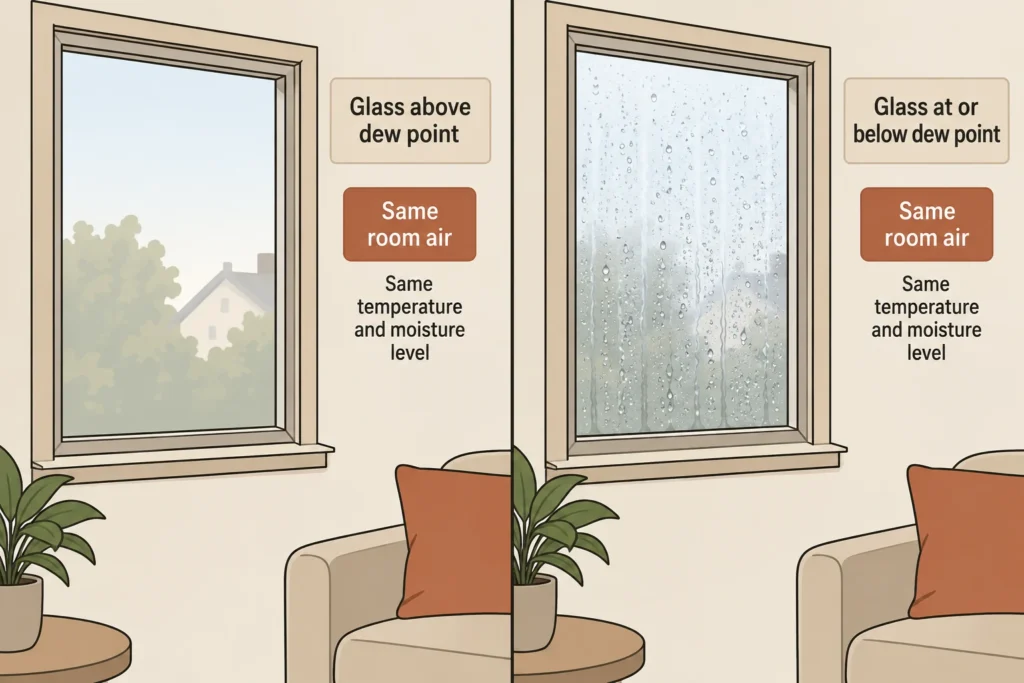
There are two factors that play into condensation: moisture content in the air and the temperature of the object that it comes into contact with. Dew point is the temperature at which the moisture content in the air will begin to form water. As your window cools down during the night it can reach this dew point and start to collect moisture on the surface, even if your room feels nice and warm. Coverings such as blinds and curtains can block warm air from hitting the window as well, creating higher moisture behind them than what you feel in the middle of your room.[3][6]
The EPA states that your home should stay under 60% RH (relative humidity) and that, if possible, you should try to stay between 30-50%. This will help keep moisture in your home at a minimum but does not always mean your windows will stay dry. If your window temperature gets low enough, your windows can still form condensation on the surface of the glass. They also recommend lowering your moisture content during colder months as the outdoor temp drops. Different windows and window temperatures will cause different results in your home.[1][5]
It could be a sign that you have too much moisture in your home. If your room is at 45% RH and all the other windows are fine and it's under a tightly fitted blind, that may be true but your window is not getting room air to it. Try opening the blind and monitoring it the next couple of days when it's cold. Make sure you take your temp and RH readings. If it's better, it could be a contributing factor to your problem but does not mean your window isn't faulty.
Record enough to distinguish a pattern
If you have condensation inside your home on your window, get yourself a simple hygrometer that can display temp. Follow the manufacturer's instructions for where to place it. I would say in a central area of the room where you're having problems, not on the cold window surface or next to a heater. Leave it in the same location and see what results you get. Keep in mind that you're only reading room temp and humidity. It will not read the temp of your window or give you any indication of leaks or poor construction.[1][5]
When wiping down your window over the next few mornings, make a mental note or jot down what time of day it is, what room and window, which side is wet, what your room temp and RH are, what the outside temp is and if it's raining, what your covering is set to and if you're doing anything to create more moisture. Check back after your wipe-down to see if just the window dries or if your sill and trim dry as well. Don't keep notes for months; you just want to monitor your issue. Don't delay if you continue to have wet windows or any signs of water damage.
Having multiple windows with moisture on the room side of the window when it's cold out would lead me to believe there is a contributing factor from the inside of your home. But the window temps could play a role. Having one window that is affected may point to the window being more exposed to cold, having a covering on it or being faulty. If you are getting moisture during windy, rainy periods you may want to check for water intrusion, usually at the top of the window and sides. These are all just clues, not surefire facts.
Wipe away moisture and pooled water from your sill. Make sure to dry off the window and trim that you can get to. Do not place a wet towel on your sill to absorb moisture. Moisture will cause your window and trim to fail if they are exposed too long. Wiping down your window will only help protect them from failing; it will not stop the moisture from occurring.[1][4]
Try increasing room air access to the glass if it is suspected to be trapped behind coverings. Make sure current sources of heat have adequate paths open as well. If you continue to see elevated values or multiple windows showing this problem focus on something that will reduce your moisture source you have control over. Turn down a humidifier you may have running or utilize current venting during shower/cooking times. Only change one factor at a time to gain meaningful data from your next reading.[2][3][5]
When you open your window you are only reducing your moisture content if the incoming air has a lower moisture content. The RH outside will not always give you this information. If the temp outside is low and has a higher RH it could have a lower moisture content then inside your home. Dew point will give you a better idea if opening your windows will help dry things out. Just because your dew point is lower outside does not mean it's beneficial to open your windows. If you find that opening your windows will bring in warmer air with more moisture it may be beneficial to run a dehumidifier.[2][6]
Take your morning readings when outside conditions are comparable to each other. You should see less condensation on the window. Less panes effected and other materials drying out as well. If the outside temp warms up it will lower your RH without reducing your moisture content. This is why we want to know the temperature when taking our readings. If the nights are warmer your window may dry out without knowing what your doing helped.[3][6]
When wiping and humidity control are not enough
If you feel you are unable to get to the moisture on the window. Other materials are staying wet around your window. Paint bubbling. Wood expanding or moisture occurring during rain you should ask for a property/window evaluation. It may be raining when your window cools down and causes condensation. You don't want to assume its leaking. These are all reasons to get an evaluation.[1][4]
If your window continues to show moisture when the rest of your home seems normal and you have tried adjusting air flow/moisture levels. Its time to reevaluate. Don't continue to lower the moisture content in your home to satisfy one spot. Your hygrometer is not able to determine if your glass is colder then normal or a faulty installation.[5]
Renters should provide your landlord dated pictures of where your window is located. Which side is getting wet. Any correlation with weather. Temps/RH. If it dries out and what you've tried so far. Home owners can provide this information to your window company or building evaluator. Have them figure out where the water is coming from. If it's the glass or surrounding materials and what needs to be done. Do not poke holes in your glass or attempt to seal windows until you know where the water is coming from.
Sources and references
- US Environmental Protection Agency: A Brief Guide to Mold, Moisture and Your Home
- US Environmental Protection Agency: Mold Course Chapter 9
- Natural Resources Canada: Condensation
- JELD-WEN: Condensation, Windows and Patio Doors (JGI012) (2023-11)
- US Environmental Protection Agency: What are the main ways to control moisture in your home?
- National Weather Service: Dew Point vs Humidity
- Andersen Windows: Condensation on the Exterior of Window or Patio Door Glass
- Andersen Windows: Clean and Maintain Andersen Combination Units