

Do not enter until the wastewater stops. Keep people and pets out of the area, and don’t start cleaning if wastewater is still present. Hard surfaces can often be cleaned and disinfected. Absorbent and/or porous materials, such as drywall and carpet pad, should be removed. Clothing can usually be saved. The extent of the water damage is not always a good indicator of how contaminated a surface is. What absorbed the wastewater, and whether you are able to reach the impacted surfaces, are more important considerations.[3][4][5]
Before you pick up the towels
If water is coming up through electrical outlets, do not go into that area. You can’t always tell which circuits are powered by looking at breakers. Keep other people out, and have a qualified person (like an electrician) isolate the circuits from a dry location. If wastewater is still present, turn off water fixtures and water-using appliances, and stop the backup. Report the situation to the utility. Cleaning up while wastewater is still being released makes the situation worse.[1][3]
Goggles, waterproof boots, gloves, and dressings are necessary to keep away the contamination. Keep work clothing and shoes separate from clothing you are wearing to protect others. Wash your hands with soap and water after removing the gloves. Children and those with a weakened immune system should not take part in the cleanup. Gear to protect you from the contamination is important, but it is not a substitute for professional help.[2][3][5]
Follow the contact, not just the puddle
I’ll include backups from floor drains on the sewage cleanup path, even though they may not always contain sewage. Water from a sink or washing machine may still contain contaminants. A floor drain backup may also be from shared waste water piping. The source of the water and a sewage-like odor will help identify the water. Until the source is determined, consider it as sewage. That is a conservative approach, not a diagnosis, based on appearance.[3][7]
Picture me in an imagined laundry-room backup, reaching for the towel already on the floor because I want the doorway usable. Then I notice its wet edge tucked beneath a cabinet’s swollen base. I’m annoyed at the extra work, but I stop dragging the towel across the room and isolate it instead. The exposed tile isn’t the whole job; the cabinet edge changes what needs attention.
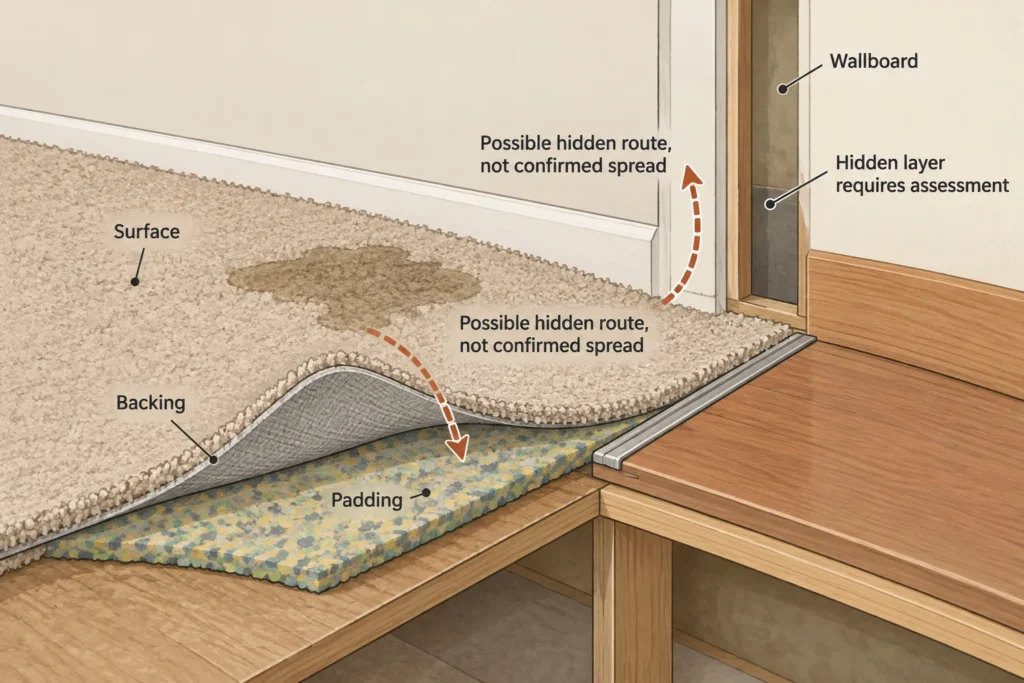
Treat all potentially contaminated surfaces as if they are sewage. Wet footprints and pooled water can also help you identify what was touched. The back of a wipeable wall surface may conceal an absorbent backing that is also saturated. If wastewater may have gotten on a surface you can't access, consider the assembly out of service until it can be assessed, not pulled apart. Just because an object is in the same room as a contaminated object, doesn't mean it should be thrown away.[3][7]
What can stay, and what probably can’t
| Affected material | Practical decision | What changes the answer |
|---|---|---|
| Accessible metal, glass, intact glazed ceramic, or compatible hard surfaces | Often retain after washing, suitable disinfection, and drying. | Seams, cracks, absorbent backing, or inaccessible joints may prevent complete treatment. |
| Drywall, insulation, wall-to-wall carpet, and carpet padding | Sewage-contaminated portions generally require removal. | Surface cleaning cannot treat contamination absorbed into these layers. |
| Mattresses and deeply padded upholstery | Generally discard when sewage has penetrated them. | A clean cover does not mean the filling can be cleaned and dried. |
| Washable clothing, linens, and some small washable rugs | May be salvageable through separate laundering and complete drying. | Care restrictions, padding, backing, or inability to clean thoroughly may rule out laundering. |
| Solid wood, composite cabinets, and layered flooring | Keep out of use until penetration and treatment access are assessed. | A sealed face is different from a soaked raw edge, joint, or hidden underside. |
| Untouched items above the spill | Keep unless splashes or contaminated handling reached them. | Nearby is not the same as contaminated. |
There's an exception for laundry. NYC’s sewage guidelines state that you can thoroughly wash small rugs and clothing, so I wouldn’t throw textiles in the trash. Keep contaminated laundry separate, don’t shake it, and wash with the hottest water allowable by the care instructions and dry completely. That may change the answer. If a laundry cycle can’t properly wash the item, dispose of it or get it evaluated by a professional.[5]
I would be more conservative with items that come in contact with food, like a pacifier or baby bottle nipple. It is OK to wash and sanitize a metal or ceramic pan but disposable plastic baby bottle nipples and pacifiers can’t be cleaned and should be discarded. It is flood cleanup guidance, not true sewage cleanup, but the distinctions can be helpful. Throw away food that came in contact with wastewater and food in contaminated packaging that can’t be cleaned and sanitized. Don’t assume you can clean something to a safe state with a quick wipe or dishwasher cycle.[6]
For salvageable surfaces, clean before disinfecting
Begin work when the backup has stopped, and you can reach the contaminated area and safely contain the liquid. Disinfectant sprays aren’t a substitute for removing sewage. Without removing the soil, you can’t ensure product contact to the surface. One thorough treatment is more valuable than several spray treatments.[3][8]
- Dispose of, remove and contain waste. Solid waste, including absorbed liquid, should be bagged for disposal according to local laws. Don't carry soiled or dripping items through clean rooms.
- Wash retained surfaces. Use a method consistent with the material. Follow the label for soap or detergent use. Remove visible soil and detergent residues.
- Disinfect. Use an EPA-registered product for the surface and the intended use. Follow label directions for contact time and keep surface visibly wet for the full contact time. Complete any required rinse, especially for food contact surfaces.
- Dry after treatment. Once contact time and any required rinsing are complete, dry retained materials and affected accessible layers. Keep rugs and belongings off damp flooring.
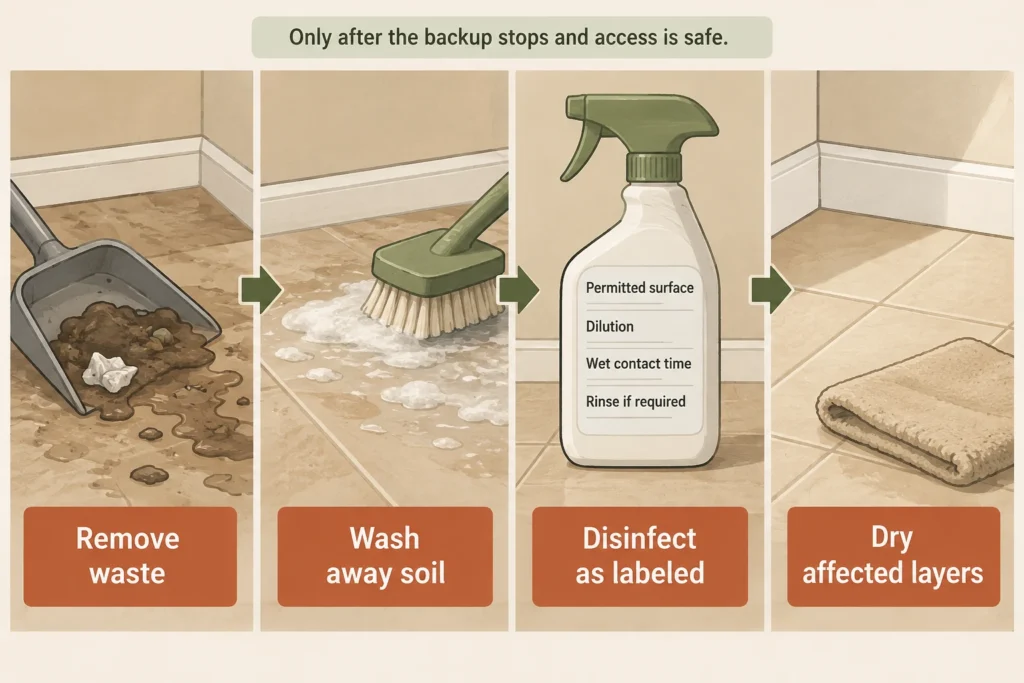
Never mix bleach with other cleaners or drain chemicals. If drain cleaner may be in the wastewater, don’t add disinfectant; tell the cleanup provider what was used. I’m deliberately not giving you a universal bleach recipe. Concentration, contact time, permitted surfaces, and rinse requirements depend on the product, and EPA registration doesn’t mean it treats every sewage organism or can be used inside porous furnishings.[8][9]
The tools are part of the cleanup. Dispose of disposable wipes and sponges. Clean and disinfect reusable tools before storing and launder clothing before storing. For an extraction machine to be used in the household again, it needs to be decontaminated as well.[3][5]
When the remaining job needs assessment
If you can’t determine where wastewater flowed, then a second floor wipe won’t provide the answer. In cases where an exact spread can’t be determined, water has entered wall/floor cavities, HVAC has been contaminated, the backup continues or at-risk occupants can’t be isolated, the Guidance for Homeowners from the Historic Nebraska Master Property Insurance Program states that the homeowner should engage the services of a professional to perform a restoration and remediation of the impacted areas. Lincoln’s homeowner guidance also recommends professional restoration for a sewage spill present for at least 24 hours. That’s a local trigger, not a guarantee that an earlier spill is suitable for DIY cleanup.[3][7]
If you are a renter, immediately report the situation to the landlord or emergency maintenance contact and document the situation in writing. If possible, take pictures to document the situation. Send the pictures with an explanation of when the back up started, if the back up is continuing and what materials became wet. Depending on the landlord, you may be able to request a cleaning of the floor and an assessment for hidden contamination. This may help reduce the number of vulnerable occupants. If conditions aren’t quickly resolved, contact your local housing or code enforcement office for more information and to assist in documentation. Your wastewater utility or health department can assist in furtherrouting your request. In NYC, contact 311.[10][11]
Diarrhea, vomiting, fever, or an infected-looking wound after exposure warrants prompt medical advice. Mention the wastewater contact.[2]
For the room, look for completed soil removal, label-directed treatment, and drying of affected layers. Those checks document the work; they don’t prove every organism is gone. A dry-looking face or vanished smell tells you less. If a soaked layer remains unaccounted for, keep that material out of use until it’s assessed. You can keep untouched belongings without pretending the hidden part of the job is finished.[7][8]
Sources and references
- CDC: Safety Guidelines: Reentering Your Flooded Home (2026-08-24)
- CDC: Protecting Workers Handling Human Waste (2024-04-22)
- City of Lincoln: After the Sewer Backup, Tips for Homeowners
- CDC: Guidelines for Cleaning Safely After a Disaster
- New York City: Sewage Backup and Overflow in Jamaica, Queens
- FDA: After a Storm or Flooding: Key Tips for Consumers About Food Safety
- EPA-hosted contractor report: Report to EPA on Guidance Documents to Safely Clean, Decontaminate, and Reoccupy Flood-Damaged Houses (2018-08-31)
- EPA: Flood Cleanup to Protect Indoor Air and Your Health
- EPA: Selected EPA-Registered Disinfectants
- Frederick County Health Department: Sewage Backup
- New York City Department of Environmental Protection: Sewer Backups