

A counter can be greasy, crumb-covered, and unpleasant without needing a germ-killing finish. Most ordinary household messes need cleaning, and adding disinfectant after every wipe usually adds work without giving that stronger product a defined job.
I once caught myself reaching for disinfectant after wiping fingerprints from a refrigerator handle, simply because the bottle was already out. Putting it back felt almost too easy, but the useful question wasn't whether I could spray the handle, it was what had happened there that cleaning hadn't addressed.
Most daily messes need removal, not escalation
Cleaning uses soap or detergent, water, and physical wiping or scrubbing to remove dirt, organic matter, and many germs. In EPA terminology, sanitizing is a registered surface claim against bacteria and isn't intended to kill viruses, while disinfecting is a registered claim against viruses and bacteria, but neither is the automatic “better clean” for a surface that was simply used.
In a typical home, routine sanitizing or disinfecting is generally unnecessary simply because a surface was used or looks dirty. Escalation has a defined job after raw meat or poultry contaminates a hard food-prep surface or inner sink, during household illness, or when someone has a weakened immune system, while ordinary dust and normal bathroom grime still need cleaning rather than an automatic stronger finish.
Let what happened choose the level
The circumstance matters more than whether the surface is a counter, handle, or bathroom fixture. Use this comparison before reaching for the strongest bottle nearby.
| Circumstance | Useful response | Stopping point |
|---|---|---|
| Crumbs, grease, fingerprints, tracked dust, or normal bathroom use | Clean with a surface-suitable cleaner and physical wiping | Stop when the soil is removed |
| Raw meat, poultry, or their juices touched a hard food-prep surface or inner sink | Clean with hot, soapy water, then sanitize as directed | Complete the sanitizer's label directions |
| Someone is sick, or a household member has a weakened immune system | Clean, then disinfect relevant hard surfaces | Target surfaces connected to the circumstance, not the whole house |
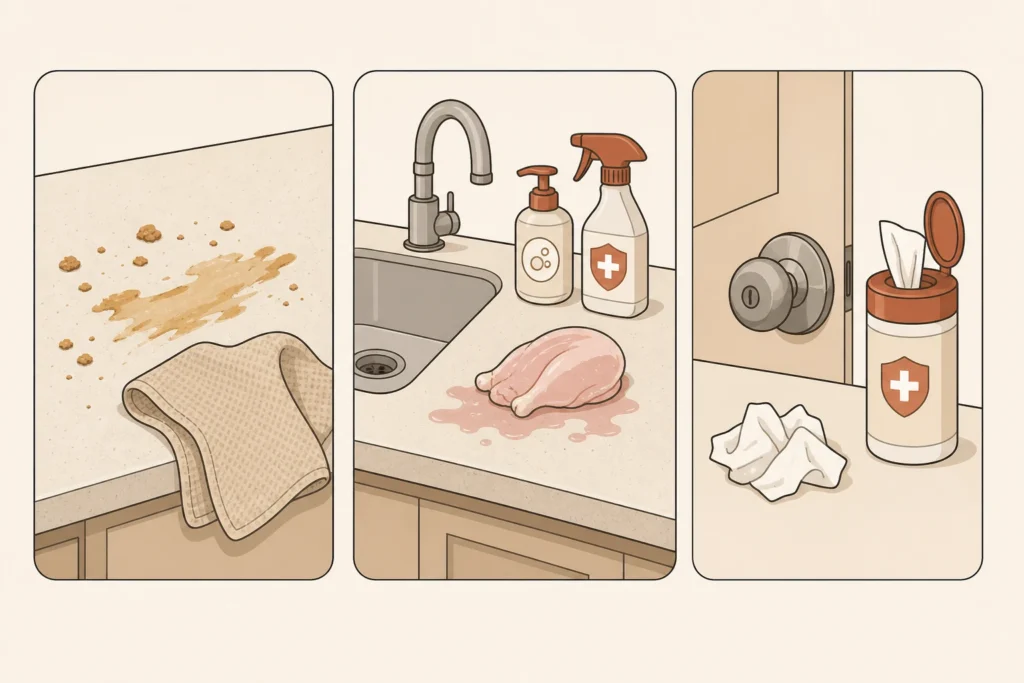
The table gives you permission not to turn every ordinary wipe-down into an escalation. A diagnosed contagious illness may call for a more specific set of targeted surfaces or product claims, but that does not change the default for crumbs, fingerprints, or routine grime.
A disinfectant only works if the label can do its job
I find the quick spray-and-immediate-wipe habit especially frustrating because it creates the ritual of disinfection while skipping the conditions that make the claim meaningful. When disinfection has a purpose, the order matters.
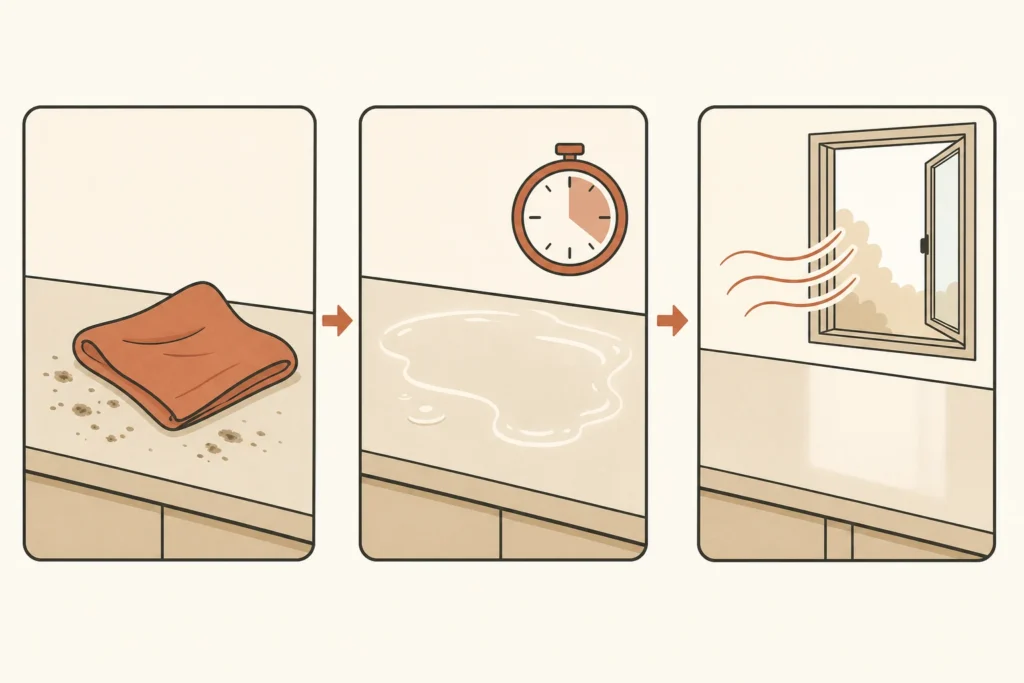
- Remove crumbs, grease, and other visible soil first, so the next product reaches the surface rather than sitting on debris.
- Confirm that the product label names the intended use site and, when relevant, the organism you are targeting. An EPA registration number identifies the registered product, but it doesn't approve that product for every surface or germ.
- Apply the product exactly as directed. Ventilate when the label calls for it, wear any listed gloves or eye protection, and never mix cleaning products. For food-contact surfaces, follow the product's after-use directions, including any required rinse.
- Keep the surface visibly wet for the full contact time printed on the label. A fast spray-and-wipe may clean the surface, but it doesn't meet the disinfecting claim when the listed wet time isn't completed.
The surface gets a vote, too
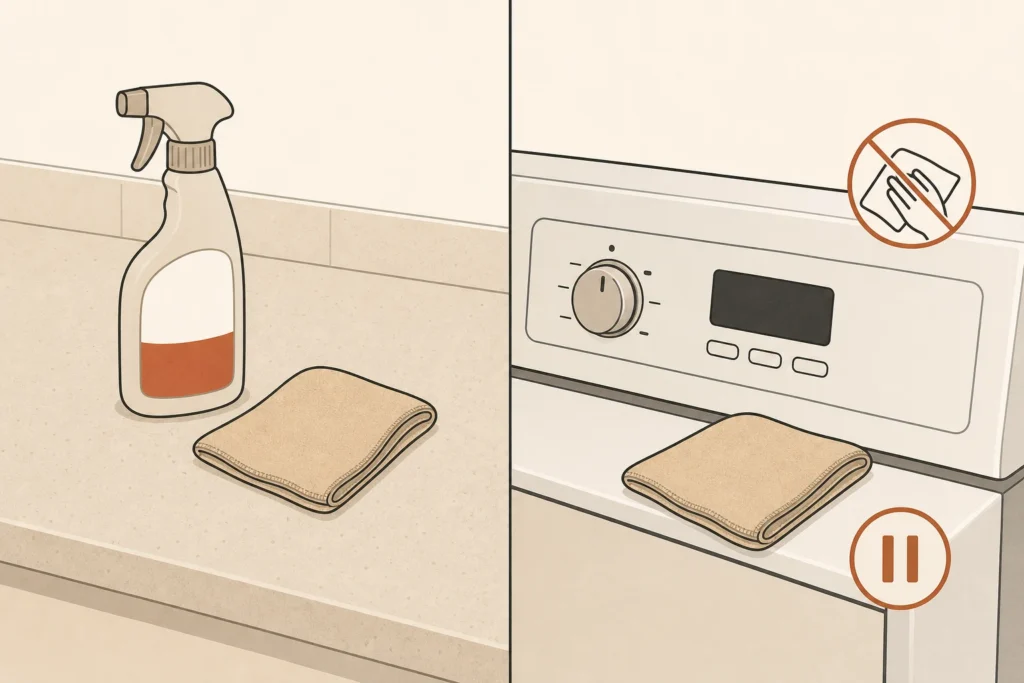
A hard-surface disinfectant isn't automatically appropriate for every appliance exterior, painted panel, control, or finish. If the item's stated care limits exclude that chemistry, broad hard-surface eligibility does not override the restriction, so use soap and water for routine cleaning or, when a defined event warrants escalation, choose a compatible product approved for that surface. One current Whirlpool range care specification starts general cleaning with soap, water, and a soft cloth or sponge, while noting that bleach, ammonia, rust removers, and sodium hydroxide can stain some metallic painted exteriors, but that is one finish-specific example, not a universal appliance rule.
I find it satisfying to put the disinfectant back after an ordinary cleanup because stopping is part of the decision, not evidence that the job was neglected. Clean ordinary soil, escalate for a defined event, and let the label control the extra step, because a routine wipe-down doesn't become more responsible merely because it uses a stronger product.
Sources and references
- Centers for Disease Control and Prevention: When and How to Clean and Disinfect Your Home (2025-01-31)
- U.S. Environmental Protection Agency: What’s the difference between products that disinfect, sanitize, and clean surfaces? (2025-10-08)
- U.S. Environmental Protection Agency: Selected EPA-Registered Disinfectants
- Whirlpool: Owners Manual: Range Maintenance and Care (2026-03-01)
- U.S. Environmental Protection Agency: Care for Your Air: A Guide to Indoor Air Quality