

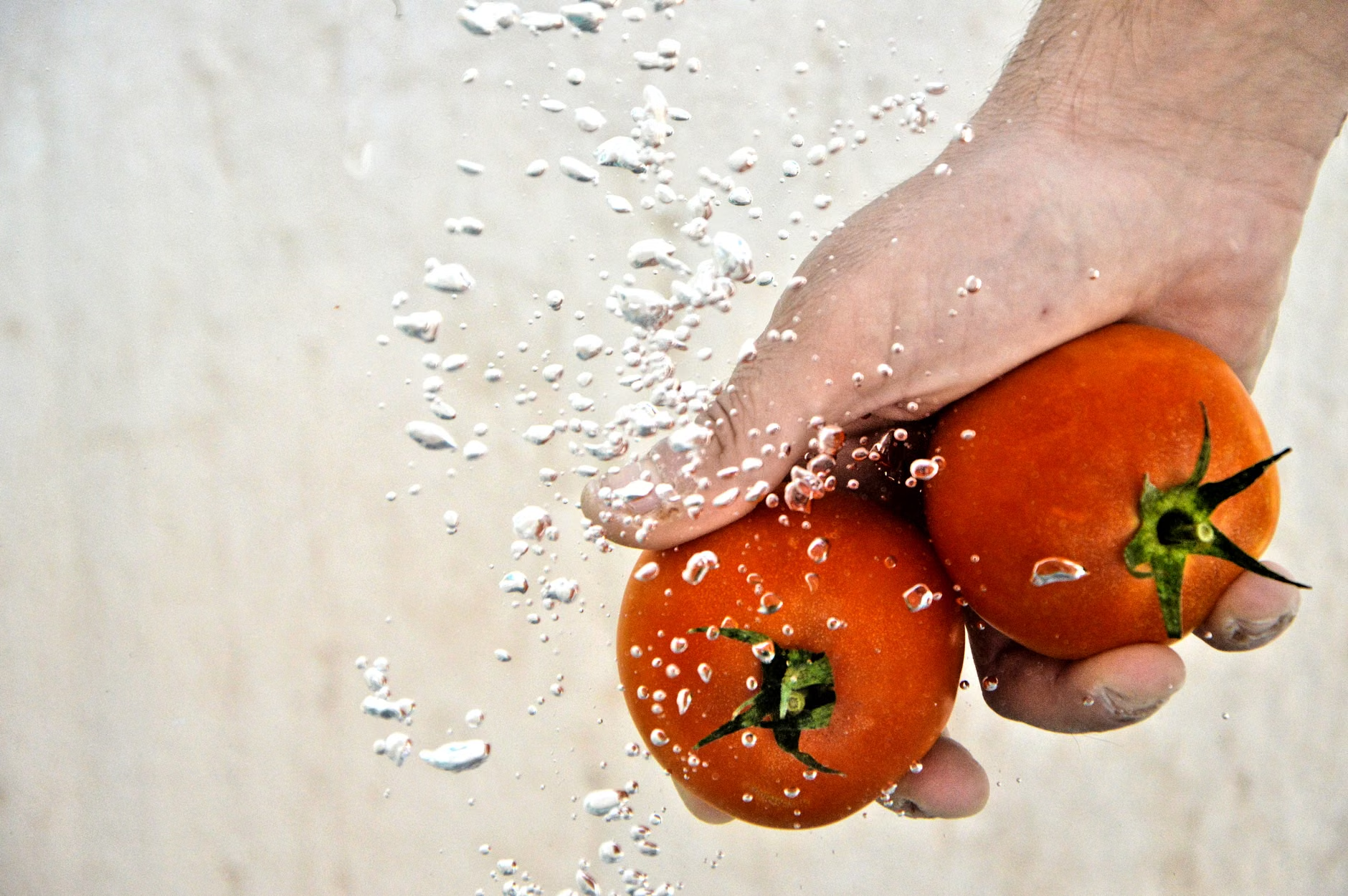
No, just run water over it. No soap, detergent or store-brand produce cleaners. The FDA doesn't recommend washing your produce with any of these products. They can penetrate into your produce even if you rinse them off. There is one instance where this doesn't apply to using a stronger wash: produce that is packaged as "prewashed" or "ready-to-eat".[1]
This isn't saying that all produce cleaners on the market are bad. There have been lab studies done comparing different methods. A study done in 2012 showed that there was no treatment that surpassed running water on all bacteria and produce. This can't be used as evidence that these won't help prevent illness in your home or that these products are ranked best to worst. Washing your produce can remove some bacteria but will not remove all of it.[1][5]
1. Check the package and condition
Make sure you read the directions on how to wash your produce before you open the product. Just because it's in a bag does not mean it was washed. Check if it says "prewashed" or "ready-to-eat". You can consume these products as they are. If you decide to wash them again, just make sure to use clean hands and utensils. You could be adding more bacteria by washing them again.[1]
Look over your produce and pick out anything that is rotten. The FDA suggests that you cut away any parts that may be damaged or have bruises before consuming them. However, throw out your produce if it is rotten. Cutting off bruising is different than trying to wash it away.[1]
You shouldn't be washing produce that has been recalled. Throw it away and move on. You should now have all your produce that is good to eat and know what you need to wash and what doesn't need to be washed.[3]
2. Rinse produce before cutting it
Before you begin preparing your food, wash your hands with soap and water for 20 seconds. Make sure to use clean knives, cutting boards and utensils. Keep your produce away from raw meat, poultry and seafood. Again, only use soap when washing your hands.[1][2]
Run your produce under water before you peel or cut, even if you are going to throw away the skin. When using a knife, you can transfer dirt and bacteria from the outside of the produce to the inside. So when cutting a melon, you would want to wash the melon before cutting, not after.[1][2]
Depending on your produce, you can wash it differently. If your produce allows it, scrub it with your hands under running water. You can also use a produce brush to wash your melons and cucumbers. Berries should be gently washed under cold running water. For leafy greens that are not prewashed, separate each leaf and rinse under running water. Don't do this if your greens are marked ready-to-eat.[1][2][4]
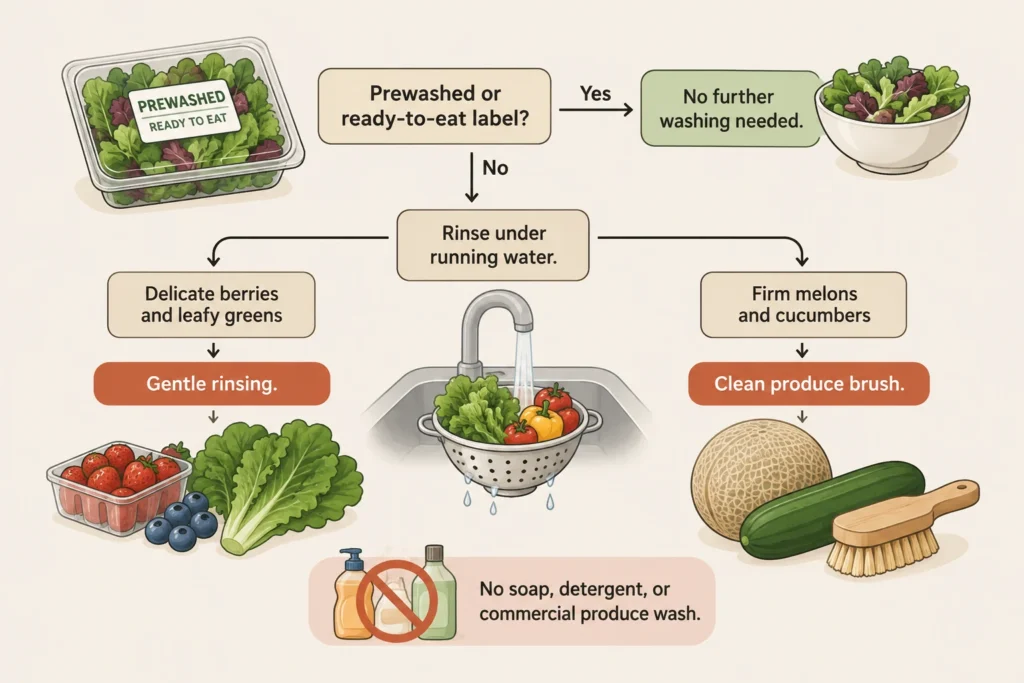
Make sure that your produce is free of dirt and you didn't damage it while washing, and that you washed the outside of the produce before cutting into it. There is no way to tell if bacteria are still present.[1]
3. Dry produce and refrigerate promptly
Pat your produce dry with a clean cloth or paper towels. It's best to wash your produce right before you use it. If you need to prepare your food ahead of time, make sure to dry your produce before storing it.[2][4]
Store any perishable prepared food in the refrigerator within 2 hours. If the temperature is above 90°F, you have 1 hour to refrigerate. These times are not recommended; you should get your food in the fridge as soon as possible. Once your produce is cut, it is no longer good on the counter. You would need to refrigerate your cut melon pieces after you prepare them.[1][3]
Make sure your refrigerator is at 40°F or lower. The settings on your fridge may not be cold enough. You're done once you have your washed produce dried off and in the refrigerator if applicable. If your prepared perishable food has sat out too long throw it away.[1][3]
Sources and references
- US Food and Drug Administration: Selecting and Serving Produce Safely
- US Food and Drug Administration: 7 Tips for Cleaning Fruits, Vegetables
- Centers for Disease Control and Prevention: Preventing Food Poisoning (2025-11-24)
- Colorado State University Extension: Guide to Handling Fresh Produce
- International Association for Food Protection; University of Georgia researchers: Efficacy of Various Consumer-Friendly Produce Washing Technologies in Reducing Pathogens on Fresh Produce (2012-08)