

Your refrigerator should be kept at 40° or lower. 37° is a good number to start with based on information from GE and Whirlpool. Just remember that it's below that max number. You can't rely on your setting to know that your food is being stored safely. Use a stand-alone thermometer and take precautions if it doesn't seem to be cold enough.[1][3][5]
1. Measure the central storage area
Determine if your refrigerator is displaying a set temperature or current temperature. GE has information about refrigerators that display only a set temperature and some that display the current temp. Your manual will state if yours shows the current temperature. If you have a dial with numbers on it, those are just settings.[4][5]
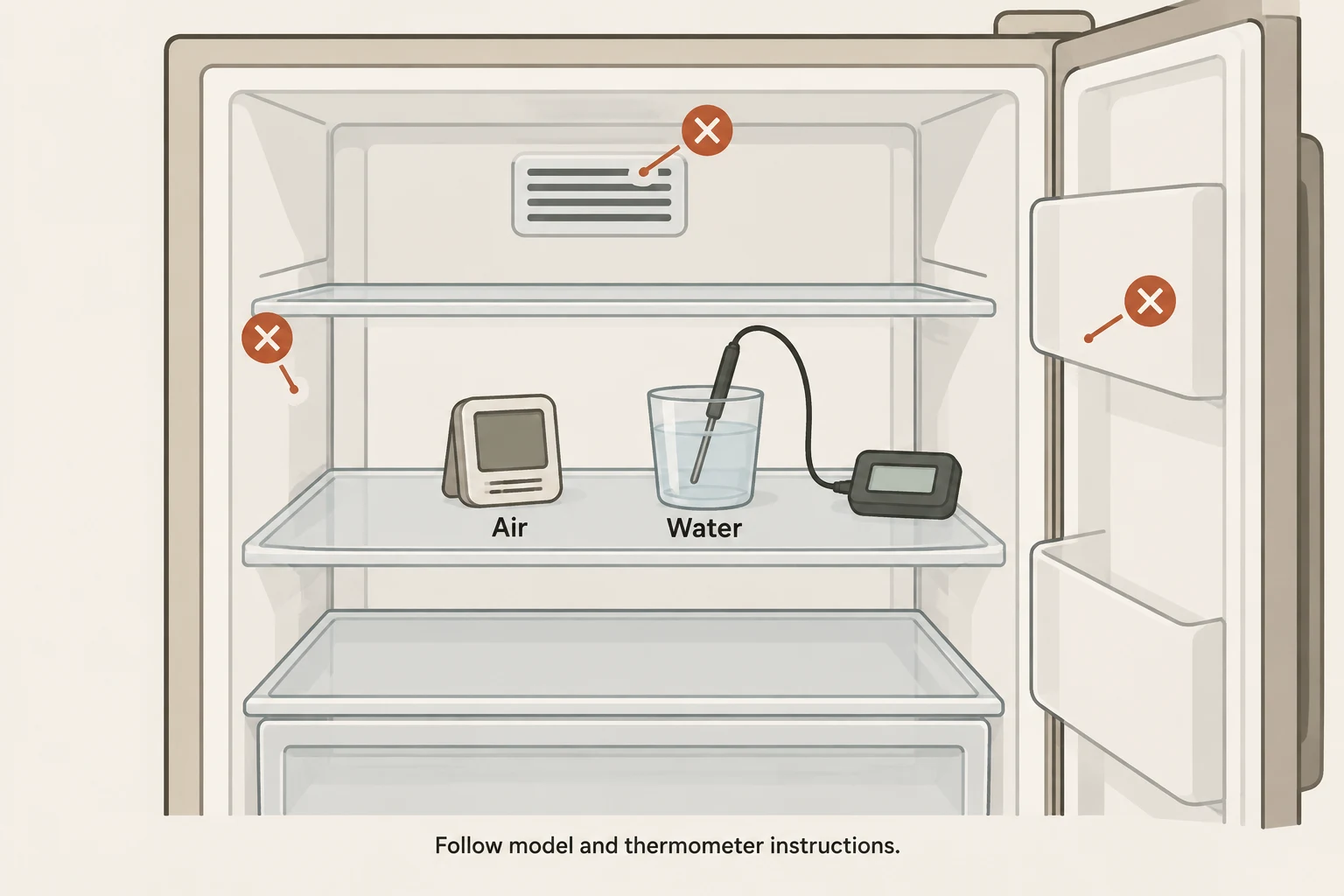
Position a refrigerator thermometer in the middle of your fridge, not touching the door or any walls. Keep it away from vents that blow cold air unless otherwise instructed by your refrigerator's manual. The FDA states to allow 5-8 hours before taking a reading. Don't open the refrigerator unnecessarily and note where you placed it and what time. This way you can compare when you take your next reading.[5][6]
You can use this if you're getting different air temperatures. The USDA suggests using a thermometer that can read temps in water and placing it in a cup of water in the middle of your fridge. Allow 5-8 hours to pass. Be sure to follow your thermometer's requirements for depth in water and other instructions. Don't let any of the display get wet if your thermometer has an electronic display. Never put a thermometer designed for your refrigerator in water unless the manufacturer's instructions state that you can.[2][3]
All these temperatures will give you different information. The temperature of the air will change when you open the door or if your refrigerator is running. Using water will tell you if that area of your fridge is staying at a cool temperature for longer periods of time. It still won't tell you what the temperature of all your foods is. If you want to check a specific food, make sure to use a thermometer designed for that purpose. That will only tell you the current temperature of the food and not what it may have been exposed to.[3][8]
2. Evaluate warm readings and food exposure
One high air temperature doesn't mean all of your foods reached that temperature. Try checking again under similar circumstances or try using the water method. There isn't a certain amount your refrigerator air temp should spike by. Your refrigerator thermometer may have the ability to store the highest temperature it read but will not tell you how long it was at that temperature.[3][7]
An air temp that is consistently higher than allowed or a temp using the water method that stays higher than what's recommended is too high. Make sure to look up your thermometer to see what it's accurate to. If you see that your thermometer only reads in tenths, it can give you a false sense of security. Having a temp of 40° means that there is no room for error.[1][7]
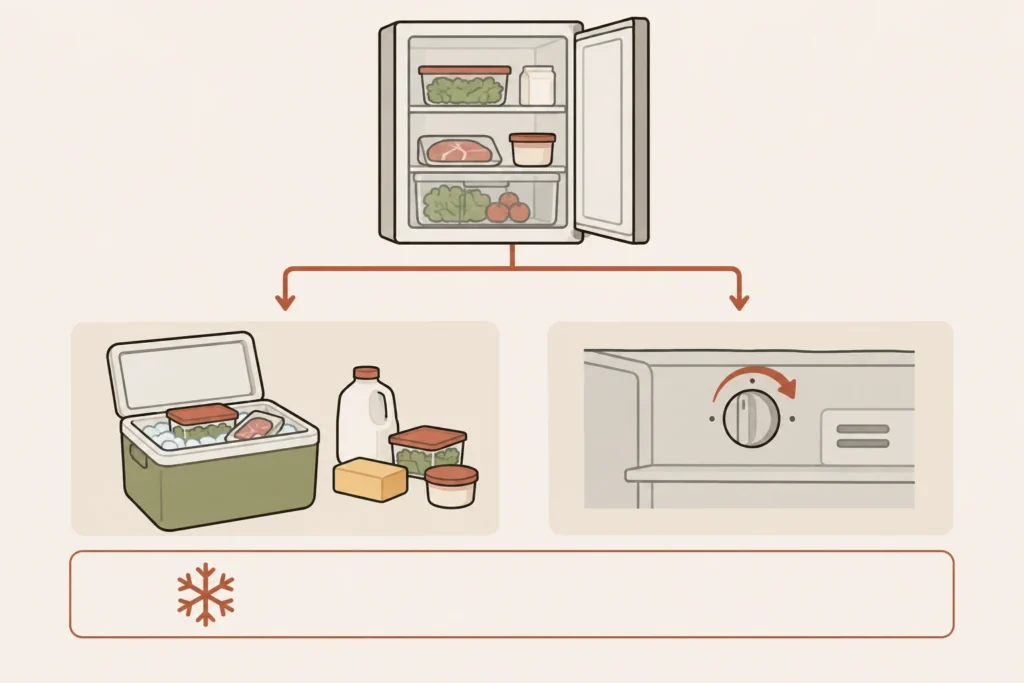
When it's determined that your food is not properly being cooled or heated, transfer any perishable goods to another fridge or ice chest. Make sure that it is under 40°F. Don't keep them in your refrigerator while you are performing another long process to test your unit. You need to fix your refrigerator and determine if your food is good or not.[8]
If your food has been exposed to temps of 40°F for two hours or more, you should throw out any perishable foods: meats, milk, eggs and cooked food. If you know that your food was warm but you are unsure how long, the FDA states that you should throw out the refrigerated food. There are some items that will not follow this rule. But don't taste your food to see if it's safe or assume it's safe because it read cold later on.[1][8]
3. Correct one cause and recheck
Make sure that your refrigerator is set to cool. Check to see if any packages are keeping the door from closing. Check that your seal is flush with the refrigerator and no food is blocking air vents. Once you find what may be causing the issue, change your temp setting. You may have found why your unit is not working properly but did not find why it may be malfunctioning internally.[5][9]
Change your temperature to one step colder. If your reading calls for it. Know which direction is colder on your dial. It takes about 24 hours for your refrigerator to reach its desired temperature according to GE and Whirlpool. Which is different then waiting 5-8 hours to take a reading. Your refrigerator needs time to cool down when you change a temp setting. And your thermometer needs time to reach an accurate reading. Neither time allows your food to remain longer at an unsafe temp.[2][3][5][6]
If you notice your food freezing by the vent and the rest of your refrigerator reads fine. Move your food away from the vent before increasing your temp. Change your temp by one step warmer and take readings as instructed by your unit.[5]
Take your reading after it has reached its desired temperature. In the same spot that you took your original reading. If you still have problems with your refrigerator not cooling. After following these steps and adjusting your temperature setting. You will want to have your unit serviced. Be sure to tell them what your setting is. How you are taking your reading and where and what your readings were and how long it has been since your last adjustment. Store your perishable foods in a cold area that you know is safe until you get your refrigerator fixed. Do not take any panels off or try to repair the issue yourself.[8][9]
Sources and references
- US Food and Drug Administration: Refrigerator Thermometers, Cold Facts about Food Safety
- USDA Food Safety and Inspection Service: Appliance Thermometers
- GE Appliances: Refrigerator, Measuring Internal Temperatures
- GE Appliances: Refrigerator, Set and Actual Temperature Settings
- Whirlpool: Tips for Properly Setting the Controls
- US Food and Drug Administration: What You Need to Know About Preventing Listeria Infections
- ThermoWorks: RT801 Digital Fridge/Freezer Alarm Thermometer Instructions
- USDA Food Safety and Inspection Service: Keeping Food Safe During an Emergency (2013-07-30)
- GE Appliances: Refrigerator, Not Cooling Enough