

A crowded refrigerator hides the food you meant to use
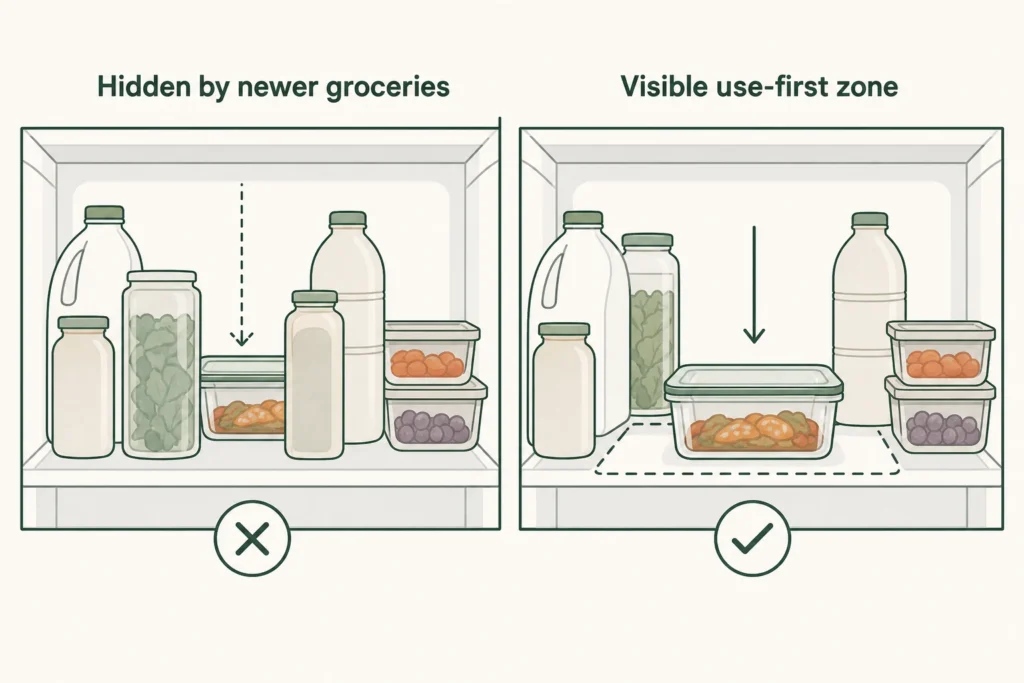
An older container of leftovers rarely announces itself. New groceries move in front, the container drifts backward, and by the time you find it, dinner has become waste plus one unpleasant cleanup job.
This is usually a visibility problem, not evidence that you need matching bins. A useful layout does two things: it protects the food-safety rules that are not negotiable, then gives the food needing attention the easiest place to see. Styling is optional. A clear path from “opened” to “used” is not.
Build the layout in two layers
Start with safety, then organize around your household. This matters because universal shelf maps are often too confident: vents, drawers, and cold spots vary by refrigerator. Your model manual should settle appliance-specific questions, but the basic setup is straightforward.
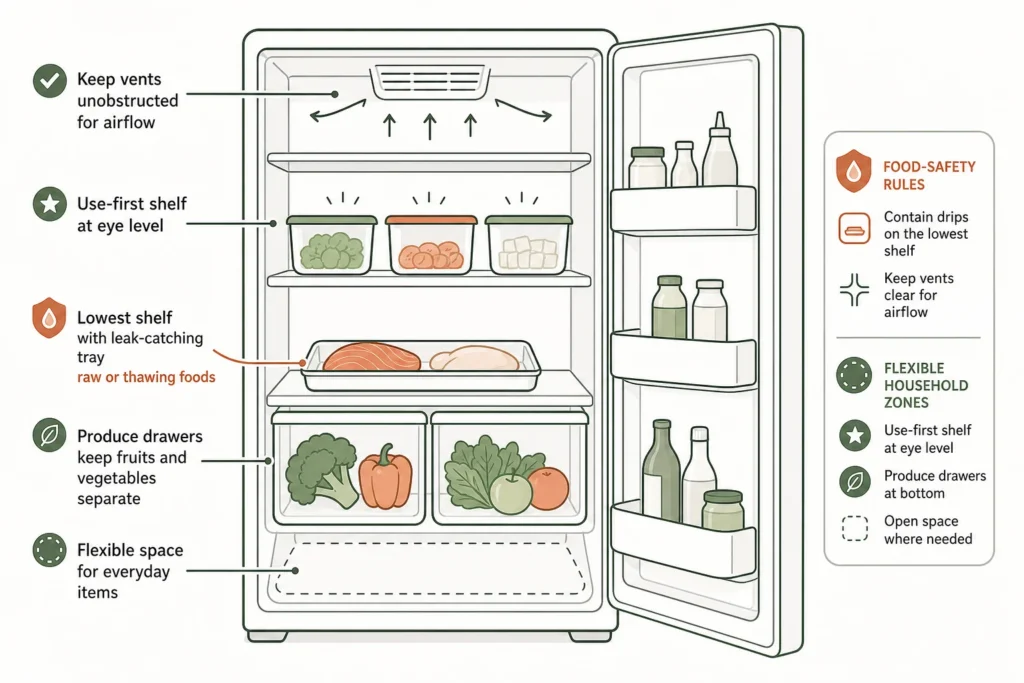
- Verify that the refrigerator stays at 40°F or below. Use an appliance thermometer if the display does not show the actual interior temperature.
- Put raw meat, poultry, seafood, and thawing food in secure packaging or a leak-catching container on the lowest practical level, below ready-to-eat food.
- Find the vents and keep packages away from them. Blocked airflow can create warmer areas or freeze food sitting near the airflow path.
- Keep produce in its designated drawers when practical. Assign other shelves and door bins by what you reach for, leaving enough room to see and move containers.
Use a tray or bin only when it pulls food forward, catches a possible leak, or makes cleanup easier. Filling every inch with organizers merely gives the clutter sharper corners.
Make the use-first zone do one useful job
Refrigerate perishable groceries and leftovers promptly, then reserve one easy-to-see area for ready-to-eat foods that need attention. Put cooked leftovers in shallow, covered containers, mark the preparation date, and generally use or freeze them within 3 to 4 days when held at 40°F or below. For opened perishable prepared foods, the opened date is a visibility cue, not a universal deadline; follow the package directions or food-specific cold-storage guidance instead.
Keep this zone narrow enough to understand at a glance. It can hold tonight’s leftover meal or an opened ingredient, provided everything remains safely separated from raw food. It should not become a small museum of jars nobody wants to decide about. The date is a decision cue, not permission to ignore safe storage limits.
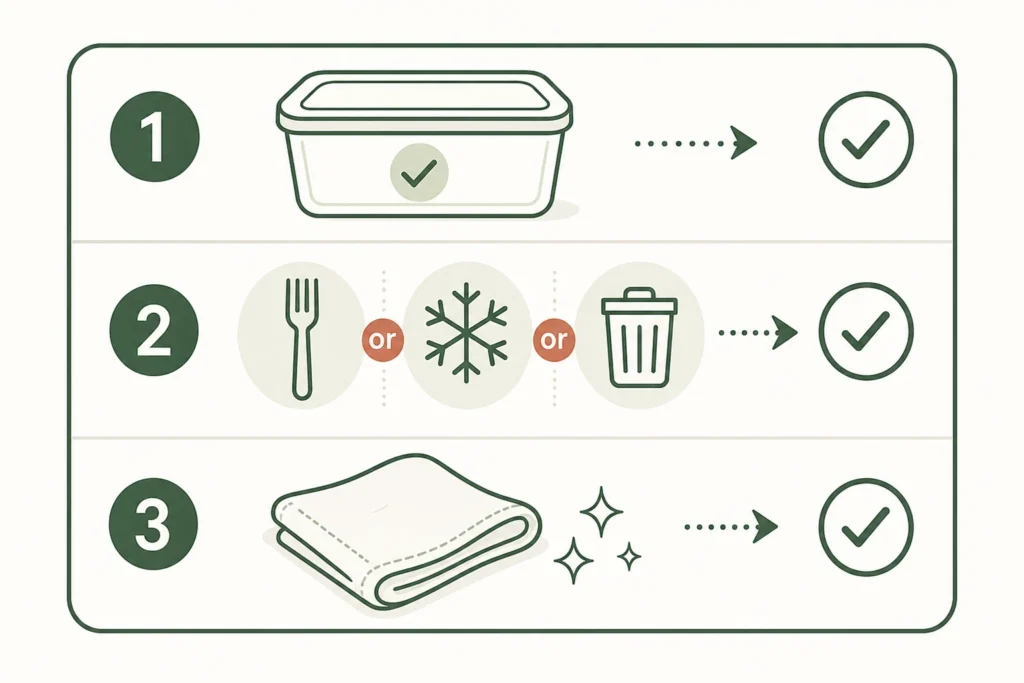
Use a three-minute restock check, not a full reorganization
A layout survives ordinary life only if restoring it is easier than ignoring it. Before unloading groceries, make one quick pass through the use-first area.
- Decide whether each older item will be used soon, frozen if appropriate, or discarded according to safe storage guidance.
- Move new leftovers and opened prepared foods into the visible zone, date them, and avoid burying them behind bulk purchases.
- Wipe fresh leaks immediately. Rinse or replace the tray that caught them before residue hardens and starts contributing to odor.
- Stop when food that needs attention has a clear path forward. The refrigerator does not need to look empty or styled.
If an established smell or sticky spill remains after the layout reset, move from organization to cleaning with [How to Clean a Refrigerator Properly and Eliminate Bad Odors](https://cleanhomeroutines.com/how-to-clean-a-refrigerator-properly-and-eliminate-bad-odors-3/). Otherwise, repeat the short check during grocery unloading or before trash day. That is enough to keep the system alive.
Sources and references
- USDA Food Safety and Inspection Service: Refrigeration & Food Safety
- FoodSafety.gov: Cold Food Storage Chart
- Whirlpool Product Help: How to Check the Air Vents for Blockage, Ensuring Proper Air Flow
- ReFED: Understanding Consumer Food Waste in the U.S. and Strategies to Reduce It (2025-07-24)
- Penn State Extension: Tips on Preventing Foodborne Illness (2026-04-01)