

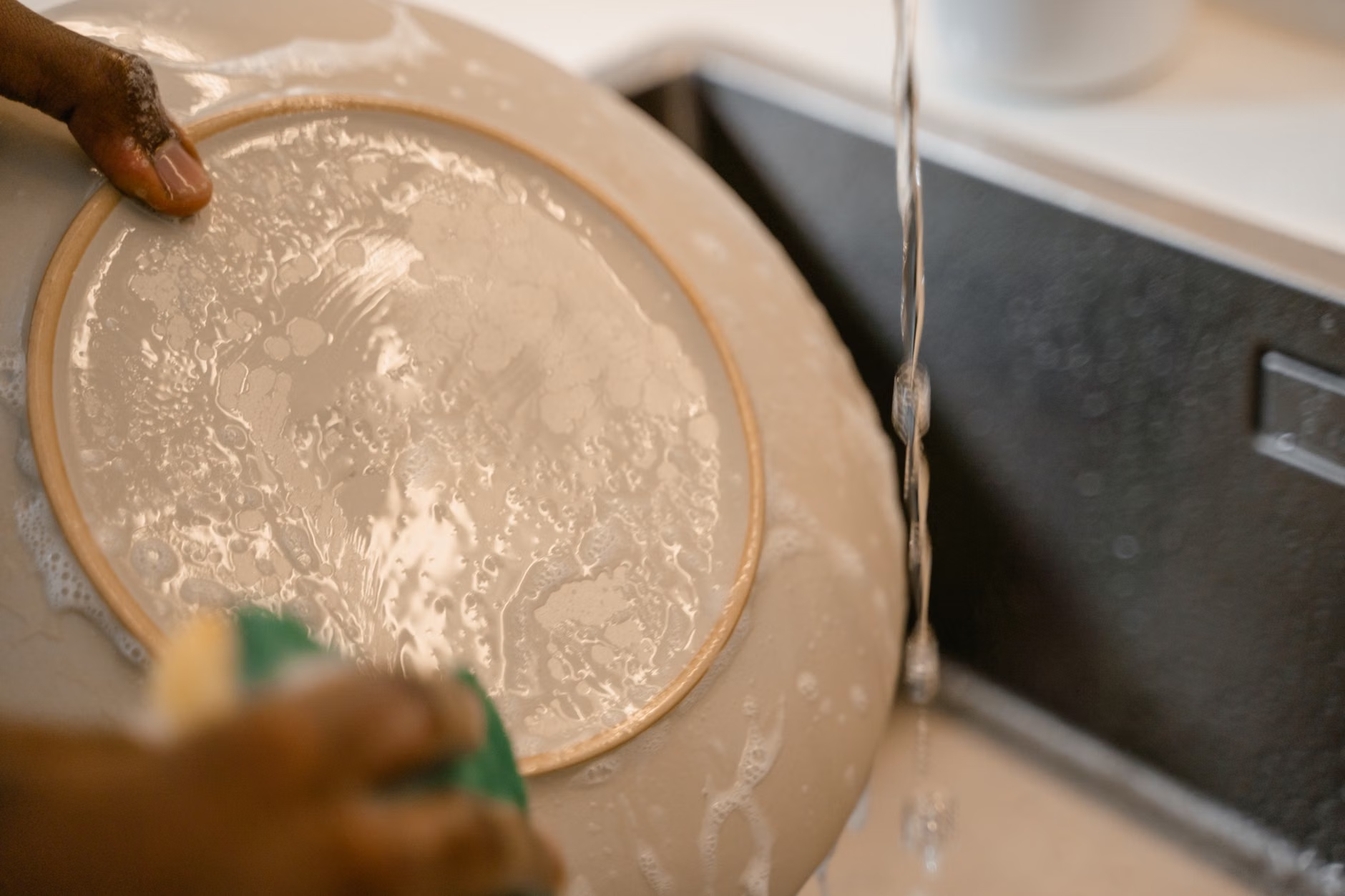
Wet dishes don’t automatically mean your dishwasher is failing. Droplets on plastics, puddles in recessed mug bases, and moisture on the tub walls can all remain after normal operation. I’d look more closely when glass and ceramic dishes that previously dried well start coming out wet across the load under comparable settings and unloading conditions.[1][2][4]
Imagine I’m unloading before breakfast: the plates are dry, but a plastic lid drips onto my sleeve and an upside-down mug spills its little reservoir onto the counter. So much for saving a chore. I’d dry those few items and change the mug’s loading angle next time, if permitted, not send the whole clean load through another wash.
Where the water sits matters
| What you notice | What it can mean |
|---|---|
| Droplets on plastic; ceramic dishes mostly dry | Many plastics retain less useful heat for evaporation, so they can lag behind other materials. |
| A puddle inside an inverted mug’s foot ring | The recess holds water physically, even if the surrounding surface dries. |
| Wet interior walls; dishes mostly dry | With condensation drying, moisture collecting on cooler tub walls can be expected. |
| New, widespread wetness on previously dry glass and ceramic | Worth checking completion, settings, rinse aid, and timing, not proof of a bad heater. |
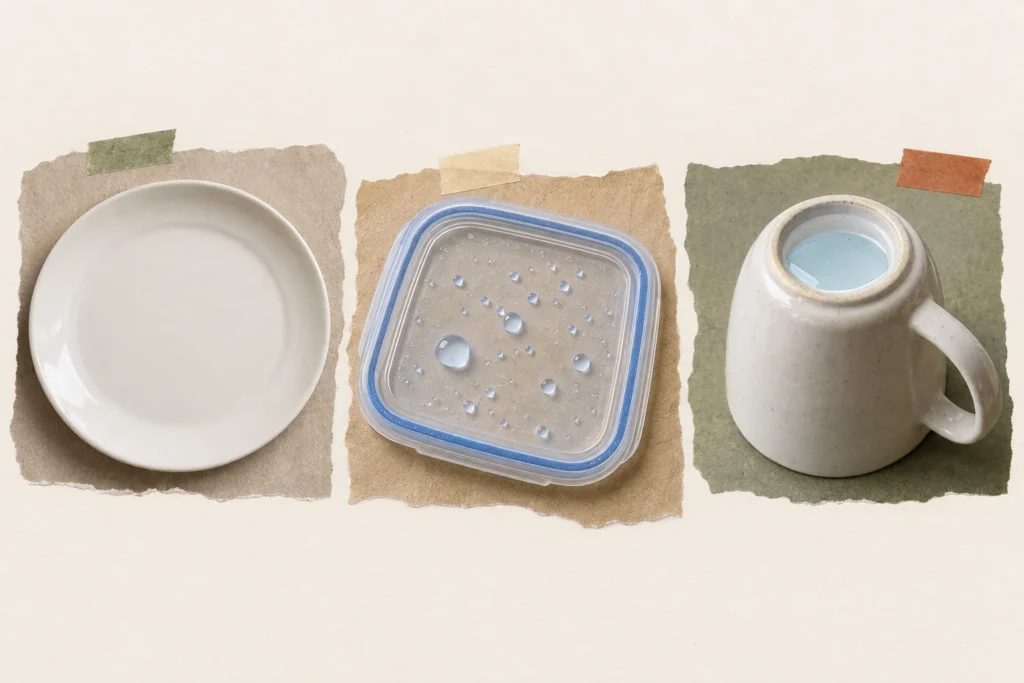
For a recessed item, try a stable tilt only if its care instructions and your dishwasher’s loading directions permit it. Keep spray access and rack restrictions intact. I wouldn’t move plastics to the bottom rack just to chase dryness. Moist tub walls also aren’t the same as unusual standing water or a leak; those need separate attention.[1][4][5]
Your new dishwasher may dry differently
Condensation drying uses heat retained from the final rinse: water evaporates from warm dishes and condenses on cooler interior surfaces. Heated drying adds heat; fan assistance moves air to help remove moisture. Those features can overlap. Whirlpool’s WDT730PAHZ, for example, has both Fan Dry and a Heated Dry option, while Bosch’s CrystalDry uses minerals to capture moisture and generate circulated heat.[2][3][5][8]
I wouldn't judge a replacement machine solely against the old one. Increased heat means slower drying, and can even leave behind droplets, especially on plastics. Enhanced drying can help, but not guarantee, that all recesses are emptied. The model’s design and features would play a greater role than a single drying label.[3][4][5][8]
If drying has actually changed
Make sure the machine finished the drying you expect before paying for service. Not all dishwashers make a sound while drying. Check your manual to see if the drying cycle is selected for your cycle, and whether there are other drying options available.[1][4][5]
A check of the rinse aid supply and its setting would also be wise before adding more heat. Rinse aid can aid in reducing beading on dishes, but not remove water from a trapped puddle. Bosch’s SHX78CM5N extra dry cycle, for example, can increase the final rinse temperature and is not suitable to dry delicate dishware. The drying option also needs to be suitable for the load.[1][2]
Users should also be mindful of when they open the dishwasher. Bosch’s model states to wait 30 minutes, but in general, check your model specifically. Users should also be mindful of automatic features. Forcing a closed door open on a Samsung can damage the dishwasher.[1][6]
After a relevant correction, compare the types of glass and ceramic items you are familiar with on the next load of dishes you need to wash, keeping the settings and the time at which you remove the dishes consistent. Manufacturing another chore isn’t necessary. This comparison is limited to a diagnosis. If there are lingering wetness issues after performing these checks, contact service and be prepared to provide the model number, cycle, options, unloading timing, and any error codes. These might help even if the only issue is wetness. There are a number of potential issues with the heater, fan, and control.[1][4]
A tripped breaker changes this advice. Stop using the dishwasher and contact service. Comparing loads won’t help, and there is likely an electrical issue.[4]
If only plastics and recesses are still wet, those items can be allowed to finish air drying before being put away. Rewashing a load for dryness isn’t addressing the issue. NSF sanitization applies to the sanitizing cycle only, not to the appearance of the dishes, after the sanitizing cycle completes.[4][7]
Sources and references
- Bosch: Use and Care Manual SHX78CM5N, document 9001642005_B
- Bosch: Tips to Maximize Drying
- Whirlpool: Dishwasher with Fan Dry WDT730PAHZ
- Whirlpool: Dishes Not Drying: Quick Fix Guide
- Whirlpool: Using a Heated Dry Cycle
- Samsung: Samsung Dishwasher Door Does Not Close
- NSF: Dishwasher Certification
- Bosch: CrystalDry Dishwasher Technology