

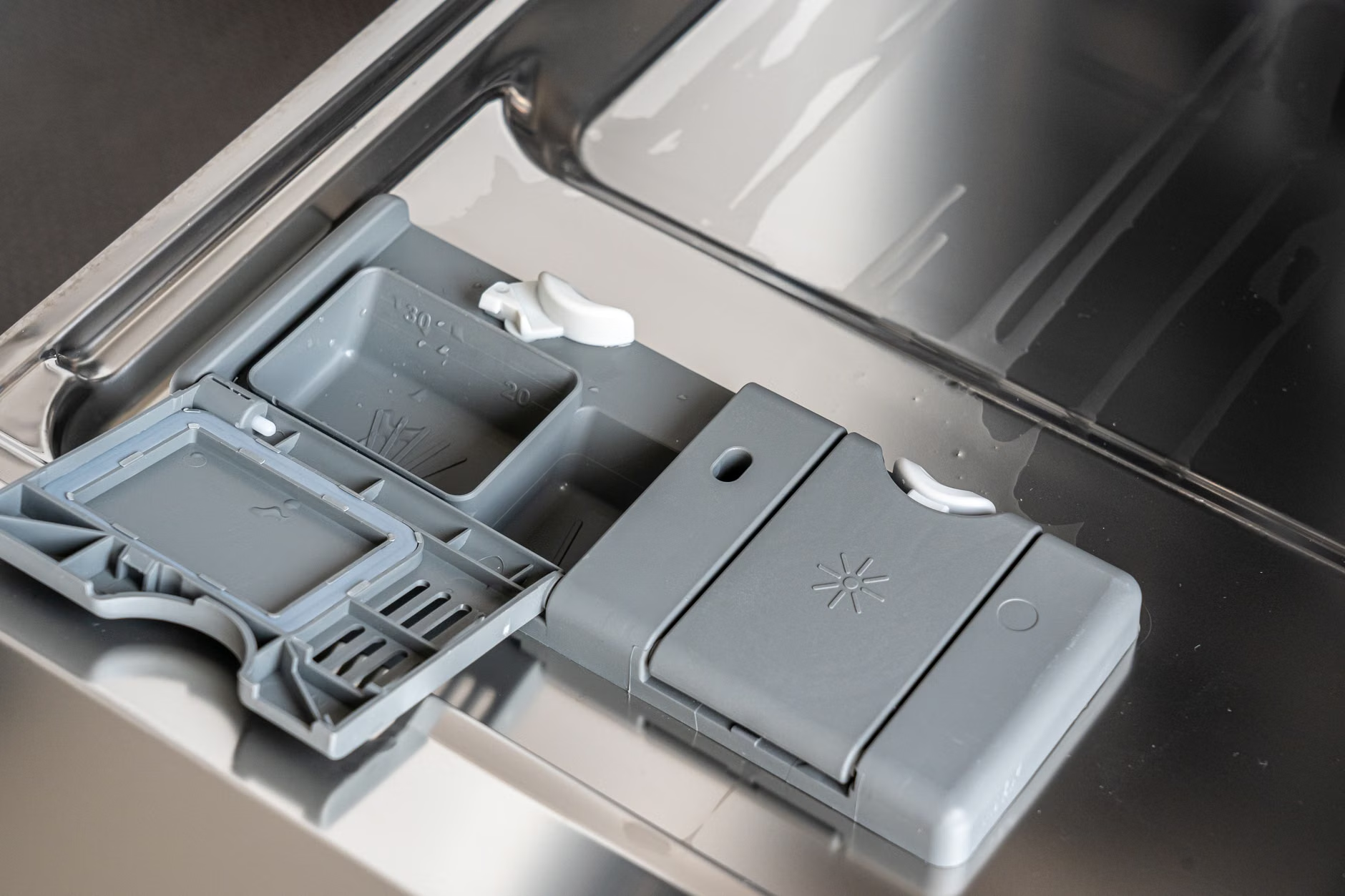
That milky haze may be sitting on the glass, or the glass surface itself may have changed. The first problem can often be cleaned away; the second cannot. Because hard water can leave removable deposits while very soft or softened water, excessive detergent, and aggressive washing can contribute to etching, changing detergent before testing can push you in the wrong direction.[1][2][3][4]
Test one glass before changing the dishwasher
- Choose an ordinary, undecorated glass marked dishwasher-safe. Do not experiment on crystal, painted or coated glass, metallic trim, an antique, or anything labeled for hand washing.
- Place only part of the cloudy area in white vinegar for about five minutes. Keeping part untreated gives you a direct comparison. Do not mix the vinegar with another cleaner.
- Rinse the glass and dry it with a soft, lint-free cloth. Judge the dry glass, since water can temporarily hide both film and surface damage.
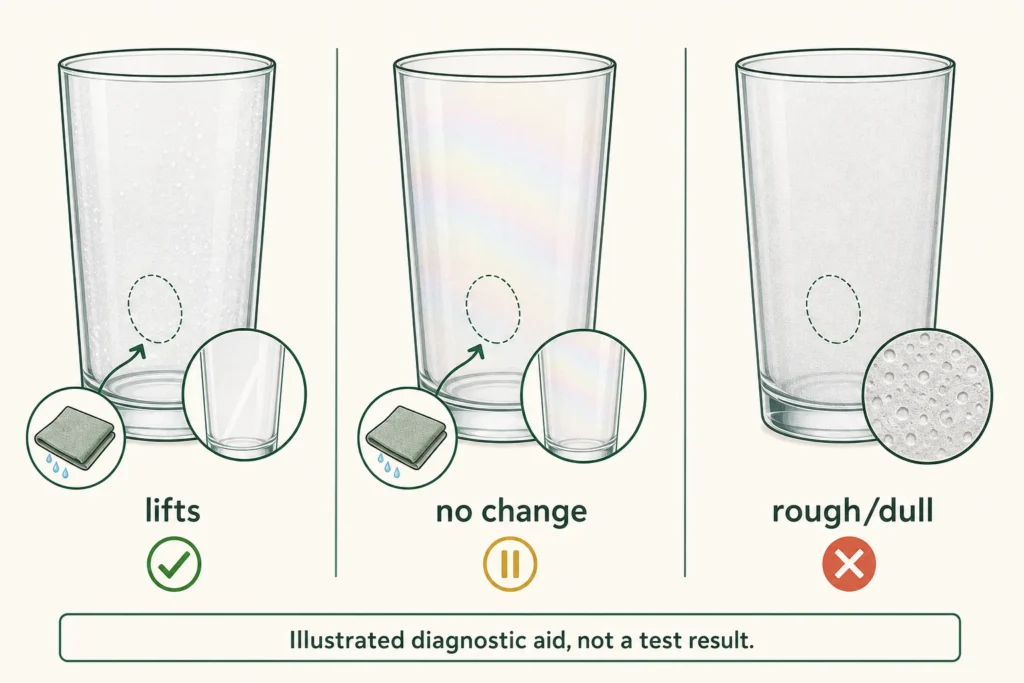
- If the treated patch is clearer, the haze behaves like removable surface film. If it does not change, stop escalating the cleaning. The surface may be etched or affected by another non-removable, silica-like condition. This test sorts the next action; it does not prove the exact chemistry of every haze.
What the result changes
| Observed result | Working explanation | Next action |
|---|---|---|
| Chalky, spotted, or cloudy film clears in the tested area | Removable mineral deposits or wash residue | Clean gently, then verify water hardness and rinse performance |
| Milky or rainbow haze does not clear, but the surface is not obviously rough | Possible silica-like film or early surface damage | Pause treatment and review water, detergent, cycle, and whole-load patterns |
| Dull or rough surface remains unchanged | Permanent etching is likely | Stop restoration attempts and prevent damage to other glasses |
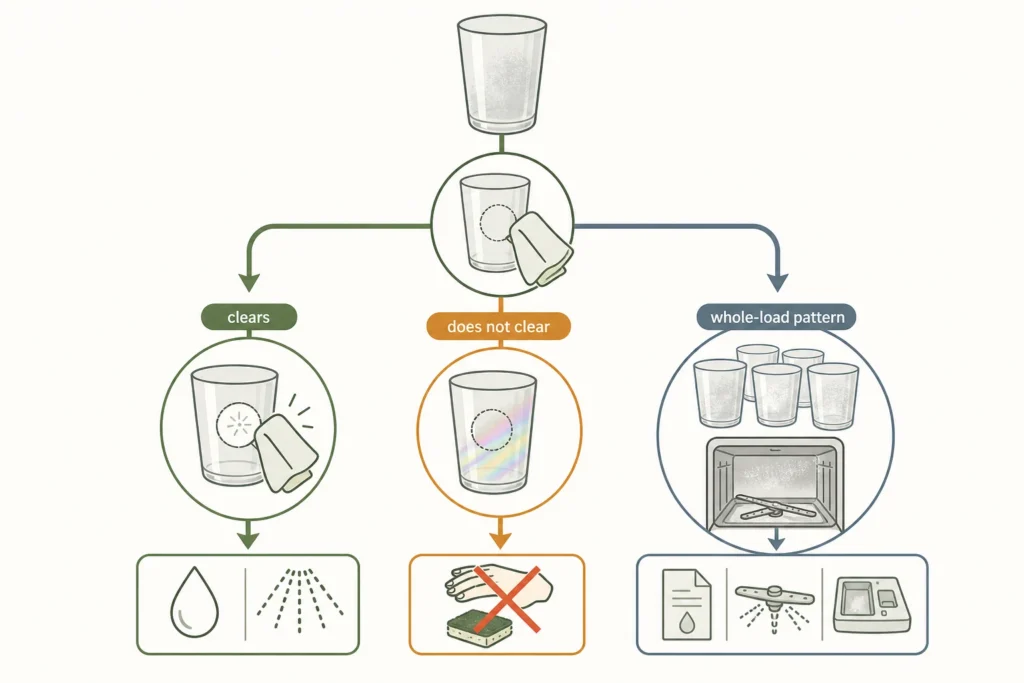
One old glass staying cloudy does not establish a dishwasher problem. The case for a water or rinse issue becomes stronger when similar spotting appears across several glasses, on other dishes, or as a pale deposit inside the dishwasher.
If the patch clears, remove the film and find the repeat cause
For ordinary dishwasher-safe glass, give the remaining film the same brief white-vinegar contact that cleared the test area, then hand-wash, rinse, and dry with a soft cloth. Keep this treatment at the sink rather than improvising an in-machine vinegar cycle or combining cleaners. Abrasive powders, scouring pads, and steel wool can scratch the glass, turning a removable clarity problem into permanent damage. Before adjusting detergent, find out whether the household water is hard, naturally soft, or softened by using your water utility's hardness information, a valid home test, or the current water-softener setup. Confirmed hard water makes recurring mineral film more plausible, but it does not mean that adding more detergent is automatically the right correction.[1][3][4][5][6]
If it does not clear, stop treating it as dirt
Confirmed etching cannot be cleaned away because the glass surface has been eroded rather than covered. A non-clearing rainbow or milky haze is harder to identify precisely at home, since manufacturer guidance also describes silica-related surface changes, but the practical answer is the same: repeated acid treatments and harder scrubbing are unlikely to restore the original luster, and abrasives can add scratches. An everyday tumbler can be kept or demoted according to whether its appearance and feel remain acceptable for ordinary use, not because another cleaner might revive it. Keep crystal, delicate stemware, and coated or decorated pieces out of the dishwasher unless their care labeling explicitly permits it.[1][2][3][4][6]
Change dishwasher conditions to match the diagnosis
Check your model's use-and-care instructions for the variables that actually change the answer: supported detergent type and amount for your water hardness, rinse-aid setting, any built-in softener or hardness setting, glassware cycle or heat options, and rack-loading instructions. Then follow the branch supported by the test and the pattern across the load.
- For removable, hard-water-type film, match the detergent and rinse-aid setup to verified hardness. Rinse aid may improve runoff, but turning it to the maximum without evidence is not a universal fix.
- For suspected etching, pay particular attention to naturally soft or softened water, detergent overdose, and unnecessarily long or hot washing. Use the least aggressive dishwasher cycle approved for the glassware, and avoid heavy prewashing when the dishwasher instructions warn that leaving too little soil can increase etching risk.
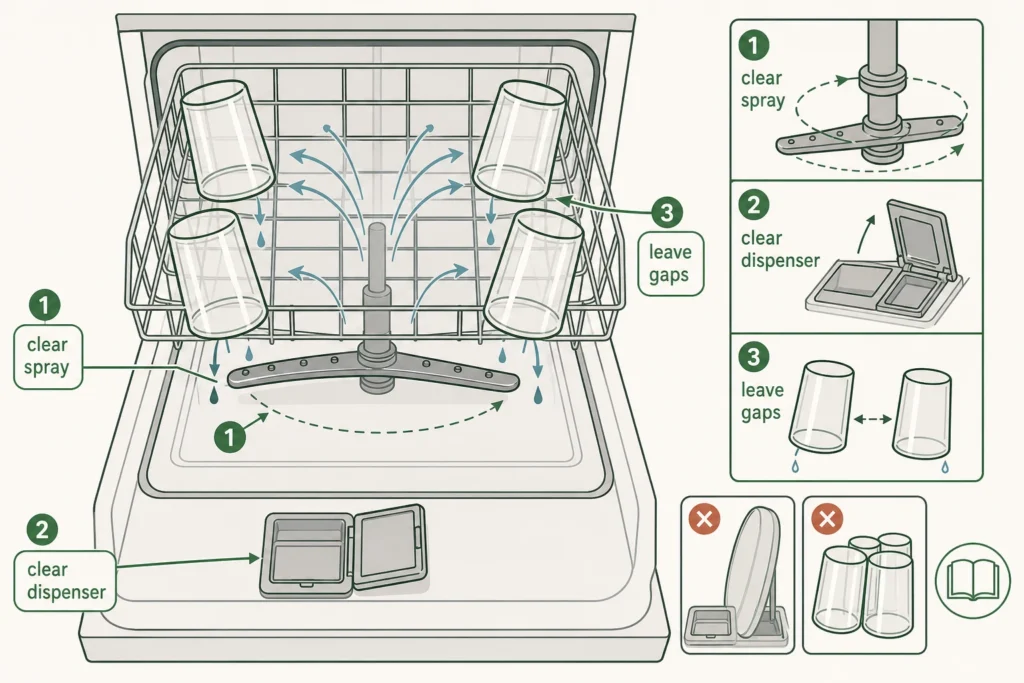
- For inconsistent residue across a load, make sure the spray arms can rotate, the detergent dispenser can open without hitting a tall item, and glasses are separated and angled so spray reaches them and water can drain.
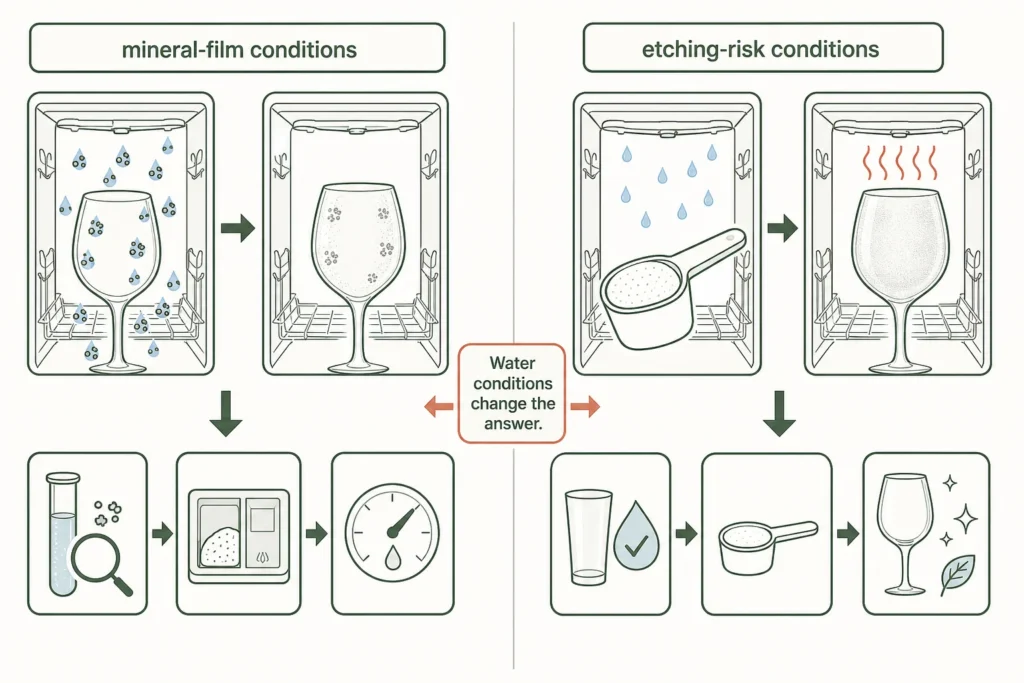
On the next comparable load, change only one variable rather than altering detergent, rinse aid, and cycle together. Keep the new setting only if comparable glasses emerge clearer. If a newly cloudy glass produces a different spot-test result, change diagnostic paths instead of escalating the same fix.
Sources and references
- Whirlpool: Whirlpool Product Help: Etching or Cloudy Glassware
- GE Appliances: GE Appliances Support: Dishwasher, Etching on Glassware
- Whirlpool: Whirlpool Owner’s Manual W11172665A
- Whirlpool: Whirlpool: How to Prevent and Clean Cloudy Glasses
- U.S. Geological Survey: USGS Water Science School: Hardness of Water (2026-08-24)
- Lenox Corporation: Lenox Brands Product Use & Care