


One more carton balanced beside an overfull container can look like carelessness, but the carton has usually reached a practical dead end. Its destination is full, awkward to open, unclear, or too far from where the packaging was emptied, so the counter becomes an unofficial waste-transfer station.
I once caught myself putting wrappers beside a full trash can because emptying it meant finding a replacement liner and making a separate trip outside, and what annoys me about this kind of pile is that everything in it has already been rejected, yet it still gets to occupy the space needed to rinse produce or start dinner. The useful fix is to repair the route, not demand more enthusiasm from the person holding a dripping wrapper.
Fix the first pause, not the evening pile
Watch the kitchen during three ordinary moments rather than emptying cabinets or redesigning the whole room. For each item, note where it is created, where it first stops, and what unfinished action stands between that pause and its proper exit.
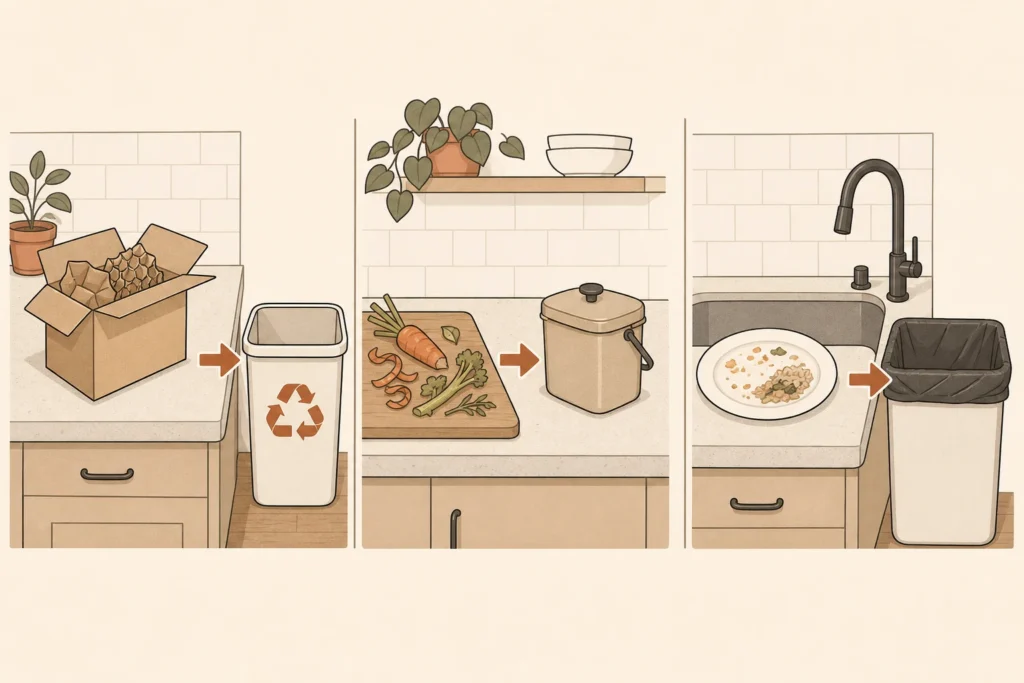
- Unpack one grocery bag. Follow boxes, film, receipts, produce ties, and unwanted food only until each item reaches its first stopping place.
- Prepare one meal. Notice whether peels, wrappers, trays, and food-soiled packaging can leave your hand without crossing the room or displacing something else.
- Clear one plate. Watch what happens at the sink, especially when the trash, recycling, or food-scrap container is already nearly full.
Fix the first repeated pause, not the largest pile you see later. Clean, dry packaging beside the sink usually points to sorting or access friction, wet scraps beside the cutting board need a reachable destination during prep, and a tied bag by the door means indoor containment worked but the final exit did not, while a plate-clearing jam that also costs sink capacity needs a separate way to [keep the sink usable when dishes pile up](https://cleanhomeroutines.com/keep-sink-usable-when-dishes-pile-up/).
Give each stream the shortest complete route
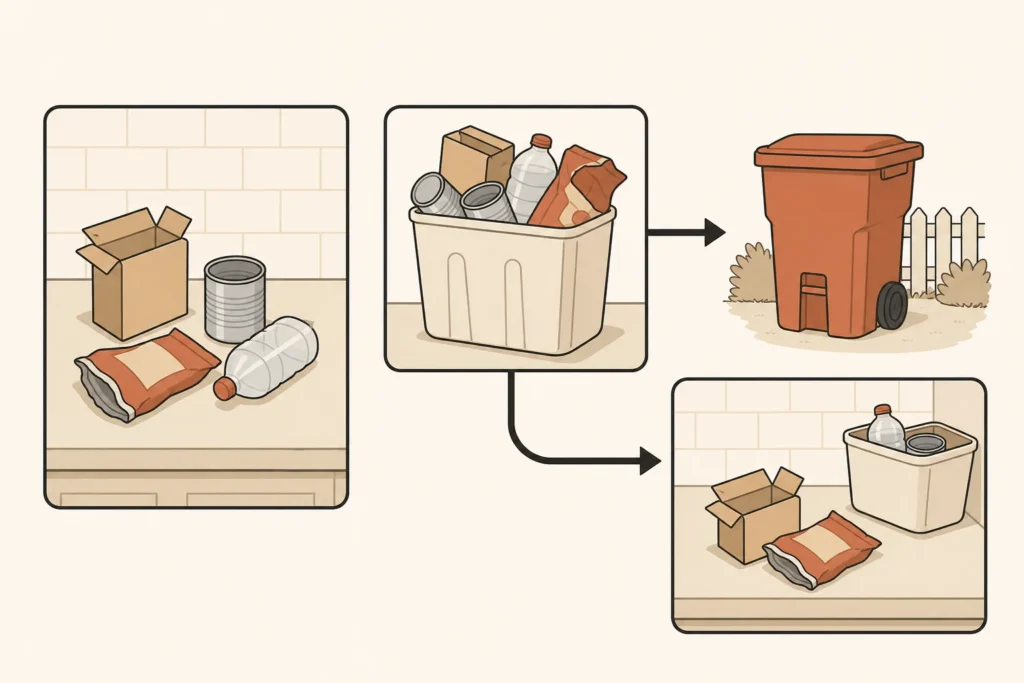
A waste stream needs its own indoor holding point only when its destination or removal timing genuinely differs from the items around it. I find matching multi-bin stations overrated when one compartment is always overflowing and another is mostly air, because sometimes recycling needs more holding room than trash because its packaging is bulkier, and sometimes it only needs a clearer path to an existing building or outdoor container.
Label recycling and organics containers only for materials accepted by the current city, hauler, or building collection rules that govern your household. Those rules vary, and neither a recycling symbol nor a plastic resin code establishes curbside acceptance by itself, so keep the sorting card short and limit it to the items your household regularly debates and the local destination already established for each one.
Food scraps have three possible routes: a local organics program, a home-compost method suited to the material, or regular trash when neither option is available. Where scraps are collected separately, a closed reusable container, regular emptying, washing after emptying, and occasional refrigerator or freezer storage can reduce odor between trips, but Seattle’s municipal guidance is only a local example because accepted scraps, compostable packaging, and liner rules still depend on your own program.
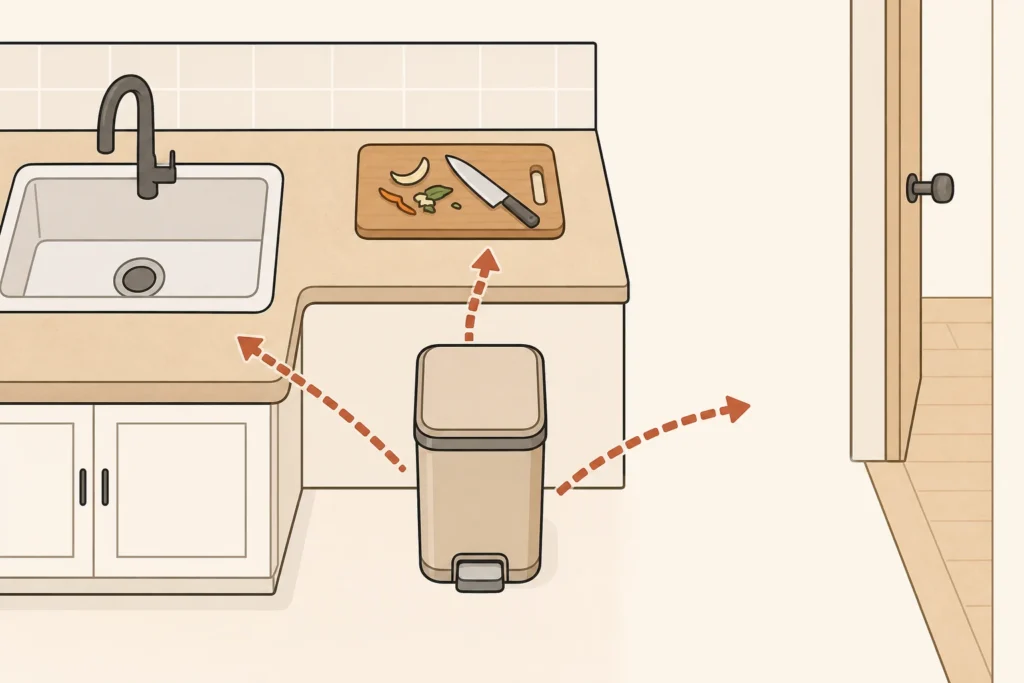
Test placement while someone is actually cooking, because the destination should be reachable when the waste is created without blocking the sink approach, prep area, appliance access, cabinet swing, doorway, or normal path through the room. A bin that must be moved before you can open the dishwasher has merely traded one bottleneck for another.
Let the symptom choose the smallest setup change
Overflow and bypass can look identical by evening, but they call for different fixes. A container that fills before its normal exit needs different capacity or removal timing, while one that remains partly empty as waste collects nearby has a location, opening, lid, or sorting-friction problem rather than a size problem.
| What lands outside the system | Likely blocked handoff | Smallest change to test |
|---|---|---|
| Clean packaging on the counter | Destination is unclear or inconvenient | Move the existing container closer or add a short local-rules label |
| Wet scraps near the cutting board | No reachable destination during prep | Place an appropriate washable container or the regular trash within easy reach |
| Clean recycling overflows before collection | Capacity and exit timing do not match | Try an earlier transfer or modestly increase holding space |
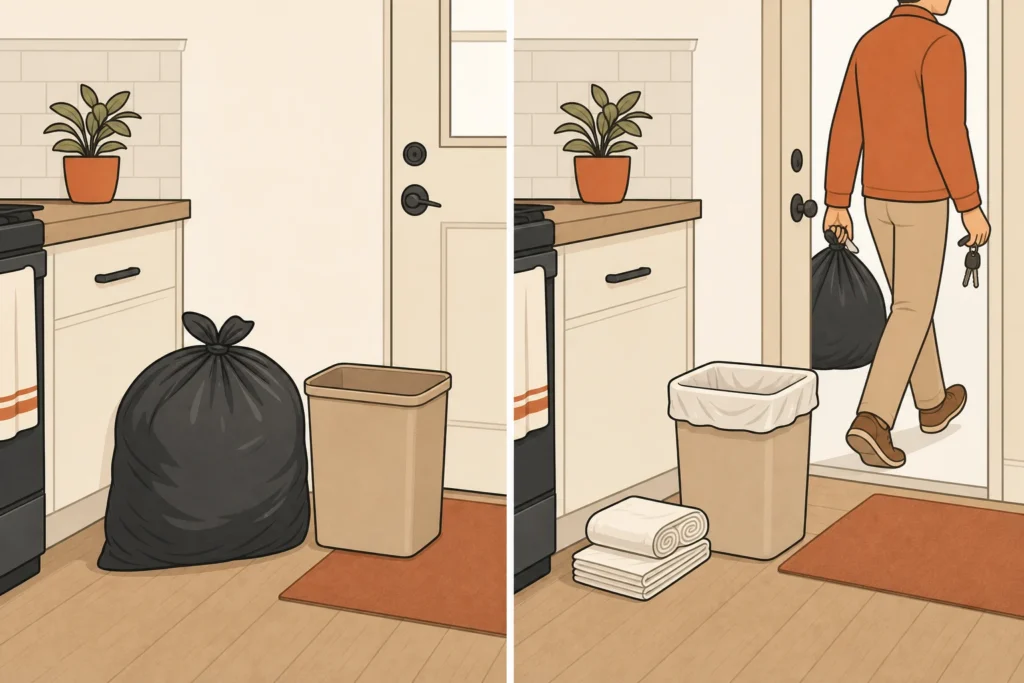
| A full trash bag waits by the door | Removal or relining is unfinished | Store liners where the full bag is removed and attach the trip to an existing departure |
| People bypass partly empty containers | Opening, lid, placement, or sorting takes too much effort | Change one friction point and observe the next few uses |
Replacement liners are part of the route, not a supply detail to solve after the bag is tied. Keep them where you stand to remove the full bag, because a temporarily unlined can is remarkably good at turning one discarded item into a fresh counter pile.
Build one exit cue before the counter becomes the backup plan
Choose a transition that already intersects with the outdoor cart, chute, or collection room, such as leaving home, bringing in groceries, taking a pet out, or making the final kitchen pass after dinner. I like cues attached to movement because they do not ask anyone to remember an isolated chore at the exact moment they are tired.
Use a functional threshold instead of a rigid daily schedule. Take the material out when the next ordinary item would not fit, when a tied bag blocks the route, or when delaying the transfer would push packaging and scraps onto the counter during the next meal.
In a shared household, agree that whoever notices a stream has reached that threshold either completes the exit or uses one clear signal that it needs to happen. If the same person keeps noticing, deciding, and reminding, the difficulty is no longer the trash bag alone, it is an ownership problem that calls for [shared cleaning standards that stop the reminding](https://cleanhomeroutines.com/shared-household-cleaning-standards-stop-reminding/).
Stop adjusting once packaging and scraps have reachable destinations, liners can be replaced without a scavenger hunt, and full containers leave before the counter becomes overflow storage. The kitchen does not need an impressive waste station, only enough clear counter and sink capacity to support the next meal.
Sources and references
- U.S. Environmental Protection Agency: How Do I Recycle Common Recyclables
- Seattle Public Utilities: Kitchen Scrap Storage Tips
- U.S. Access Board: Chapter 3: Clear Floor or Ground Space and Turning Space