

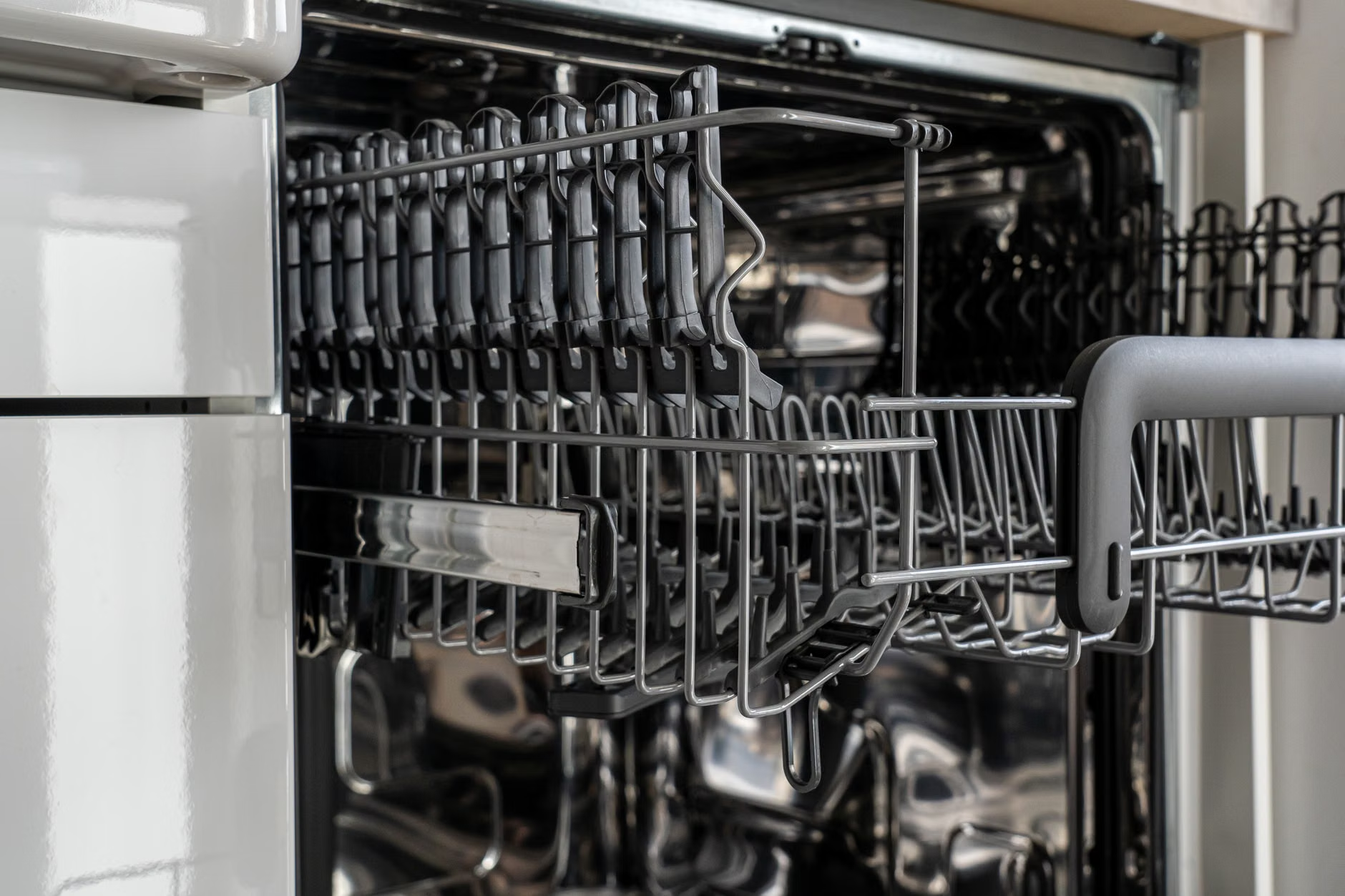
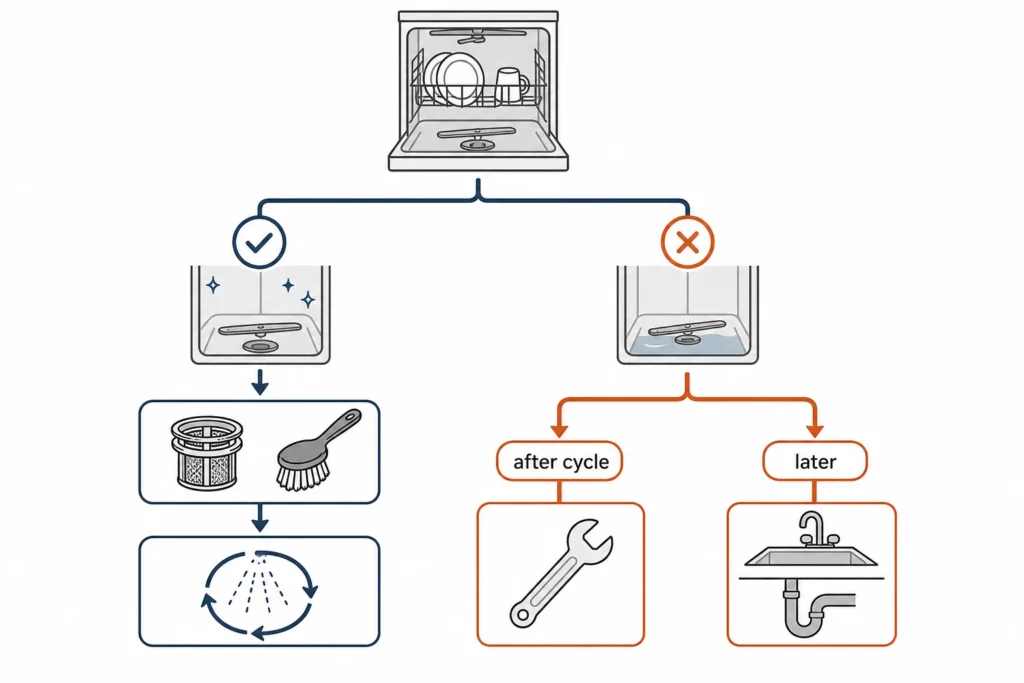
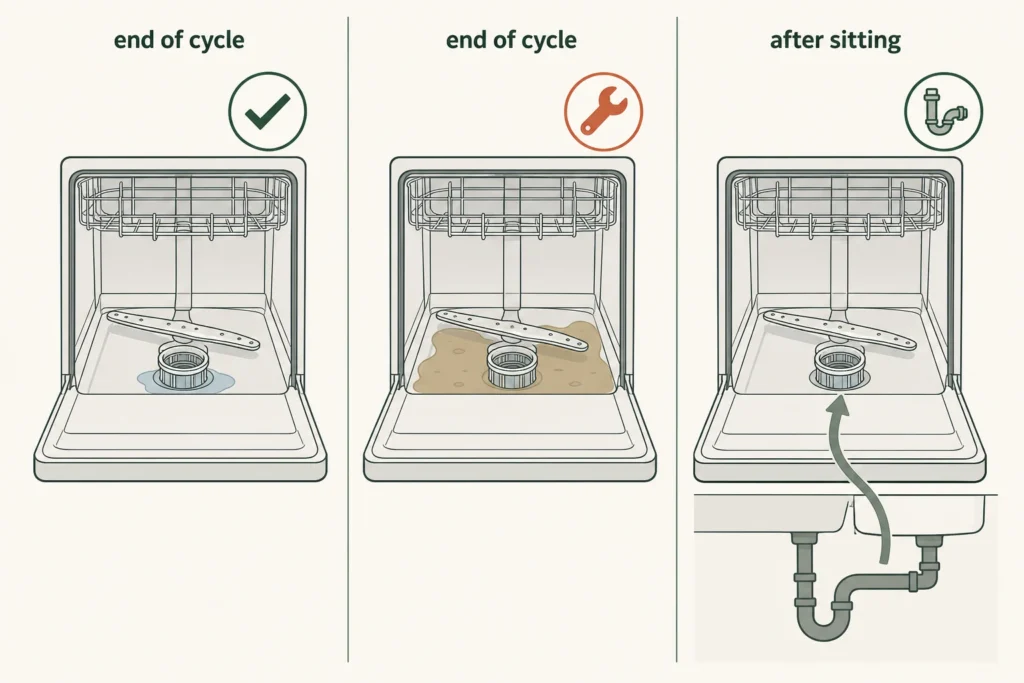
The bottom of the tub tells you more than whether the smell seems sour or stale. A drained tub with odor concentrated around the filter or door seal points toward trapped food and greasy residue. Dirty water spread across the bottom, or water that appears after the machine sits unused, points instead toward a drain path that needs troubleshooting.[2][4]
Let the water overrule the smell
Odor location is useful only when drainage looks normal. Check the machine just after a completed cycle, then again after it has sat empty for several hours.
| What you notice | What it suggests | What to do next |
|---|---|---|
| The tub has drained, and the smell is strongest near the filter or door | Food, grease, or residue in accessible catch points | Clean the filter area, gasket, and lower door edge in that order |
| Drainage looks normal, but the stale odor remains and no scraps are obvious | A thin residue film may be lingering | Inspect the accessible areas first, then run one approved maintenance cycle |
| Dirty water remains broadly across the tub after a completed cycle | Incomplete drainage rather than an odor-only problem | Clear the accessible filter area once, then move to drain troubleshooting if the water remains |
| Water or drain odor appears after the empty machine has been sitting | Water may be returning through the drain route | Look for accompanying sink symptoms and choose appliance service or plumbing help accordingly |
Why the filter comes before the cleaner
A maintenance cycle can loosen film, but it cannot reliably carry away a paper label, bone fragment, or packed food caught below the rack. Remove solids first, then clean the surfaces that stay damp.
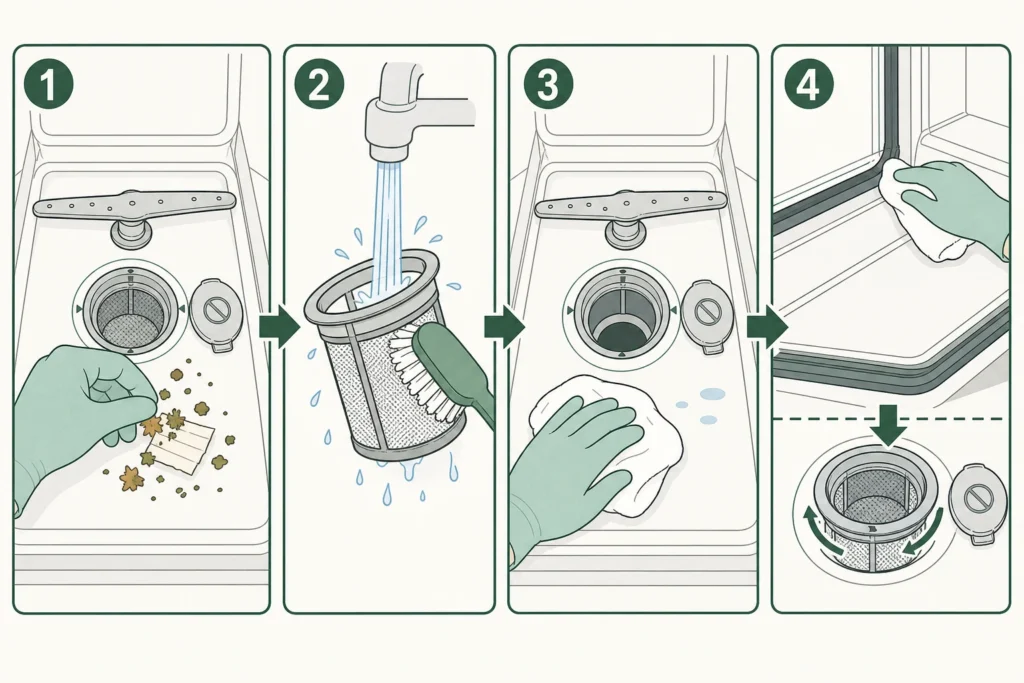
- Pull out the lower rack and identify the filter, screen, or collection cup that your exact model treats as owner removable. Some filter systems are not designed for routine removal, so do not assume a round part should twist out.
- Pick up loose food, labels, and other visible debris from the accessible lower tub before washing the filter. This keeps scraps from dropping back into the collection area.
- Rinse the removable filter under running water with mild dish soap and a soft brush. Work gently through mesh and crevices without bending or puncturing them.
- Wipe the visible area around the filter with a damp cloth, and look around the lower spray arm for scraps. Do not remove fixed covers or reach into a concealed pump area unless your model provides a specific owner procedure.
- Wipe the gasket folds, tub lip, and inside lower door edge with mild soapy water where needed, then dry the gasket and lock the filter securely back into place.
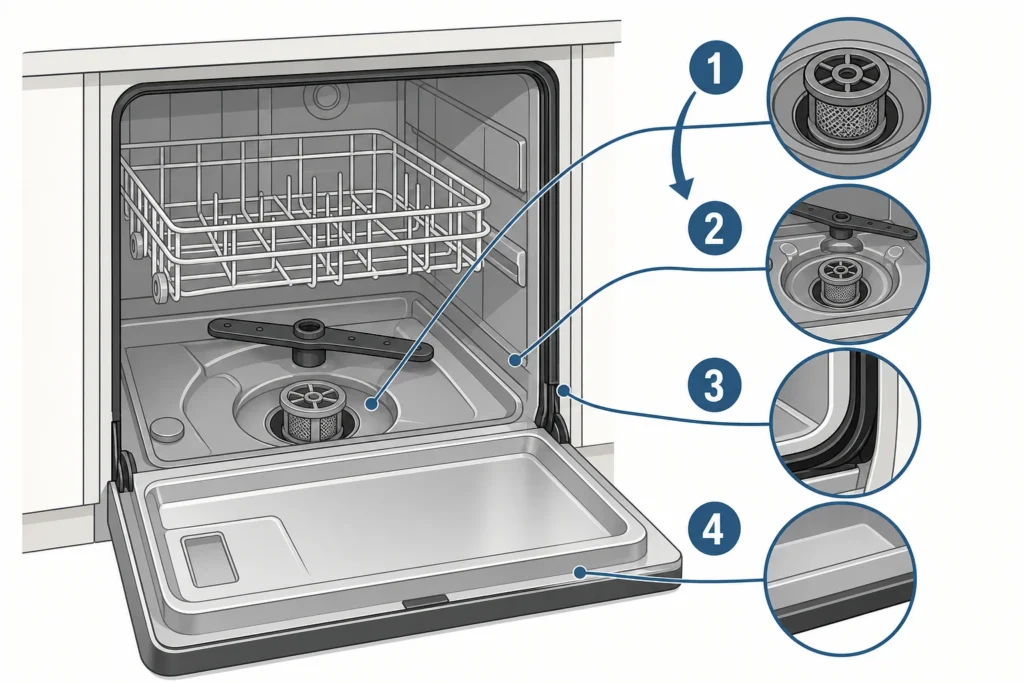
Cleaning will not fix a gasket that is torn, loose, or distorted enough to stop sealing properly. That is a part or fitting problem, not stubborn dirt.
Turn the next cycle into a diagnosis
- After everything is reassembled, run the maintenance cycle and dishwasher cleaner or descaler approved for your model. Use one method only, and never combine cleaning products.
- After the next normal wash, look for dirty water across the tub, poor washing, or a drain or pump alert. If the water has not left after the accessible filter area was cleared, another deodorizing cycle is unlikely to help.
- Check again after the empty dishwasher has sat unused. Water or odor that returns without a new dirty load shifts attention toward the drain hose, sink connection, or shared drain path.
For future upkeep, let the debris load set the pace. A filter that held grease, food scraps, or labels deserves an earlier inspection next time, while a lightly soiled filter can stay on the model’s normal maintenance interval.
Choose the right help when the water is wrong
- Choose appliance service when dirty water remains after a cycle, drainage stays poor after the accessible filter area is cleared, washing performance drops, or the machine shows a drain or pump alert.
- Choose a plumber or property manager when the sink is also slow or gurgling, the same odor comes from the sink or disposal area, or water appears to return after the dishwasher has been sitting.
- If you rent, photograph recurring standing water and note any shared sink symptoms before reporting the problem. Do not alter concealed plumbing or disconnect the drain hose as routine odor care.
Cleaner is useful for residue only when the water path works. Once water remains where it should not, or returns later, stop adding products and route the problem by the accompanying symptoms.
Sources and references
- Bosch Home Appliances: How to Properly Clean Your Dishwasher Filter
- Bosch Home Appliances: Dishwasher Use & Care Manual
- Whirlpool Corporation: How to Get Rid of Dishwasher Smells in 5 Steps
- Bosch Home Appliances: Dishwasher Troubleshooting: Dishwasher Is Not Draining