

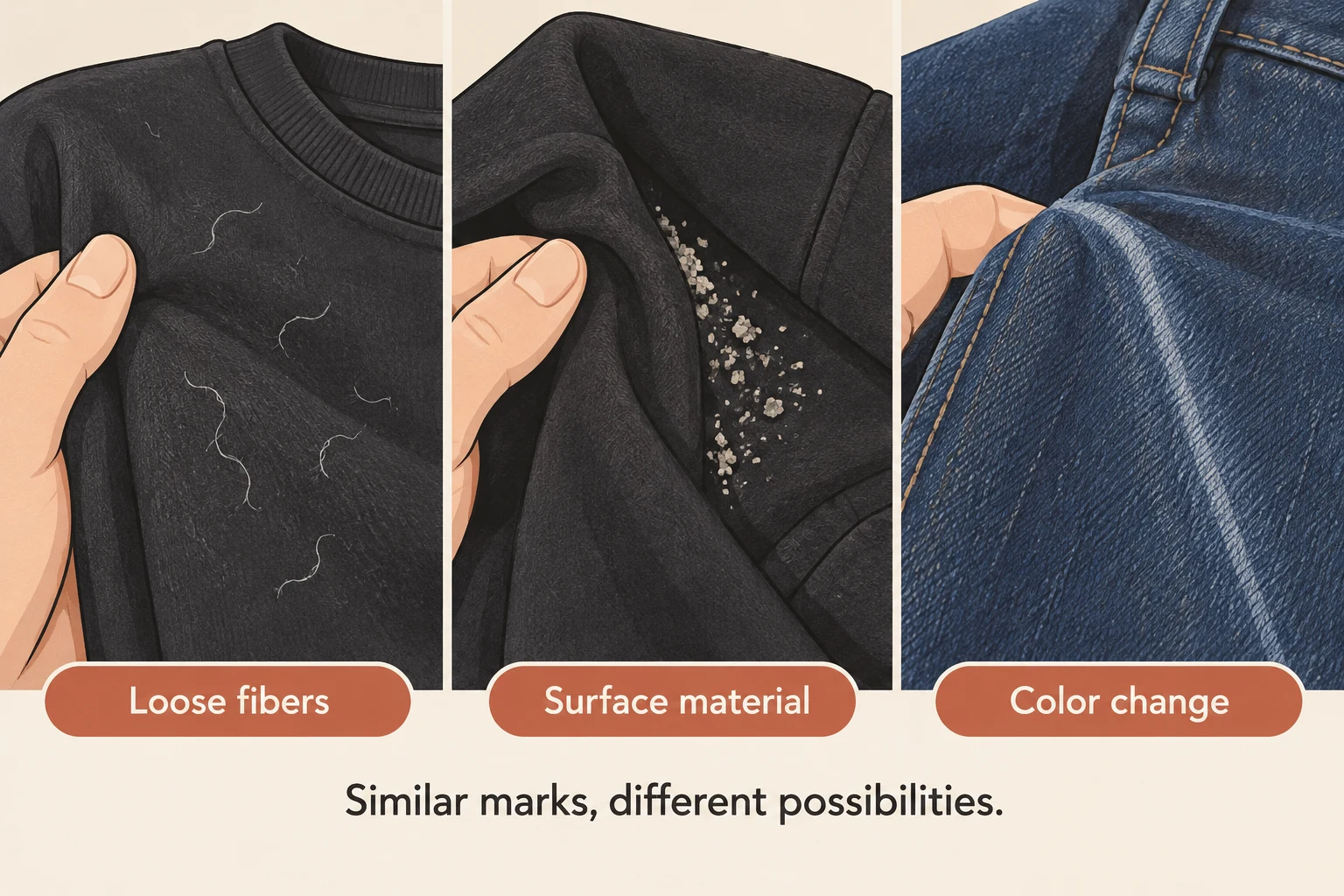
First, check if any of the staining is from material (e.g. lint) rather than from something that has changed the fabric itself. White streaks can be many things like deposits from detergents or additives, minerals, transferred lint, altered fibers, and color. Extra rinsing can help to a degree, but it won't restore dye. I probably wouldn't rewash the whole load until one item in the load shows a change.[1][2][3][8][10]
Look closely before the clothes go back in
Spread out one of the items in question so you can look for deposits or material that is trapped in folds. Also look for fibers that are still attached to the yarns. What else was in the load, and did you change anything like the type of cycle or detergent? Dark pants can make light deposits more obvious than light shirts, so compare the items instead of assuming only one of the items is affected.
| What you notice | What it supports | What to check next |
|---|---|---|
| Loose pale fibers, especially after washing with towels | Transferred lint; granular detergent can also resemble lint | Whether loose fibers lift away, and whether the load was crowded |
| Powdery specks or deposits caught in folds | Incomplete product dissolution or rinsing; mineral-related material is also possible | Powder use, water temperature, dose, and garment movement |
| A coating after a detergent or softener change | A product-related deposit is plausible, but feel alone doesn't prove it | Product placement, dispenser configuration, and dosing |
| Pale lines at denim folds, or fuzz attached to worn yarns | Abrasion or a fiber/color change rather than loose residue | Whether anything actually comes off, and whether the dry mark persists |
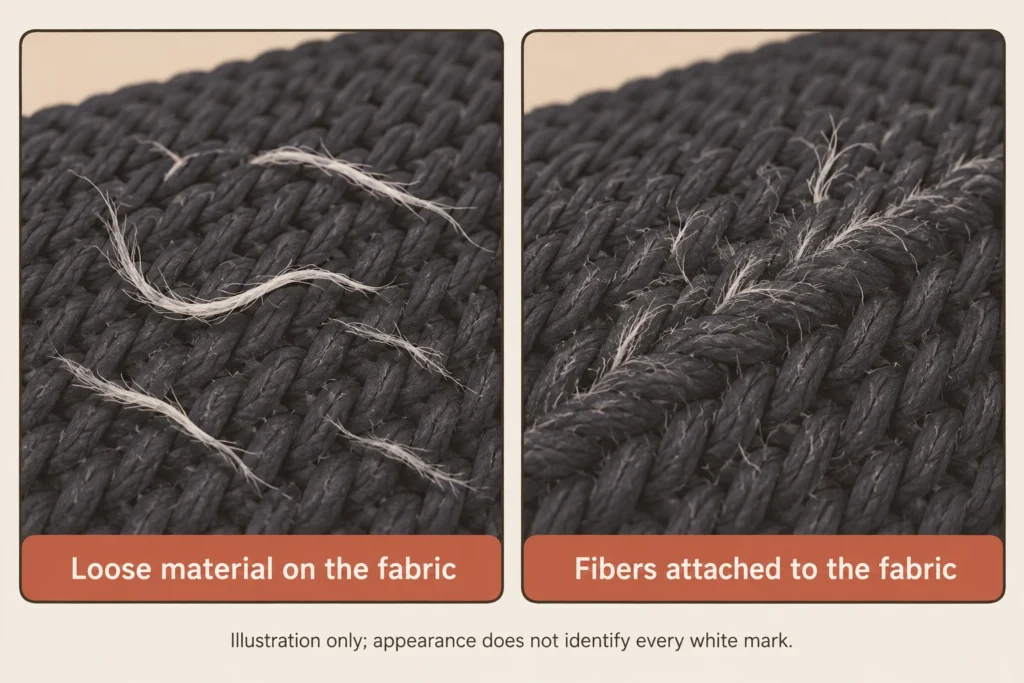
Imagine I have a pair of black pants that I need to wear tomorrow, and they have pale lines on the knees because of something that happened in the last load of wash with towels, and I’m checking one of the deposits instead of handing the whole load over to the loss of an evening.
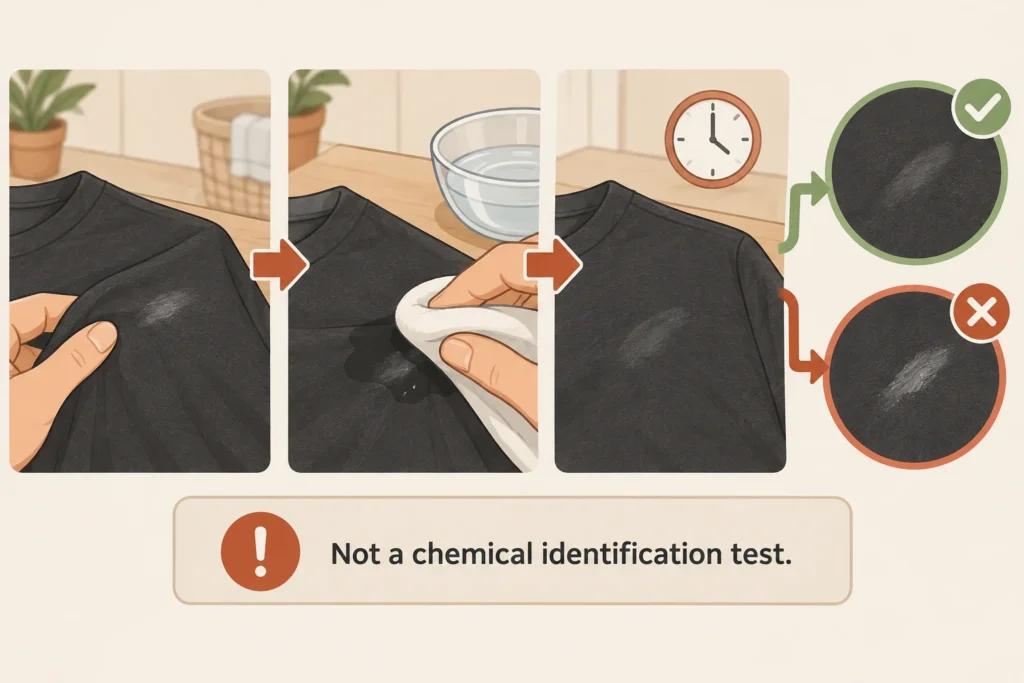
If a care label says you can water wash, check a hidden seam, and wash the color out if it transfers to water. A deposit that comes out supports that it is a deposit and is not necessarily damage.[5][10]
Choose a correction for what you found
It's worth a try to use a different type of lint roller or a clothing brush before automatically putting clothing through the wash again. Keep in mind, constantly brushing at attached fuzz will only wear down the fabric. Try to separate lint-shedding towels from lint-catching clothing when doing the wash to prevent losing more lint.[2]
To remove a deposit that may have been water-soluble from a machine-washable fabric, try one care-compatible rinse and spin with no detergent or fabric softener and with ample space for the fabric to tumble, allowing any deposits to be removed. To ensure there is no detergent entering the wash, check your washer's documentation for your model to find out how to disable dosing for that cycle. A different cycle name doesn't necessarily mean there won't be any detergent put in the wash.[3]
Evaluate the fabric or garment after it’s dry according to its care label. Wet fabric can cover up a faint stain. Gone when dry? This is removal, not identification, of the substance. If nothing changes, I would probably take a wait and see approach. One attempt is a reasonable limit to repeating a futile attempt and is not an indication that the fabric can’t be restored.
Persistent pale lines in indigo denim can be due to loss of dye from abrasion. Bleaching can change color, too. More detergent doesn’t put color back. An unsuccessful rinse does not give you justification to attempt a vinegar or chemical soak.[10]
What changed in the wash?
I would investigate why the previous load was packed too tightly, and address this before investing in a more expensive detergent. If your washer has a capacity guide, use this as a start point to load your clothes for the cycle you have selected. The drum accepting everything, doesn’t mean a quick cycle is the best option.[2][3]
Review the dose you used, against the directions of the detergent. Also consider the washers directions and hardness of the water. Over compensating for the hardness of the water is also a separate issue that requires attention. Cutting the dose may be convenient, but consider what you’re actually washing.[3][5]
Troubleshooting temperature-related issues can go in opposite directions. Whirlpool mentions that very cold water can impact the dissolution of powder, and therefore a warmer wash would be recommended if the fabric allows it. However, they also talk about a body-soil/product residue pathway that hot water can make worse. Neither of these explain your shirt. Using powder and the conditions of the wash give you a reason to consider temperature; a white streak doesn’t.[1]
Additionally, it may be worth examining the product placement if you have started using a different detergent or added a product. On the LG dispensers described in their literature, the liquid detergent cup comes out for powder and filling the dispenser past the limit can cause it to disperse early. Check your liquid/powder dispenser; make sure it’s in the correct position, the limit isn’t past the fill line, and there isn’t build up of the product. A build up of product can contribute to the drawer being configured incorrectly and appear to work properly.[4]
Tide directs its pods into the empty drum first, but that doesn’t guarantee the correct pod count. Liquid softeners require a different dispensing pathway and should not be in direct contact with the clothes. For automatic dosing, consider any documented concentration and amount settings and if you are manually adding detergent, as well. Pick the best-supported change for the next ordinary load rather than changing everything and wondering which part helped.[5][6][7]
When water or washer operation deserves a closer look
Hard water is not necessarily indicated by the presence of white residue. Controlled studies on cotton have shown that mineral scale deposits may involve both water salts and detergent ingredients and their interactions and not necessarily a substance that you may be able to identify by sight. Your utility’s hardness information is more useful for dosing, assuming it describes the water that reaches your washer. A household softener would change that, so check if it provides the laundry connection.[8][9]
I’d look into the reasons discussed above based on the symptoms displayed by your washer. Use your model’s troubleshooting for the observed dispensing, filling, and/or draining rather than guessing at the failed part. If documented owner checks don’t address the issue, give service your model number, code, product and dose, and take pics. You are asking them to investigate a specific symptom rather than authorizing an open-ended repair for white residue.
Sources and references
- Whirlpool: Clothing has White Residue
- GE Appliances: Washer & Dryer, Lint Concerns and Solutions
- GE Appliances: Washer, Soap or White Residue in Clothes
- LG Electronics: LG Washer, Detergent and Additive Usage (2025-12-15)
- Procter & Gamble / Tide: How Much Laundry Detergent To Use
- Procter & Gamble / Tide: How to Use Tide PODS®: Step-by-Step Guide for Clean Laundry
- Procter & Gamble / Downy: How To Use Liquid Fabric Softeners
- University of Zagreb researchers / Polymers: Carboxymethyl Cellulose and Carboxymethyl Starch as Surface Modifiers and Greying Inhibitors in Washing of Cotton Fabrics (2021-04-06)
- Philadelphia Water Department: Drinking Water FAQ
- SUNY Oneonta; reproduced Iowa State University Cooperative Extension material by Janis Stone: Quick & Easy Stain Removal Tips