

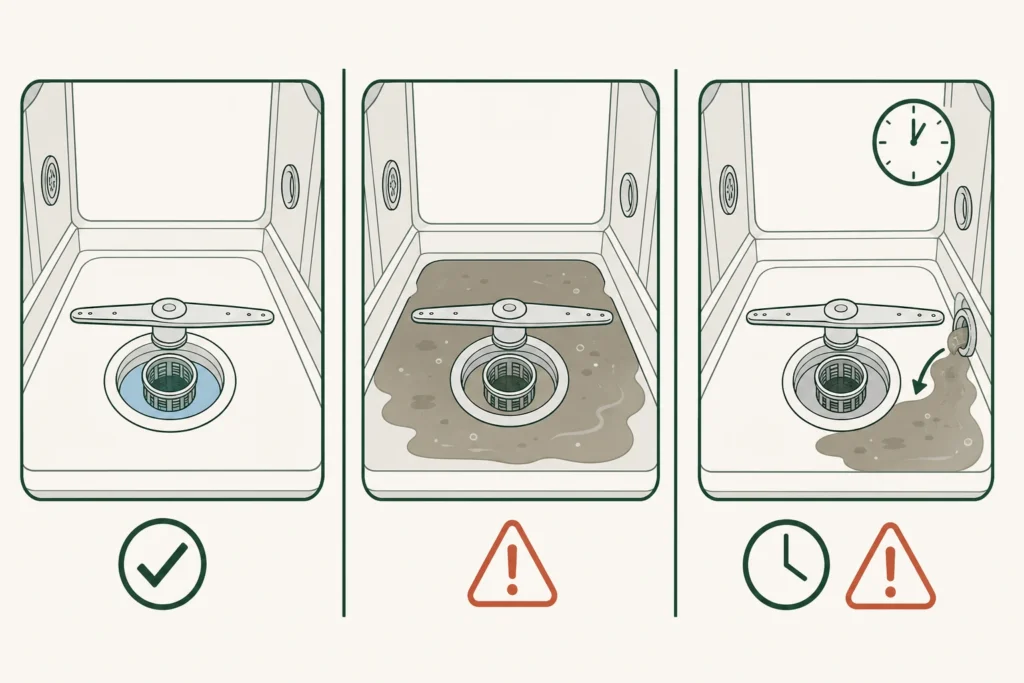
An empty cleaning cycle is often the wrong first move. It may loosen greasy film, but it cannot reliably remove a paper label, food fragment, or packed debris caught below the lower rack. First look at the water, then remove accessible solids from the filter and lower tub, wipe the gasket and door edge, and finish with the cleaning method approved for your model. If dirty water remains across the tub or returns while the machine sits, stop treating the odor as a cleaning problem.
First, read the water
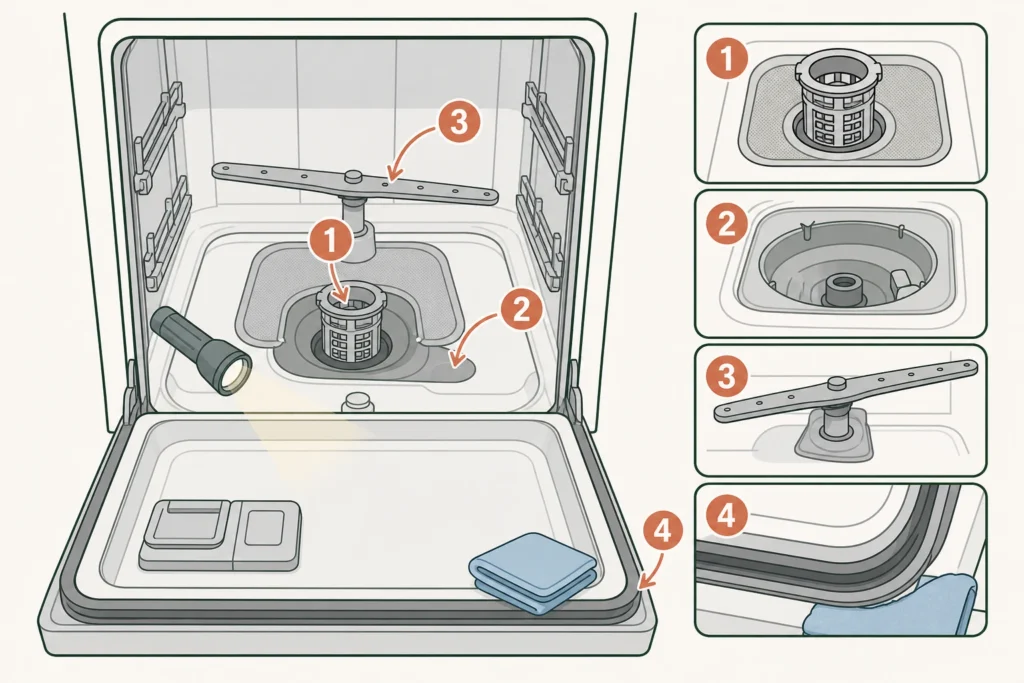
A sour or food-like smell with no unusual pooling usually points toward trapped residue. Visible water changes the diagnosis according to where it is and when it appears.
| What you see | What it suggests | What to do |
|---|---|---|
| A little clean-looking water confined to the filter well | This can be normal on some models | Check the manual, then clean accessible residue if odor remains |
| Dirty water spread across the tub after a completed cycle | The dishwasher may not be draining fully | Clear accessible debris, then test the machine again |
| Water appears or gets dirtier while the dishwasher sits unused | Sink water may be flowing back through the drain route | Inspect the visible under-sink connection and arrange help if needed |
| A sewer odor is strongest near the sink or under the cabinet | The drain path or plumbing deserves attention | Check the sink, air gap, disposal connection, and hose route rather than adding cleaner |
Know what your model lets you remove
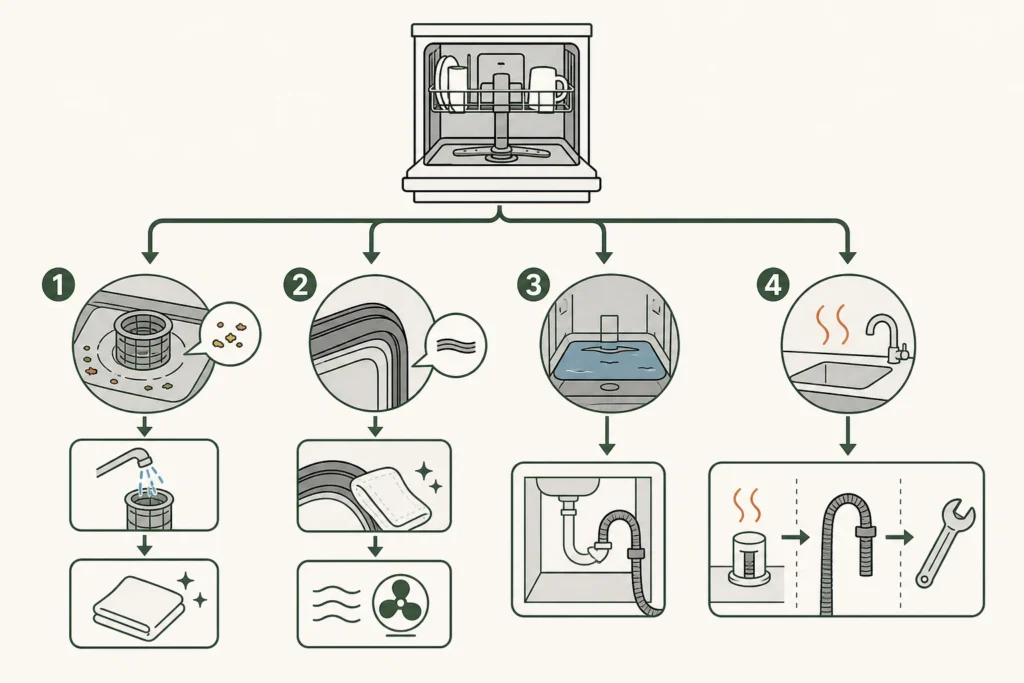
Use the model number to find the use-and-care manual before twisting a filter or lifting a spray arm. Some dishwashers have a removable manual-clean filter, while others use a different filtration setup or a foreign-object cup. The manual should show which parts are user-serviceable, how the filter locks into place, and which cleaning cycle or product is allowed. Gather a flashlight, soft cloth, soft brush, and warm water.[1][3]
Clean from the filter outward
The order matters because loose solids can contaminate areas you have already wiped. Remove what the machine cannot carry away before addressing thin residue on the door and seal.
- Empty the dishwasher, remove the lower rack, and let the interior cool if a cycle just finished.
- Remove the filter only as the manual directs. Rinse it under running water and use a soft brush for stuck residue. Use mild dish soap only if the manual permits it, and avoid abrasive pads.
- Shine a flashlight into the exposed filter well or sump area. Pick out visible food, labels, glass, or other loose material without reaching into hidden openings or dismantling covers.
- Look over the lower spray-arm zone for debris. Clean the arm in place unless the manual specifically explains how the user can remove it.
- Reinstall and lock the filter correctly. Do not run the machine with the filter loose, tilted, or missing.
- Wipe the gasket folds, inner door perimeter, lower door edge, and accessible detergent-dispenser residue with a damp cloth. Use a soft brush only for stubborn film, then dry the gasket.
Run the maintenance cycle only after reassembly
Once the filter is locked in place and visible debris is gone, run the model’s cleaning cycle or its manual-approved empty cycle with an approved dishwasher cleaner. This finishing step can work on residue in the water path without repeatedly circulating trapped scraps. If food and grease caused the smell, it should improve after the next complete cycle.
Make future checks match what you found
A lightly soiled filter can follow the maintenance interval in the manual. If it was packed with grease, food, or labels, inspect it sooner, especially when dirty loads often sit before washing. Scrape off large food particles rather than prewashing every dish, and use a rinse or hold cycle if your model has one and a load will sit for an extended period.[1][2][3]
When the smell survives the cleaning
Check the tub as soon as the next cycle ends. Dirty water across the bottom, food-specked water, an error message, or obviously poor draining means the drain path needs attention. Look again after the dishwasher has sat unused. Water that appears or rises later is more consistent with backflow than with a dirty gasket.[2][3][4]
Under the sink, limit the inspection to visible conditions: a crushed or kinked hose, a low sagging hose instead of the specified high loop, a blocked countertop air gap, a problem that began after disposal installation, or a sink that drains slowly. A high loop or air gap helps keep dirty sink water from returning to the dishwasher, but the required setup depends on the appliance and installation.[2][3][4]
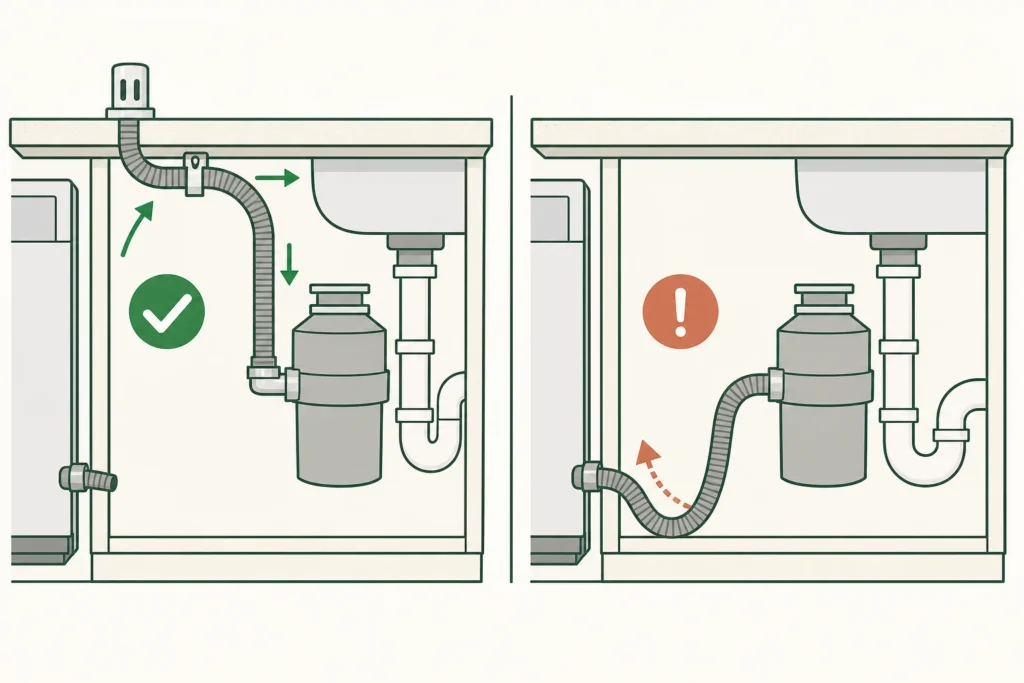
- Call a plumber, installer, landlord, or building maintenance for a slow sink, blocked air gap, disposal connection problem, or questionable drain-hose routing.
- Arrange appliance service if the sink drains normally but the dishwasher still leaves dirty water after accessible debris has been cleared.
- Stop using the dishwasher and arrange qualified service for a burning-plastic or electrical odor. That is not a routine cleaning problem.
Renters should photograph recurring standing water and any visible under-sink concern, then report it rather than altering concealed plumbing. Repeated cleaner cycles will not correct dirty water that returns through the drain route.
Sources and references
- Whirlpool: Whirlpool Product Help: Cleaning the Filter, Dishwasher (2026-09-12)
- GE Appliances: GE Appliances: Dishwasher, Odor From Food or Mildew
- GE Appliances: GE Appliances: Dishwasher, Not Draining
- GE Appliances: GE Appliances: Dishwasher, Water in the Bottom of the Tub