

Few cleaning results are more irritating than the first barefoot step onto a freshly mopped floor that looks clean and feels faintly tacky. Footprints appear almost immediately, dust seems newly interested in the room, and the obvious response is to mop again.
Pause before doing that. Tackiness can come from cleaner film, soil carried around in dirty water, a product that does not suit the floor, or a coating that has changed. Another generous dose of cleaner may simply give the problem a second coat.
Treat the tackiness as evidence, not a dirt verdict
A floor can look spotless while a thin film remains on top. Too much cleaner, an incorrect dilution, a shine product, or soil redeposited from a loaded mop pad can all leave the surface feeling wrong. Quick-returning footprints support the idea that something remains on the surface, but they do not identify what it is.
The useful question is not, “What stronger cleaner should I use?” It is, “Does one carefully cleaned patch respond like removable residue?” That distinction saves both effort and finishes.
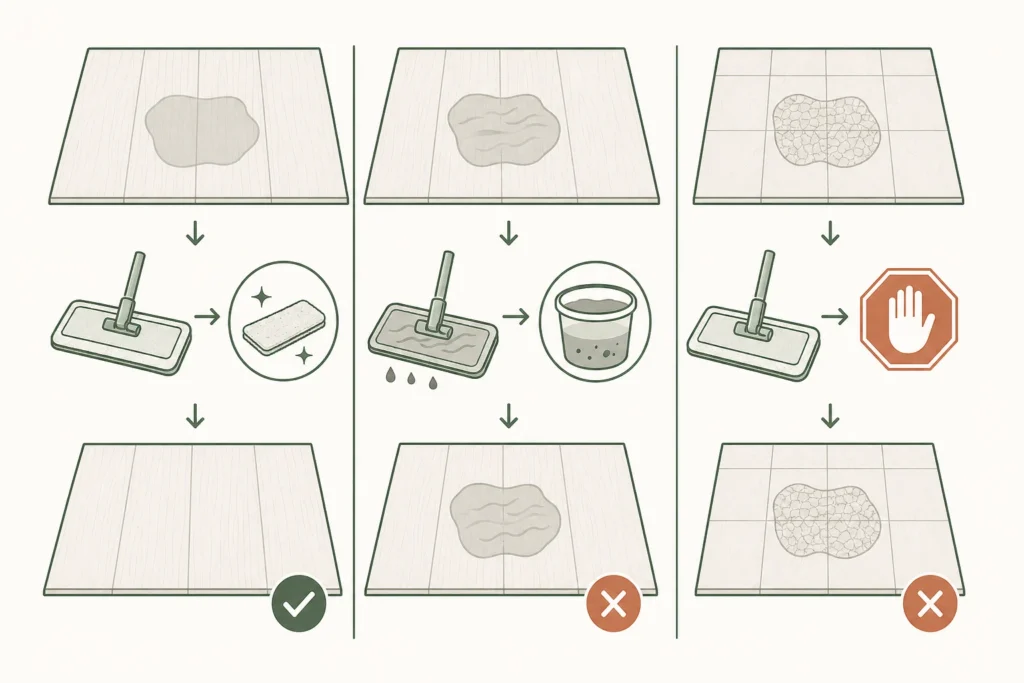
Confirm what the floor allows before you rinse anything
Also read the cleaner label for its exact dilution and whether it requires rinsing. Words such as wax, polish, shine, oil soap, detergent, or citrus are reasons to stop and compare the product with the floor maker’s instructions. They are not interchangeable promises of cleanliness, however enthusiastically the bottle suggests otherwise.
Use one small reset instead of another full mop
Choose a small tacky area where a slight difference will be easy to compare. The aim is not to restore the room in miniature. It is to remove enough variables to make the result useful.
- Sweep or dry-mop the test area. Loose grit and hair should not be part of the experiment.
- Use a freshly washed or unused microfiber pad, or a clean white cloth. Do not reuse the gray pad that just crossed the room.
- Clean only the small area using the installed floor’s approved method and moisture level. If its instructions prohibit water mopping, do not improvise a plain-water rinse.
- Let the patch dry fully. Compare its feel and appearance with the untouched floor beside it only after the moisture is gone.
- If you expand the reset, replace the pad or solution as soon as it becomes visibly dirty. Carrying dirty water farther is redistribution, not efficiency.
The clean pad matters more than it may seem. Without it, you cannot tell whether the cleaner failed or the mop simply returned yesterday’s soil to today’s floor.
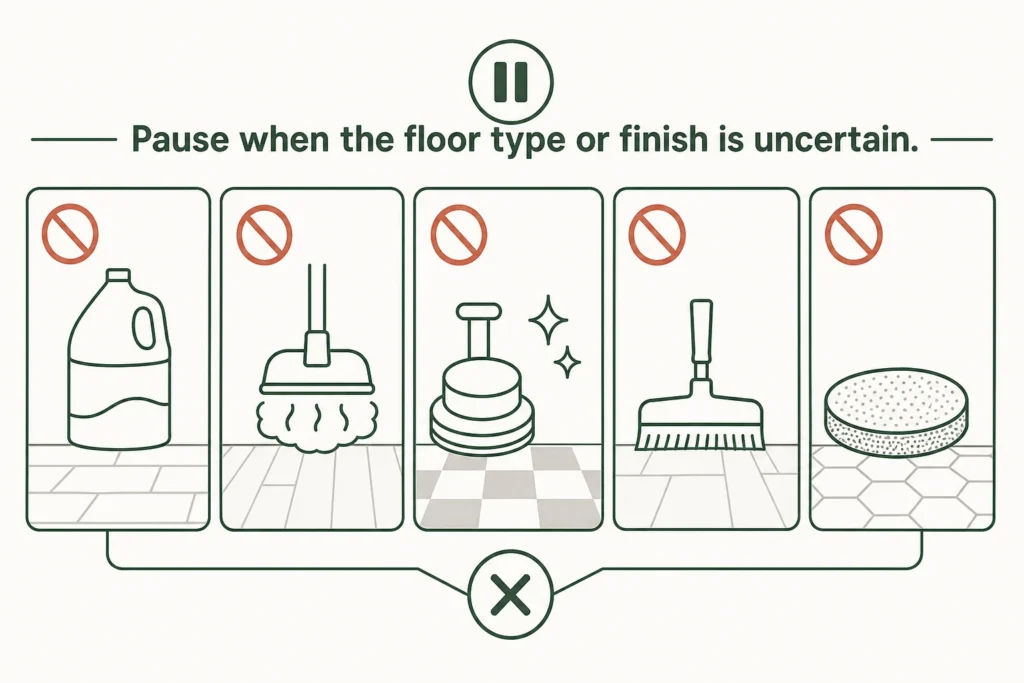
Read what the patch tells you
Once the patch is fully dry, its response determines whether another cleaning pass is reasonable. This is more useful than judging the floor while it is damp, when water can temporarily change both feel and sheen.
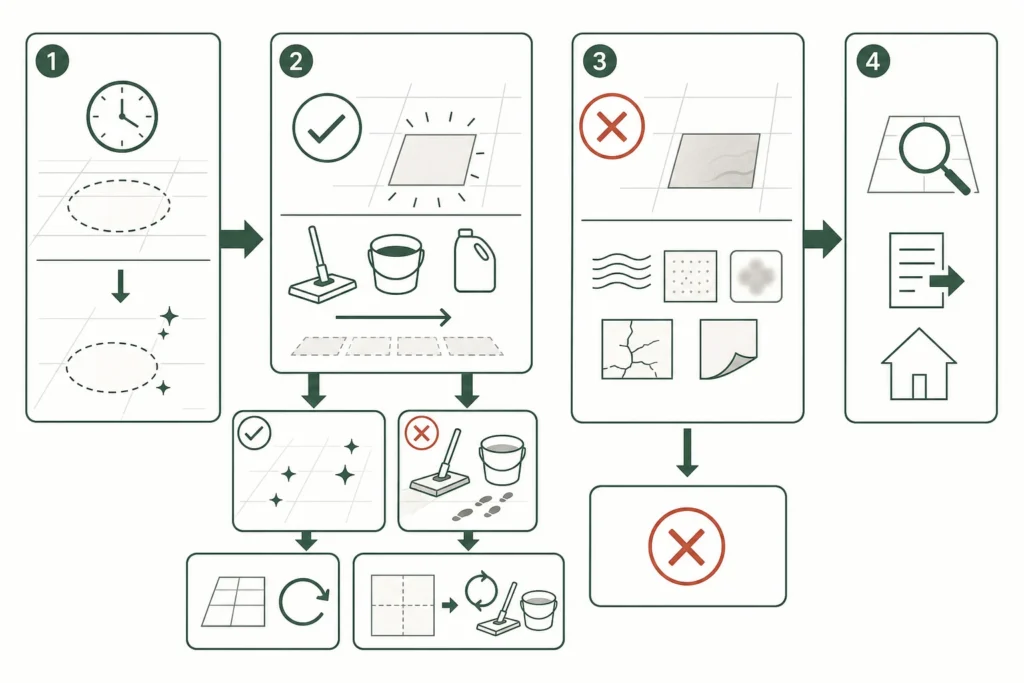
| What you observe | What it suggests | What to do next |
|---|---|---|
| The dry patch feels normal or noticeably less tacky. | Removable cleaner film or redeposited soil is plausible. | Reset the larger area with clean pads, fresh solution, the exact label dilution, and only the necessary passes. |
| The floor improves, but tackiness or footprints return as the pad or water becomes visibly dirty. | Soil is probably being carried from one section to another. | Work in smaller areas and change the pad, water, or solution sooner. Do not compensate by adding cleaner. |
| The dry patch does not improve, or the surface shows altered sheen, texture, persistent haze, peeling, swelling, or lifted edges. | The problem is not behaving like ordinary removable residue. A coating or the flooring itself may have changed. | Stop. Do not add acid, steam, polish, abrasives, or stripping products. Request product-specific advice from the manufacturer, installer, landlord, or property manager. |
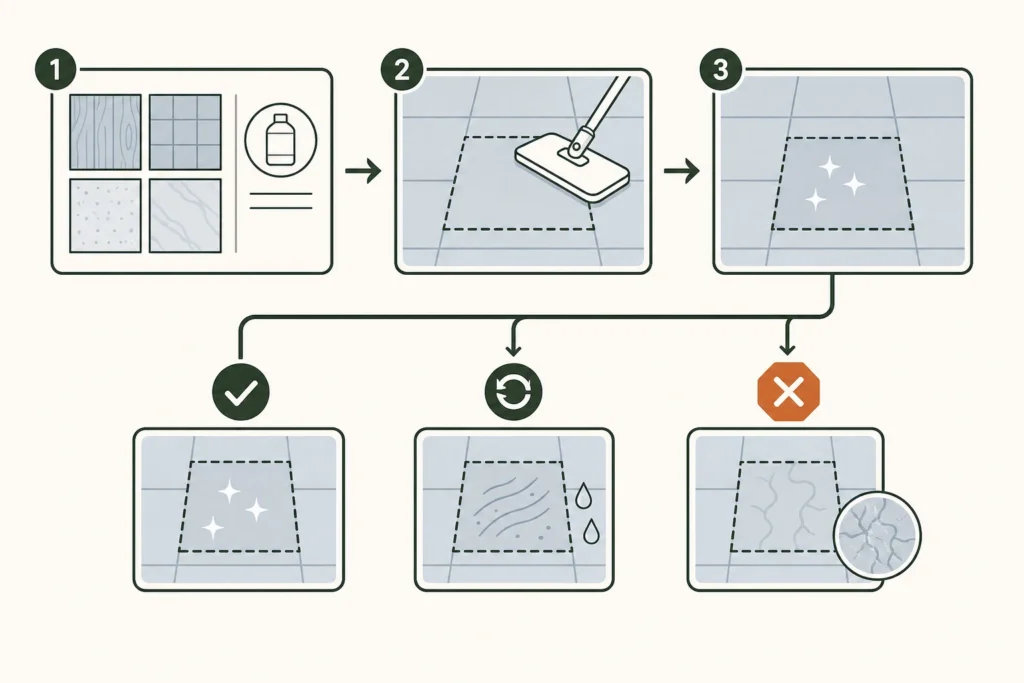
That final result is a boundary, not a remote diagnosis. Tackiness alone cannot prove finish damage, but nonresponse plus a visual or physical change is enough reason to stop experimenting. A stubborn symptom is not permission to assemble a small chemistry set on the floor.
Keep the next mop low-residue
If the patch supports a residue or dirty-water explanation, the next routine can stay refreshingly uneventful. That is exactly what floor care should be.
- Remove dust, grit, and debris before introducing moisture.
- Use only a cleaner approved for the specific floor, measured according to its current label.
- Do not add a second product for scent or shine. More ingredients make the next problem harder to interpret.
- Start with a clean pad, and refresh the pad or solution when it becomes dirty.
- Do not keep mopping an unchanged sticky area. Let the small-patch result be the stopping rule.
- If you rent, photograph persistent haze, swelling, peeling, lifted edges, or uneven sheen. Save the names of products used before requesting maintenance guidance.
A clean-feeling floor should not require a stronger and wetter attempt every time. If a controlled patch improves, proceed carefully with fresh tools. If it does not, the useful next step is restraint: protect the surface until you know what floor and finish you are dealing with.
Sources and references
- Shaw Floors: Laminate Floor Care & Maintenance
- Mohawk Flooring: Hardwood Floor Care & Maintenance
- COREtec Floors: Installation & Maintenance
- Natural Stone Institute: Care & Cleaning of Natural Stone
- American Cleaning Institute: Cleaning Hard Surfaces
- Pergo Flooring: Pergo XP+ Laminate Edgeview Hickory Product Page