

A just-cleaned mirror can look respectable head-on and striped the moment afternoon light crosses it. Stainless shows wipe arcs, a glossy cabinet face looks dull, and yesterday’s fingerprints are visible again. The irritating part is the timing: the surface looked better before the effort had fully dried.
That does not prove the cleaner caused the problem, but it makes residue worth testing. Before adding another spray, separate removable film from mineral deposits, remaining soil, intentional polish, and a finish that has actually changed.
The surface may be clean but not clear
Surfactants help water spread, loosen oily or particulate soil, and hold that soil where it can be removed. The last part matters. If too much product is applied, the cloth is already loaded, or loosened material dries back onto the surface, cleaning can leave a visible layer behind. Glass, stainless steel, and glossy painted or laminate cabinet faces reveal that layer readily in side light. Floors may announce it as tackiness instead. Gloss is not creating the problem; it is simply an unforgiving witness.
Sort the film before treating it
| What the surface does | Likely category | What the observation changes |
|---|---|---|
| A clean-water patch dries clearer or less tacky | Removable residue or light soil | Resetting may help, but the test does not identify the exact film. |
| Pale or chalky marks appear where water dries | Mineral film | Reducing cleaner alone may not remove a water deposit. |
| The layer is evenly slick or glossy after polish or protectant | Intentional product layer | Do not treat it as ordinary cleaner residue. |
| Dullness, roughness, peeling, or altered sheen does not change | Possible finish change | Stop adding cleaner or abrasion. |
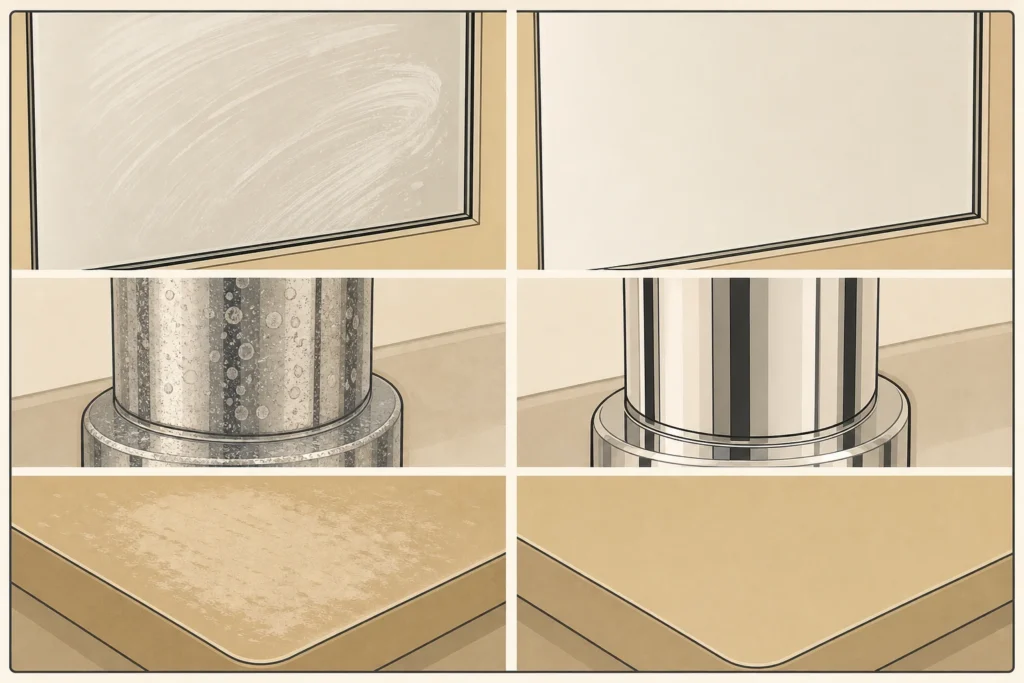
A water-patch result is directional evidence, not a kitchen-counter chemistry lab. If the patch improves, something removable was present, but it may have been cleaner, light soil, or both. That modest conclusion is still useful because it tells you whether another full-strength pass is likely to help or merely rebuild the film.
Reset one small patch with less product
The point of the test is restraint, not finding a new universal remedy. Use it only on a smooth surface you already know tolerates damp wiping. Unknown coatings, unsealed wood or stone, peeling finishes, and specialty surfaces are poor places to improvise with water.
- Choose a small patch with the same haze or tackiness as the surrounding surface, avoiding seams, openings, and visibly damaged spots.
- Remove loose dust and crumbs so the damp cloth does not turn dry debris into fresh smear evidence.
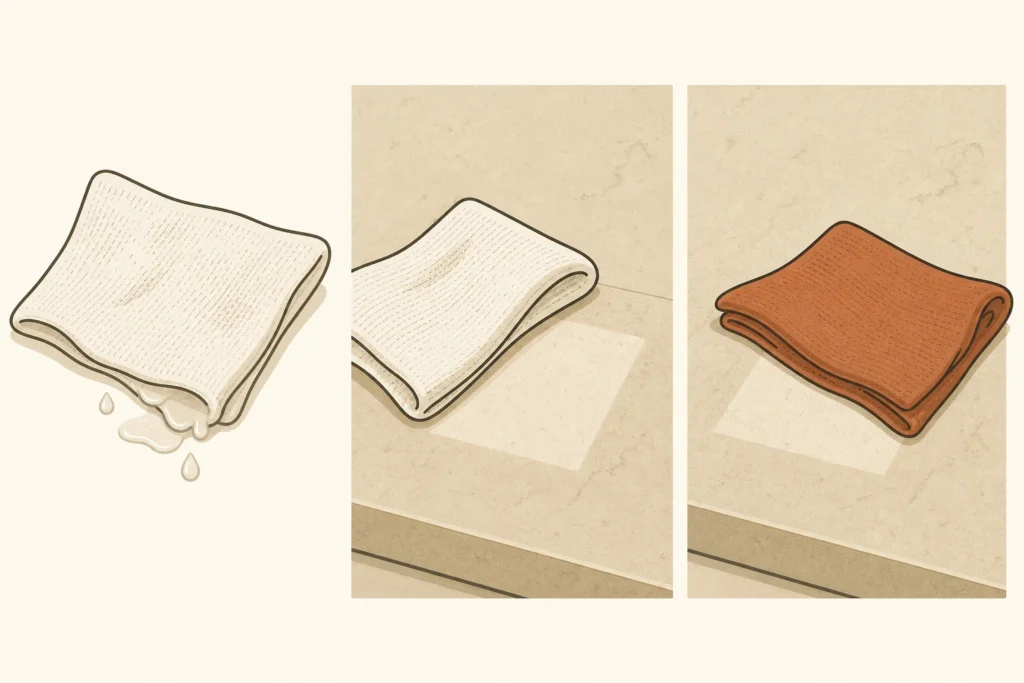
- Dampen a clean, soft cloth with fresh water and wring it well. Make a few overlapping passes, then finish with a second clean, dry cloth. Loaded or gray fabric compromises the comparison because it can redistribute what it picked up.
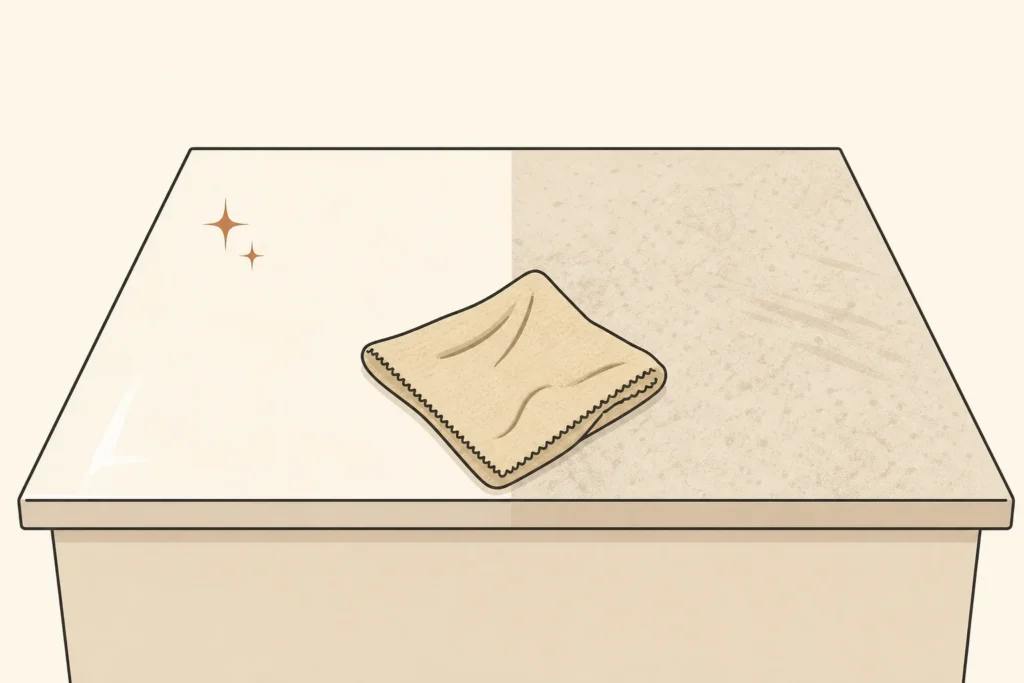
- Let the patch dry fully and compare it with the untreated area in the same light. If it is clearer or less tacky, reset the rest of that compatible surface in small sections. If nothing changes, do not add strength or abrasion.
Keep routine cleaning from rebuilding the film
During diagnosis, change only one variable in a comparable cleaning pass so you can tell what mattered. Once the patch has established that removable film is the problem, combine the lower-residue habits below into the regular routine. That distinction matters: controlled testing identifies the cause, while maintenance should simply prevent the film from rebuilding.
- Measure concentrates at their stated working dilution rather than using an arbitrary capful or a stronger mix. Dilution is formula-specific; one current concentrate specifies 1 ounce per gallon, which is an example of why measurement matters, not a default ratio.
- Apply only enough cleaner for the soil and working area. Turn to a clean section of cloth as it loads up, and replace gray water before it starts returning soil to the surface.
- For a cleaner that requires rinsing, use fresh water on a damp-wipe-compatible surface and finish with a clean dry cloth. A rinse-free formula still depends on modest application and a cloth clean enough to remove lifted soil.
Know when the problem is not a cleaning loop
Pale haze associated with drying water may be mineral film, so reducing cleaner alone may not change it. Polish, brightener, and protective products are different again because they are intended to leave a layer; adding general cleaner on top can make the sheen harder to interpret.
An unchanged dull patch, rough texture, peeling coating, or localized change in sheen is not asking for a tougher scrub. Those clues justify a shift from cleaning to figuring out how to tell dirt from damage. Preserving the unchanged patch is more useful than obscuring it under another product.
If the main symptom is that the floor feels sticky after mopping, flooring introduces material and finish limits that need a floor-specific approach rather than this broader surface test.
The useful split is modest: if the patch clears, remove the film and make the routine leaner. If it does not, preserve the clue. A stubborn mark does not become more informative after the fourth product; it merely becomes harder to interpret.
Sources and references
- American Cleaning Institute: The Chemistry of Cleaning
- American Cleaning Institute: Ask ACI: Hard Water Residue
- P&G Professional: Mr. Clean PRO All Purpose Floor Cleaner
- Whirlpool: How to Clean and Care for Stainless Steel Surfaces
- St. Olaf College Facilities Department: Section 3, Custodial Methods
- 3M Commercial Solutions: Disinfectant Residue (2019-02)