


The paper stack on the counter is usually doing four jobs badly. It is an inbox for new mail, a reminder system for deadlines, an archive for records, and a holding area for paper that could leave. Everything looks equally important until a permission slip, bill, or insurance notice goes missing inside it.
This is why storage-first advice irritates me. A new file box may contain the pile, but it also gives unanswered decisions a lid. The useful fix comes earlier, when each paper is given one next destination instead of being returned to the stack.
The pile is not one problem
Sort paper by its next job, not merely by what kind of paper it is. A receipt needed for reimbursement still requires action. A receipt with no return, warranty, tax, or reimbursement purpose may leave. A completed insurance form may become a record, while an informational school flyer may need one calendar entry and no storage at all.
Status matters too. An unopened or undecided item belongs at the arrival point. Once someone has looked at it, it must move to action, protected reference, or exit. A completed record does not remain in the active-paper space just because it is important. Mixing finished records with unfinished work is how the counter quietly becomes an archive.
Give incoming paper only three routes
Choose one small arrival point where paper naturally enters the home. It can be a tray, basket, or clear section of a shelf, but it holds only new or undecided items. The counter may also hold one bounded action holder. It is not the reference archive, and it is definitely not where a bag of shredding begins its long domestic residency.
| Route | Decision question | Destination | Counter rule |
|---|---|---|---|
| Action | Does this still change what someone must do, bring, pay, reply to, or remember? | A visible, bounded action holder | Keep only current work here. |
| Protected reference | Is the immediate task complete, with a defined reason to retrieve this later? | Protected physical storage or an appropriate secure digital location | Move it off the shared surface. |
| Exit | Is there no remaining action or retrieval need? | Recycle ordinary paper or securely destroy sensitive paper | Clear it regularly instead of storing disposal. |
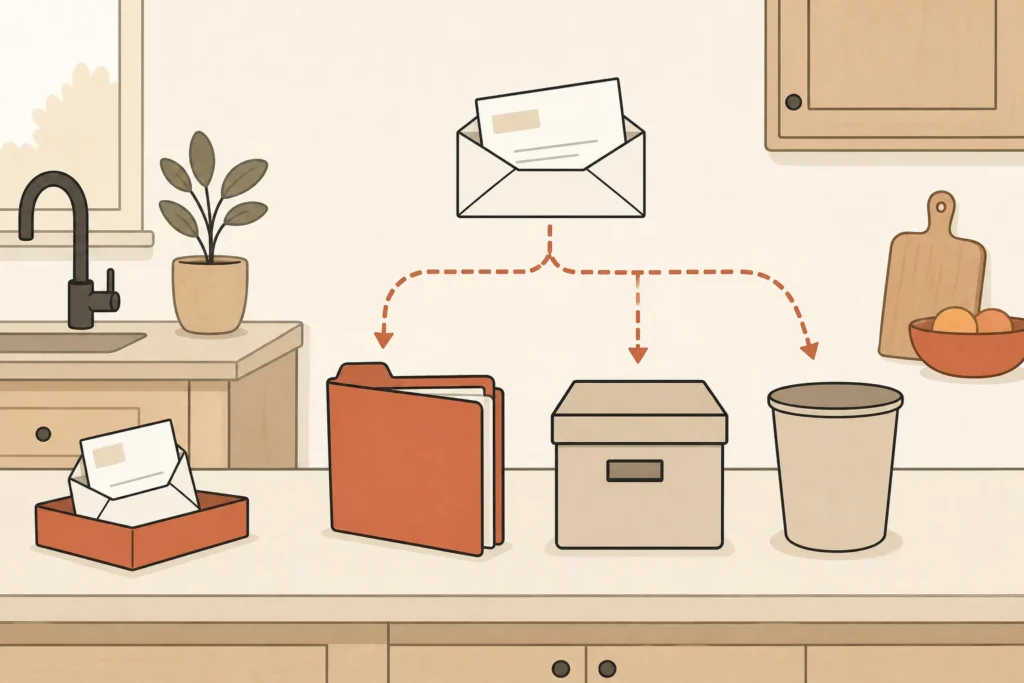
These are routes, not broad categories that papers join forever. When an action is completed, its paper either earns protected reference storage or exits. That boundary prevents a tidy-looking action tray from becoming the same old pile with better branding.
Make deadline papers louder than the rest
Not every action paper deserves equal visibility. Put date-sensitive items upright at the front of a contrasting folder or holder, rather than flat beneath papers that can wait. The due date or next move should be visible without rereading the entire stack.
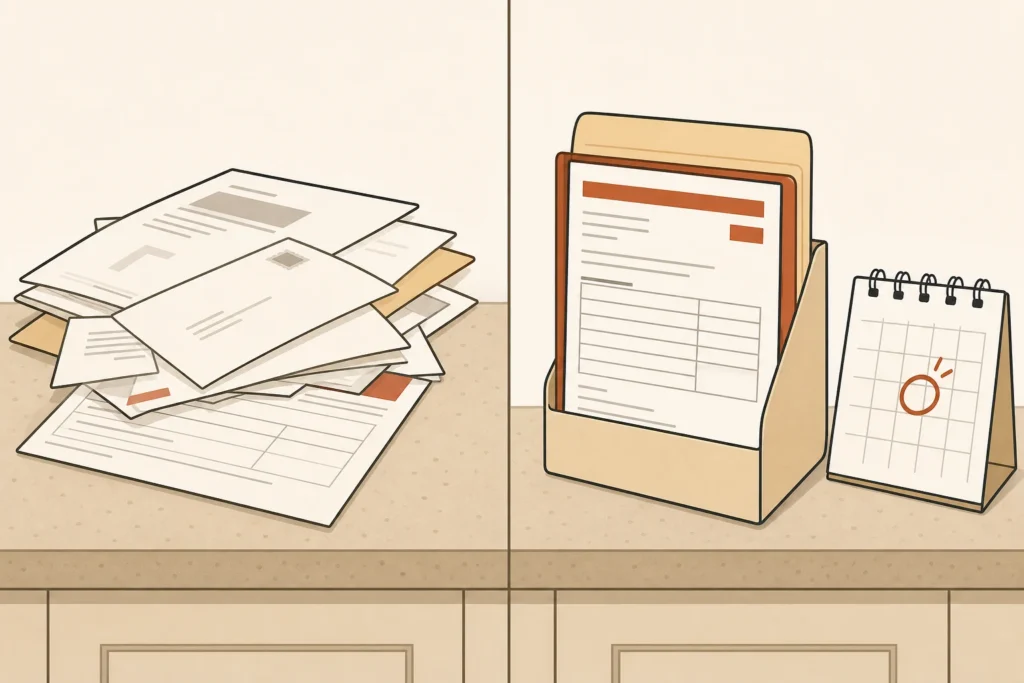
Then create a second cue outside the paper. Add “sign by Thursday,” “pay by the 15th,” or “bring Tuesday” to a calendar or shared reminder. If another person owns the task, name the handoff: “Jordan has the form and will return it Friday” is a handoff; placing it on Jordan’s pile is relocation.
I have learned that “I will remember what was in that stack” is not a storage method. An action holder stores the page. The calendar cue and named owner protect the task from becoming invisible.
Keep important records out of the daily flow
A reference paper should be stored because it has a defined future use, not because discarding anything official-looking feels risky. Identity documents, estate documents, property titles or deeds, active insurance information, and applicable tax records generally deserve protected, accessible storage. They do not need to compete with this week’s forms for space on the counter.
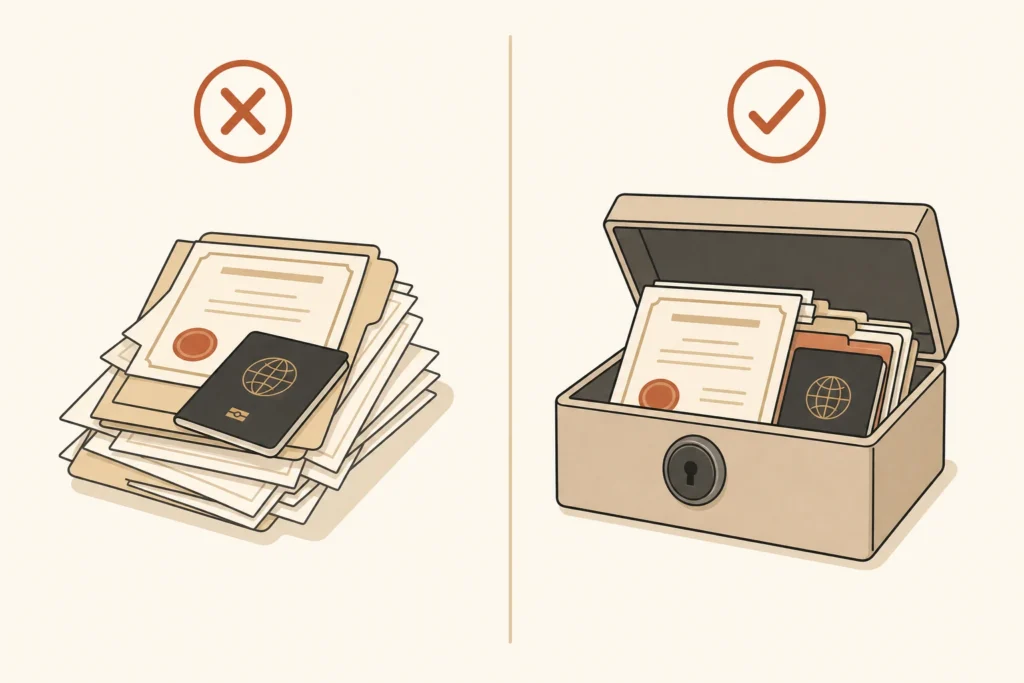
Digital copies can make important information easier to retrieve and provide a separate backup, but scanning is not automatic permission to discard an original. Whether the original is required can depend on the document, issuer, agency, lender, insurer, transaction, or legal process. Store irreplaceable originals in a protected location and use secure copies to improve access, not to justify a sweeping paper purge.
Let disposal be quick, but not careless
Once its retention need has ended, paper containing personal or financial information should be securely destroyed rather than placed loose in the trash or recycling. Ordinary nonsensitive paper can often go directly to recycling, which is why it helps to separate the two exit routes immediately instead of making one large “deal with later” bag.
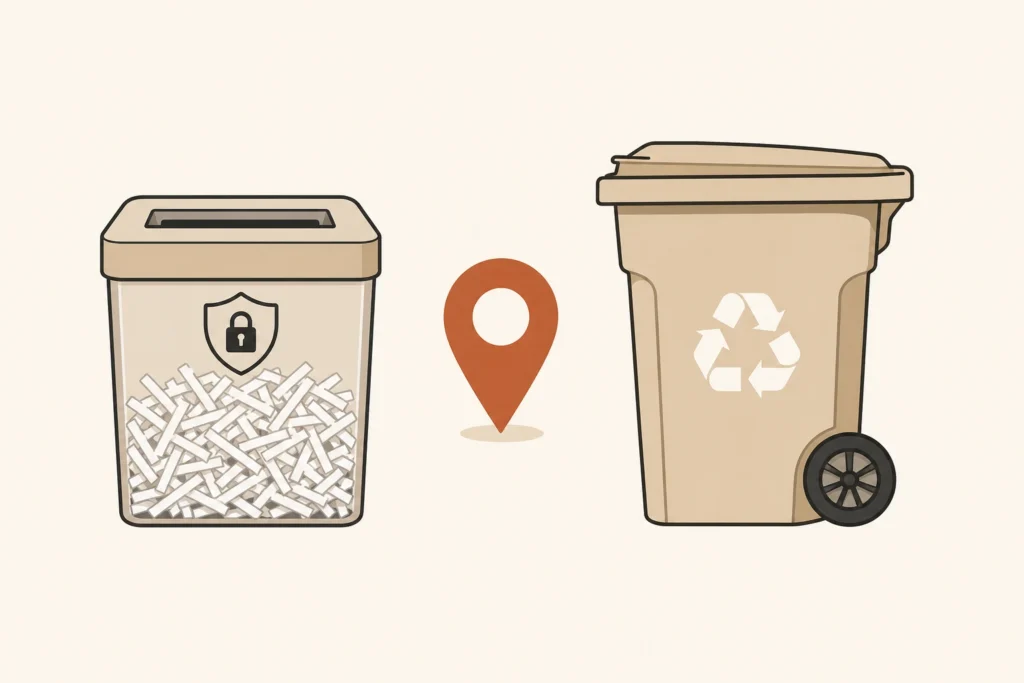
Shredding answers an information-risk question. Recycling answers a local material-acceptance question, and one does not settle the other. Some municipal programs reject shredded paper at the curb, while others accept it only when prepared in a particular way, such as inside a sealed paper bag. Verify the current rule with your local recycling or solid-waste program before putting shredded paper in curbside recycling.
Use one review to keep the route moving
Attach the review to something that already happens, such as bill paying, weekly planning, or the evening school papers usually come home. Look at the deadline slot first. Complete or calendarize the remaining action items, move finished records out of the active area, and clear both disposal routes.
Stop when no date-sensitive item is hidden and the incoming surface is usable again. The archive does not need to be perfectly reorganized, and every old paper in the house does not need a verdict tonight. The useful result is smaller: the next envelope has one arrival point, one decision about its next job, and no permission to disappear into the counter.
Sources and references
- Internal Revenue Service: IRS record-retention guidance
- Federal Trade Commission: FTC guidance on documents to keep and shred (2025-06)
- Consumer Financial Protection Bureau: CFPB emergency document-storage guidance
- U.S. Environmental Protection Agency: EPA household paper-recycling guidance
- City of New Orleans Department of Sanitation: City of New Orleans recycling guidance
- City of Milwaukee: City of Milwaukee recycling directory