

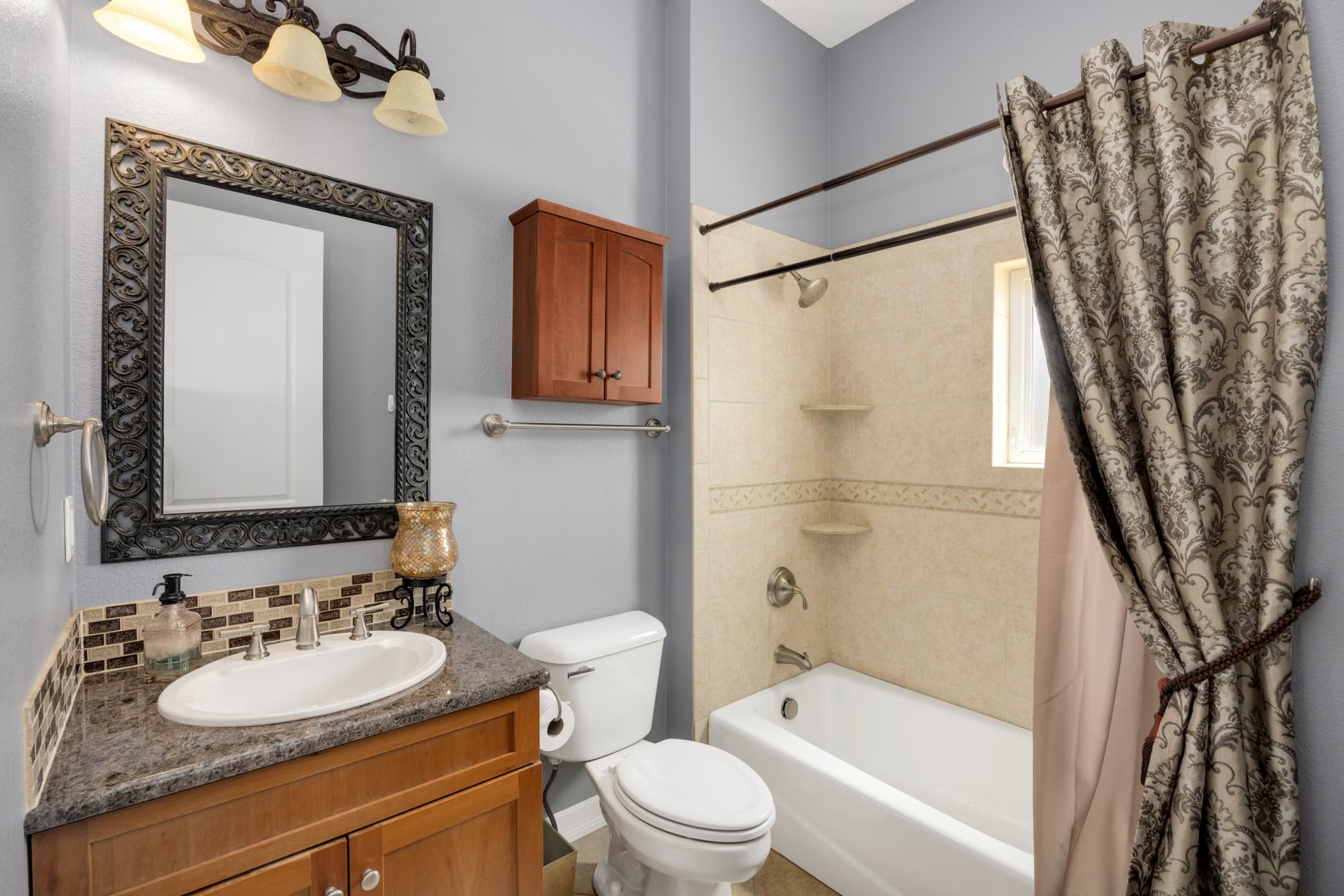
A bathroom can look freshly reset in the morning and feel clammy or faintly sour by evening. That reversal is discouraging because it makes the cleaning seem temporary, but the useful question is not what needs washing again, it is what never finished drying.
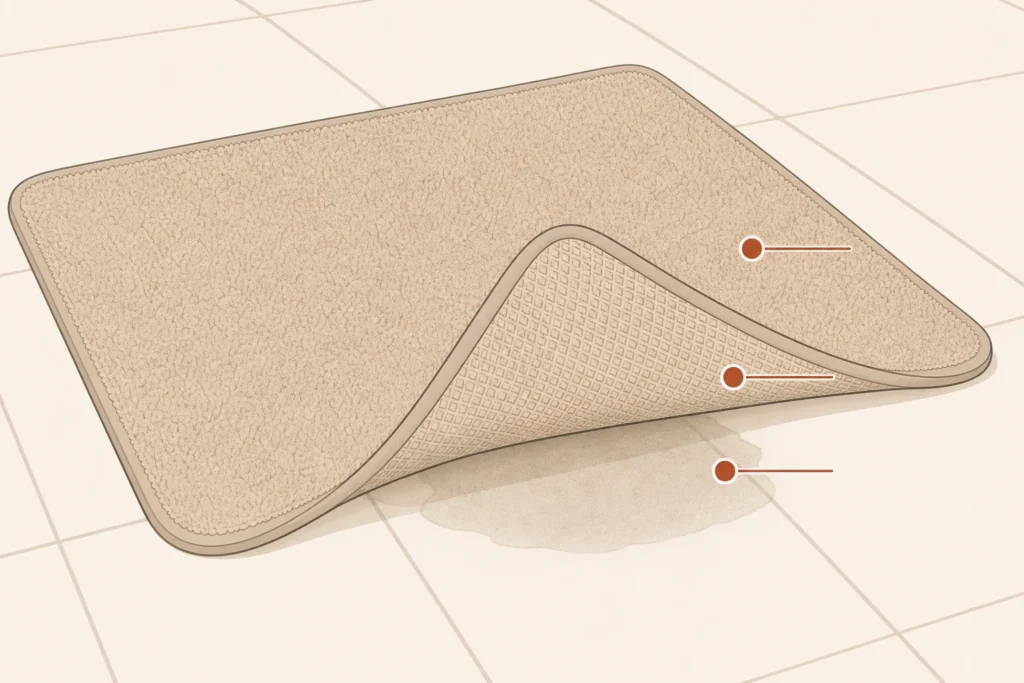
Treat the room as several drying zones, each one the place and position where a wet item is expected to finish drying. I used to straighten a bath mat flat against the floor because it looked neater, then found myself annoyed that I was wiping around it more often while its underside remained cool and damp, because the mat was technically put away but had no drying route.
Find what is still wet at the next use
Immediately after a shower, almost everything may be wet, so that moment tells you very little. I prefer checking when the bathroom is normally used next because the delay exposes the real holdout: look for what is still cool, damp, heavy, sour, or visibly holding water, then inspect the fold, backing, or contact surface you cannot see.
| Item | Bottleneck clue | Hidden trap | Smallest reroute |
|---|---|---|---|
| Towel | Still cool, heavy, or sour | Middle doubled over a hook | Spread on a bar or two separated hooks |
| Bath mat | Top feels dry, underside does not | Backing, pad, or floor contact | Lift or hang so both sides are exposed |
| Curtain or liner | Wet folds remain bunched | Gathered end or overlapping folds | Draw it fully across after use |
| Wall or glass | Drops or pooled water remain | Ledge, track, or horizontal seam | Make one cloth or squeegee pass |
Change the route for the item that fails this next-use check, rather than creating work for every damp surface. EPA guidance about drying wet materials within 24 to 48 hours concerns leaks and spills, not a reasonable target for towels and mats that become wet through ordinary daily use.
Give the bottleneck one workable route
A small or shared bathroom does not need four new drying devices. It needs one repeatable handoff for the slowest item, even if that means an alternate hanging spot just outside the room.
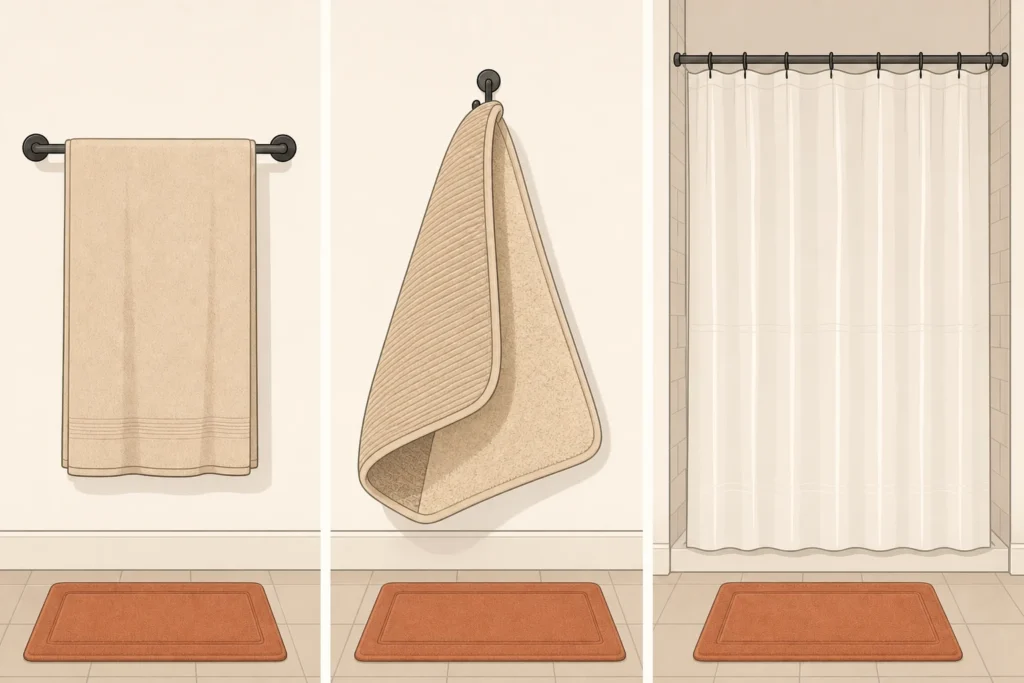
- Let a towel hang open on a bar, widely spaced hooks, or a hanger rather than folding over itself.
- Lift the bath mat after the last shower in a cluster so air reaches its underside. If it stays wet through back-to-back showers, rotate two mats, hang one open between uses, or leave the floor bare until the shower cluster ends if that works in the room.
- Draw the curtain and liner fully across the opening so their wet folds are not compressed at one end. Air-dry plastic or vinyl liners after washing; this after-use fix does not prescribe washing or heat drying for other materials.
- Wipe the enclosure only when glass, walls, tracks, or ledges are demonstrably the slowest-drying zone. I dislike universal squeegee rules because they turn a targeted fix into daily polishing with no stopping point.
Make one change and check at the next usual use. What I find satisfying about this test is its clear finish line: if the item is no longer the cool, damp, or sour holdout, you do not need to optimize the rest of the bathroom.
Know when the room itself is staying wet
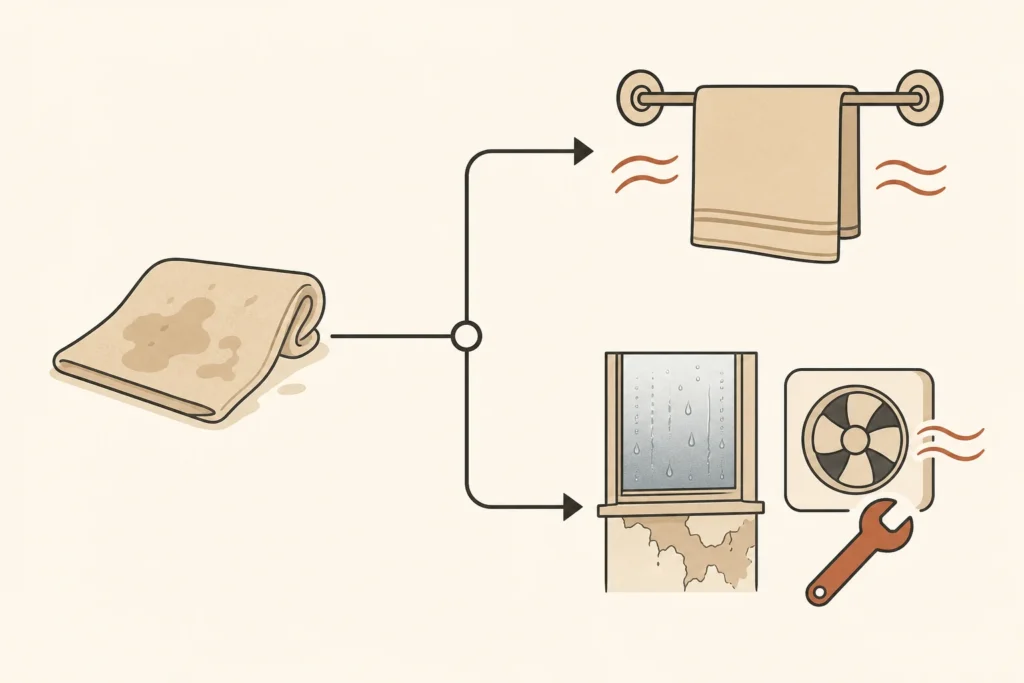
If the room clears while one textile remains damp, change the textile's route. If the room itself stays wet, stop trying to solve a broader moisture problem by rearranging the bath mat.
Sources and references
- U.S. Environmental Protection Agency: Biological Contaminants and Indoor Air Quality
- Home Ventilating Institute: Ventilating Living Areas
- The Company Store: When To Replace Bath Towels
- Ruggable: Bath Mat Wash & Care Guide
- Whirlpool: How to Clean a Shower Curtain and Liner