

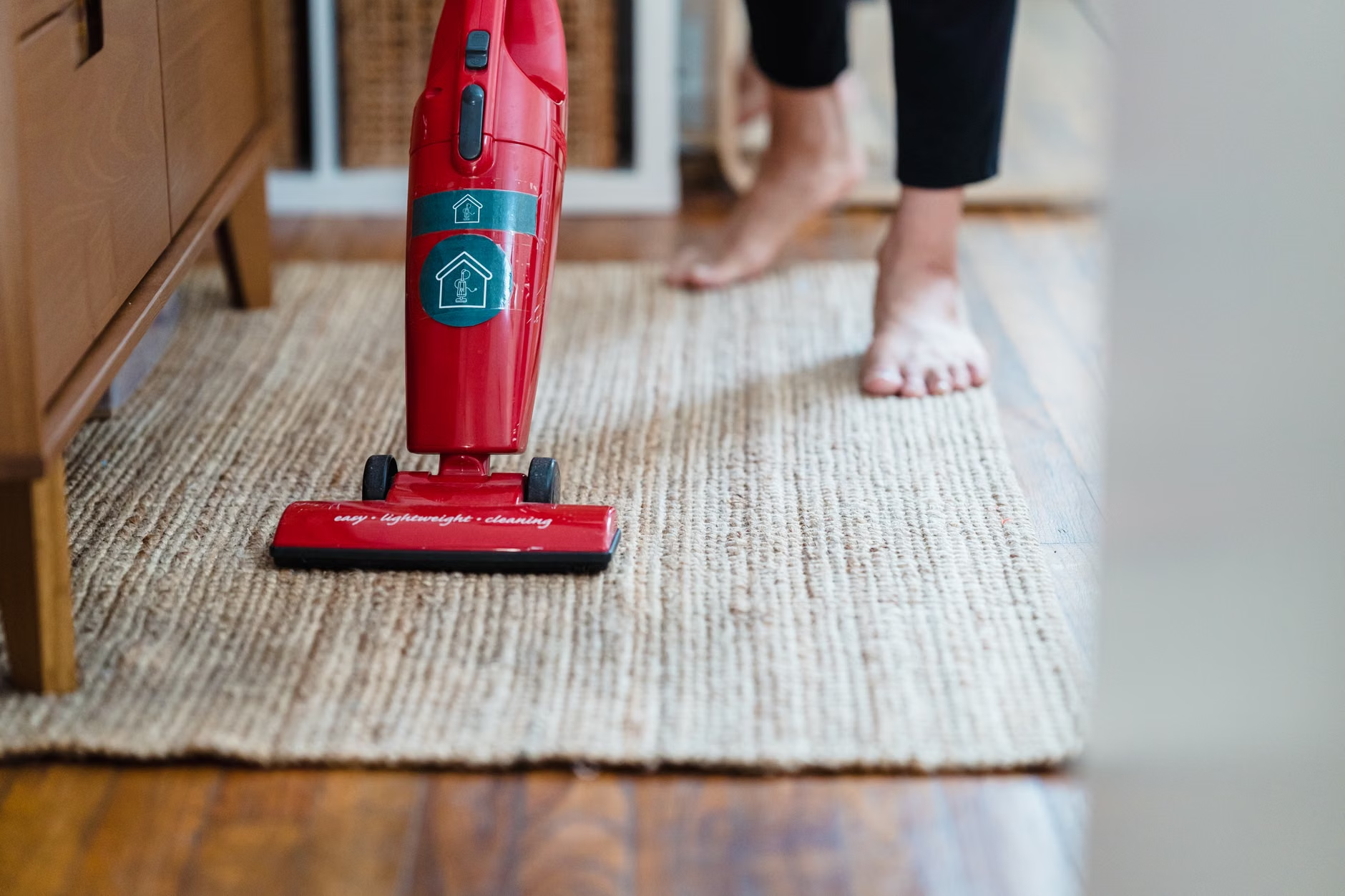
One carpet mark reappearing while drying may indicate soil rising from deeper within the carpet; another darkening after being walked on may mean it is simply collecting new dirt on old residue. Neither is conclusive evidence of either possibility. Determine what the carpet's care code allows, then allow the spot to dry. Afterwards, select at most one recommended treatment that is applicable, rather than using stronger formulas or soaking again.[1][3]
What the return timing tells you
| What you observe | Possible explanation | What changes the next decision |
|---|---|---|
| The mark reappears as the area dries, before anyone walks on it. | Wicking: dissolved soil migrates upward or outward during drying. | Wait for drying before judging appearance; do not keep flushing the spot. |
| The dry area initially looks clean, then darkens with use. | Cleaner or spill residue may be collecting new dirt. | Consider permitted residue removal rather than another detergent application. |
| The mark never clearly disappears, including when dry. | Remaining soil, discoloration, or altered pile may be involved. | Repeating the same treatment has no demonstrated benefit. |
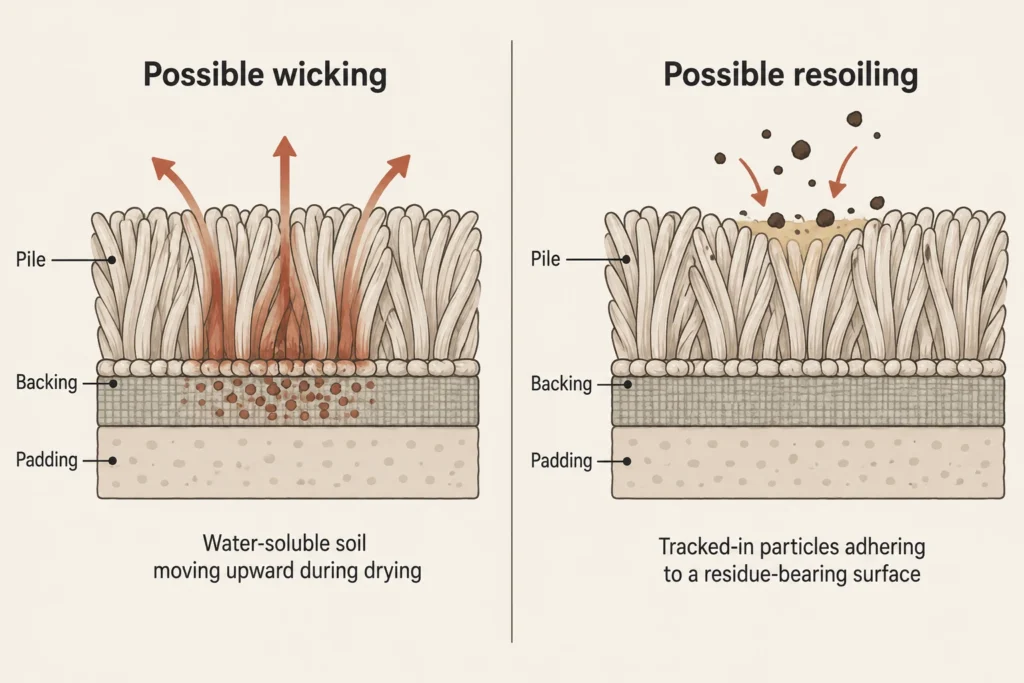
Wicking does not imply that the padding was contaminated. Material that is water soluble can still be present at the bases of the yarns or within the backing and be carried toward the surface as moisture wicks during drying. Additional solution will mobilize more material without removing it, creating a larger returning mark.[1]
Residue poses another issue: while the original spill may have been partially removed, leftover detergent can turn sticky and attract dirt. It can also add to leftover spill residue. Stains that darken with use are therefore consistent with resoiling; they are not evidence that the cleaner caused the stain.[3]
Compare the dry mark from both directions as well. Pile-direction changes can cause an area to fade or darken; chemical color loss is NOT soil. An angle-dependent mark is an indicator of an appearance alteration, NOT a diagnosis. If treatment causes further fading/fuzzing/textural change, STOP.[4]
Let's say you treat an area next to the couch, where a coffee spot is presumed to be. It appears to be gone following treatment, but reappears overnight. The dog went into the room and the cleaner had a strong odor. Neither of those facts proves anything about the cause. The dog is only relevant if he walked across the spot. Odor doesn't indicate how much residue is left. If someone didn't walk across it and it wasn't dry yet, then wicking is more likely, but comparing the visual improvement when still wet with the dry result is now comparing apples and oranges.
When one correction is reasonable
Find out what carpet style/fiber you have from purchase info, installation records or your landlord's documents. Look up the care instructions for that carpet: allowable spot cleaning agents, rinse method, restrictions on extraction, or limits on certain tools for that type of pile. The fiber itself does not determine if you can wet the backing or if machine use is allowed. If you're still unsure about those, do not try another wet solution.[3][7]
One constrained surface treatment may make sense for a dry mark that’s consistent with wicking: if allowed, apply only a small quantity of the allowed solution and blot again instead of rewetting. Pretest the entire process in an inconspicuous area and check it after it dries. Adhere to the product’s instructions for use; always work from the outside in with a white cloth, never scrubbing abrasively.[1][2]
For a stain that darkens with traffic, select allowed residue removal in place of adding detergent. If clear-water removal is allowed by your carpet and product instructions, carefully dampen a white cloth with water, blot with it, and then dry with a clean cloth. These are options, not steps to be used one after the other. If one rinse method fails, don't try another stain-removal formula.[2][3]
When spraying is expressly allowed, be sure to differentiate spraying from recovery. For instance, instructions for BISSELL’s SpotClean Pro model require contact with the suction channel, slow-backward motion, and release of the spray trigger while recovering. Obey your model's corresponding directions rather than continuing to spray. Just because water is not going into the recovery tank doesn't mean the backing or padding is dry.[5][6]
The dry result decides whether to stop
Success is defined as the fully dry stain becoming less noticeable, not increasing in size, and causing no change in fiber color or texture. Cease treatment and allow the carpet to be used as normal. In the case of coffee, if the ring has grown outward even after the one allowed do-over, it is a failure regardless of how clean the middle may appear. Another wet pass is not allowed.
Do not take the fact that you should wait to see if a dry stain appears as an invitation to let the carpet stay wet. The EPA guidance states that ideally any wet building materials should be dried within 24-48 hours, including the carpet backing and padding. The 48 hours is not a magic exact time when mold will appear if you go longer. Facilitate drying with air movement and dehumidification. If you continue to experience moisture problems or the wet spot continues to grow, or you suspect there is wetting below the surface, discontinue watering down your carpet and consult with someone who can perform an expedited moisture investigation. You cannot tell by touch if anything underneath is dry.[5]
When all else has been tried or if one corrective treatment does not work or if the dry mark reappears, consult with a trained carpet cleaner to evaluate residual soils, treatment residue, possible back involvement and fiber change. Inform them of the type of carpet, history of any spills/spots and exact products used. Share with them any pictures you have taken while the carpet was dry. Never lift an installed carpet and treat the padding as you would during normal spot cleaning. They may be able to determine a cleaning limit instead of promising complete removal.[5][7]
Sources and references
- Institute of Inspection, Cleaning and Restoration Certification: Carpet Topics Tip Sheet, section 22: Wicking
- Carpet and Rug Institute: Cleaning and Maintenance
- Shaw Industries: Carpet Care & Maintenance (2024-02-28)
- Carpet and Rug Institute: Carpet Maintenance and Troubleshooting Technical Bulletin (2017-07-27)
- US Environmental Protection Agency: Mold Course Chapter 3
- BISSELL: SpotClean Pro™ | Getting Started With Your Machine
- Shaw Floors: Carpet Care & Maintenance Tips