

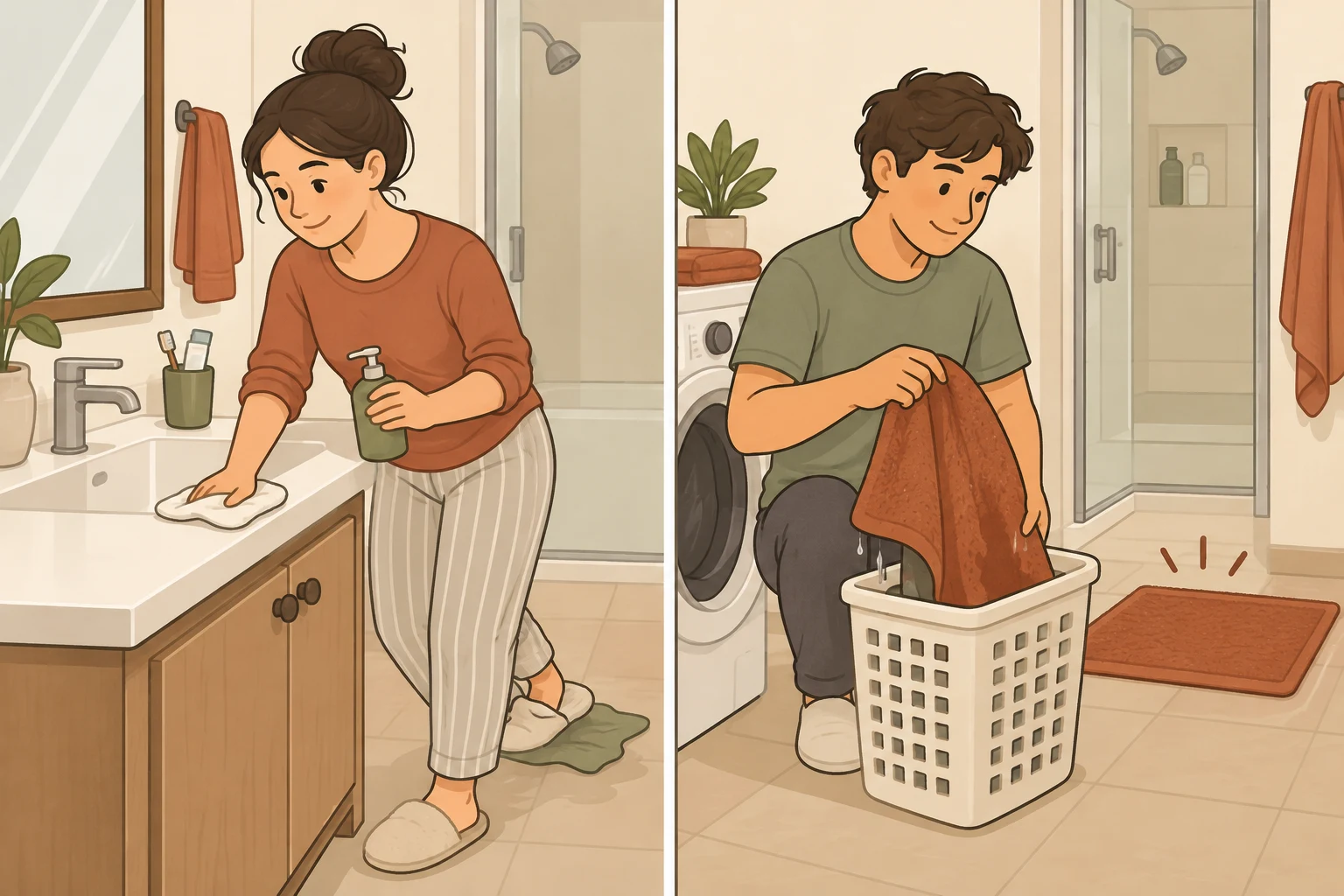
Have the bathroom mostly ready for the next user (leaving the toilet water and a small amount of paper on the roll, for example) so the next person can use it without a full cleanup. Come to agreements on what needs to be finished before someone leaves (a surface level clean on sinks, toilets and counters), as well as what can be finished later (the restocking of supplies or towels). I would begin there, rather than focus on a larger chore chart.
Imagine I'm heading into the bathroom before an early shift. Last night’s shower is still over the basin, and someone left their grooming kit in the sink. I’m irritated before I can even brush my teeth. I ask for a clear basin before my alarm goes off, not a fully spotless room.
Start with the times the room lets someone down
The situation that keeps going wrong, like the toilet stop before you leave for the day, a late night handwashing, or a post-shift shower, should be the starting point. If two people need the room at the same time, portable grooming may work better than cleaning agreements. Give the shower a time limit to make sure the next person can use the bathroom. Normal cleaning, or the departure reset, can be quick and small. Leave the basin clear and toilets and counters at a useable level.
For ordinary use, the departure reset can be small: remove personal items from the basin, deal with fresh splashes and visible mess, dry floor water, and leave toilet paper, soap, and hand drying available. Mirror streaks can wait. CDC recommends washing hands after toilet use, so an accessible sink and soap aren't cosmetic extras.
An installed roll isn't the whole supply job
I would split the supply job in two. The person who finishes a roll installs the next one. The owner of the named job checks the reserve, purchases the replacements and places them within reach. Otherwise, all the employees can truthfully say they replaced the roll while the supply cupboard quietly empties. A shopping list reminder is little comfort when you’re already sitting on the supply.
One possible ‘trigger’ is to message the person who owns the supply when the last roll or container of soap is opened. But this will depend on your supply shopping cycle. If the reserve is not going to last until the next shopping cycle, the warning needs to come earlier. The supply cupboard owner needs a regular check of the supply that fits their schedule so replenishment doesn’t rely on someone remembering to send the message. This is a household proposal, not a health standard.

Wet things need a destination and a finish time
After a shower, hang the towel; don’t leave it on the floor. If a mat is saturated, name who removes it and where it goes, and who puts a clean dry mat in its place before the early user shows up. Removing a wet mat is only half the job. If doing the laundry overnight is not an option, use a dry replacement mat. Be clear that you can’t promise to have it done by then.
EPA recommends use of a bathroom fan, opening a window, and prompt towel and mat drying. A clean, dry mat should always be available to replace a saturated one. Persistent dampness warrants an investigation into the source and renters should report any leaks and moisture. Hand towels should be changed before they get too damp. Mildew can start to grow on damp towels.
Keep the busy-day version genuinely small
On a low capacity day, I would focus on getting the next person through the door. That would include polishing the sink, and drying the standing and wet area. Further cleaning would be done in the periodical deep cleaning. On a low capacity day, telling an agreed backup exactly what is left before the next person shows up should take priority over polishing.
A quick reset is not a substitute for a thorough cleaning. The CDC states that for typical household situations, regular cleaning is sufficient to break the germ transmission cycle. Illness or a suppressed immune system may call for additional disinfection. Clean up of vomit or diarrhea, or sewage spillage, for example, requires special procedures and should not be addressed with the shortcuts discussed here. Disinfectants work by wetting a surface for a certain period of time (contact time) with the disinfectant. A rushed wipe may not be effective.
How did it go with your most hectic schedule? Did you get in when you needed to? Was the supply there? Did the jobs that use a wet item finish? Answers to these questions tell you more than a shiny faucet. Was the same snag or inconvenience present? I'd change that part of your arrangement e.g. take an earlier shower, allow more time for drying, or make other supply arrangements. Ask yourself these questions before you ask everyone to remember to take a longer time to do the task.
Sources and references
- Centers for Disease Control and Prevention: When and How to Clean and Disinfect Your Home (2025-01-31)
- Centers for Disease Control and Prevention: Hand Hygiene Frequently Asked Questions (2024-03-14)
- US Environmental Protection Agency: A Brief Guide to Mold, Moisture and Your Home