

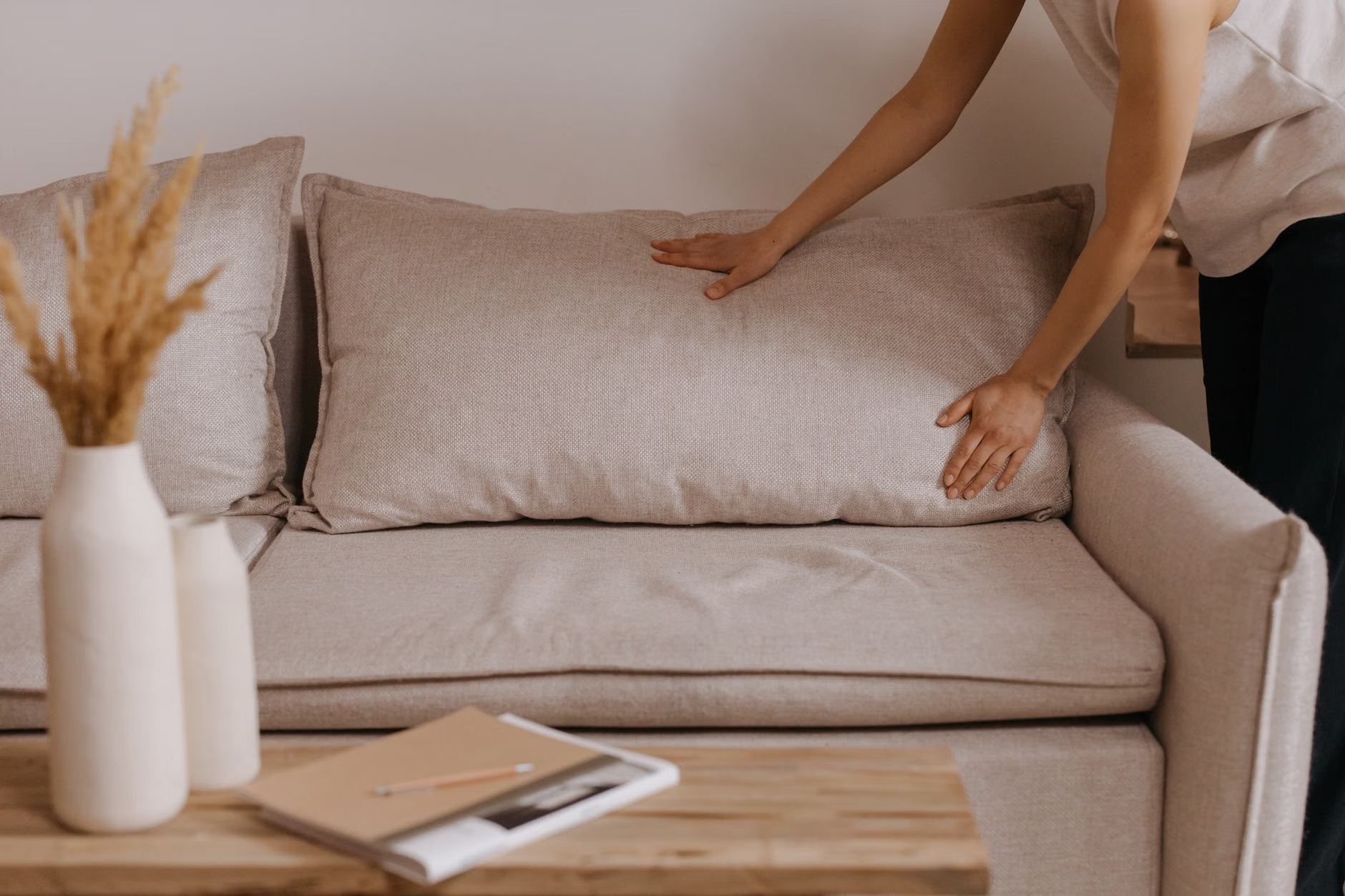
The spot is darker, the cloth is damp, and another spray feels like action, yet the mark is no clearer than it was five minutes ago. This is the moment I dislike most, because helpful effort can quietly push moisture through fabric, into cushion fill, along a floor seam, or under an unfinished edge.
A wetter surface is not evidence of a more thorough clean. Use the least moisture that can do the specific job, make sure that moisture has a realistic way back out, and judge the result only after the material dries.
Water has five different cleaning jobs
The useful distinction is what the moisture is doing and how it will leave the material.
| Job | Purpose | Practical limit |
|---|---|---|
| Dry removal | Lift loose grit, hair, and crumbs | Vacuum, sweep, brush, or lift first |
| Lightly damp treatment | Loosen soil at the surface | Apply a controlled amount, not a soaking |
| Rinsing | Remove permitted cleaner residue | Add clean water only when the item's care information calls for it |
| Extraction | Pull out solution and moisture | Use only on items that permit the method |
| Stopping to dry | Reveal the real result | Wait before deciding on another pass |
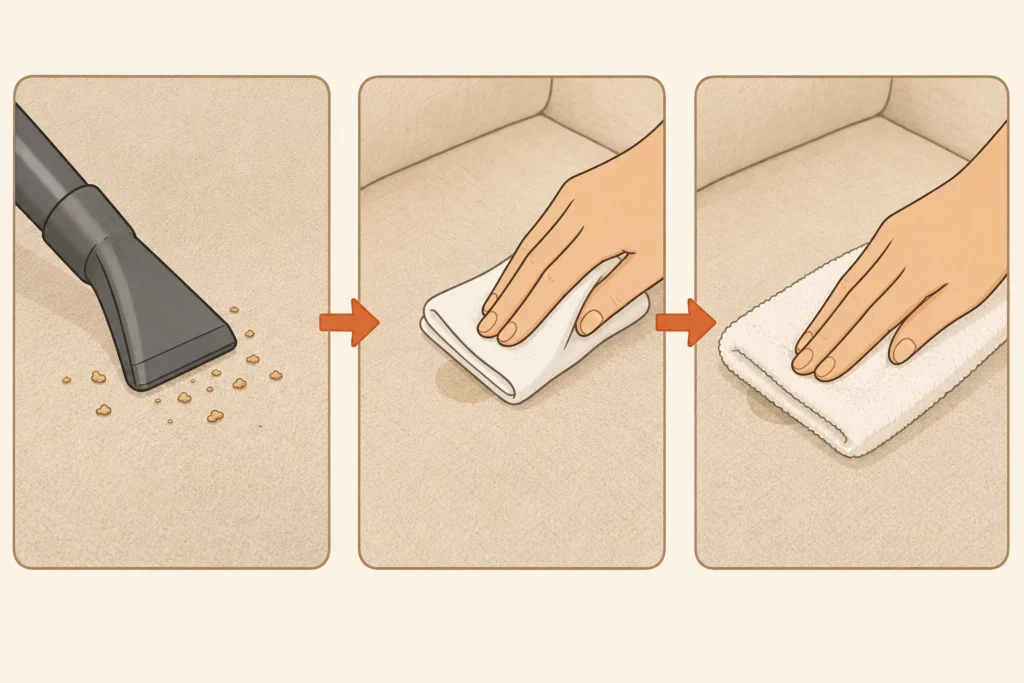
Move up that ladder only when the previous level was insufficient, explicit product limits permit the next method, and you already know how the added liquid will be blotted, extracted, or dried evenly. If the material, finish, or permitted wet method is unknown, stop at dry removal rather than testing with liquid.
A wet method needs an exit route
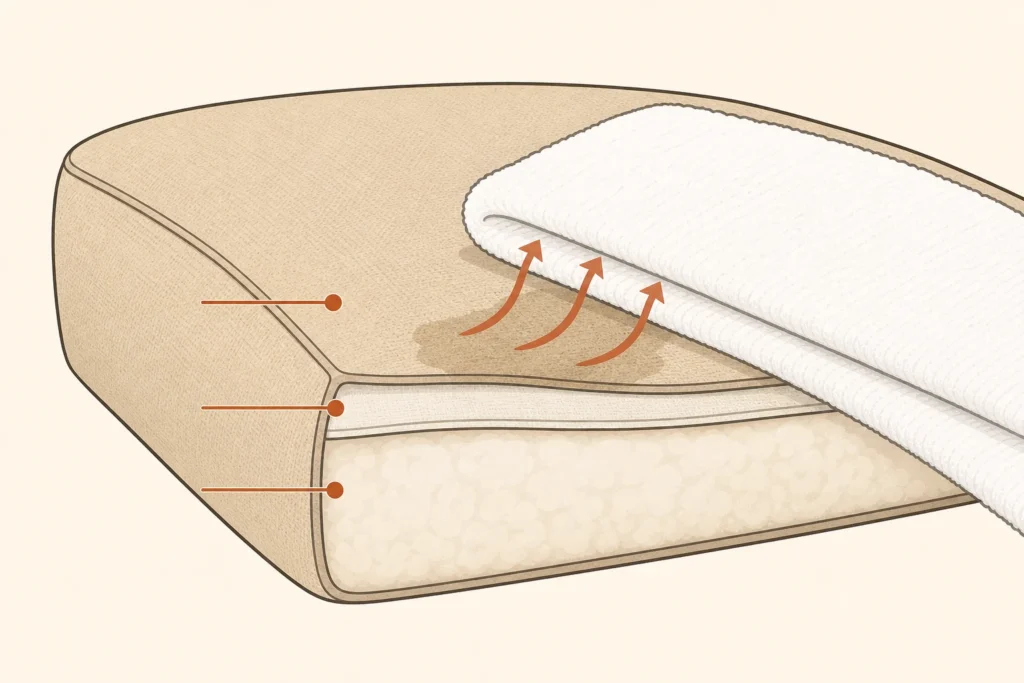
Before adding liquid, ask two questions: What does this particular item's care information permit, and where will the moisture go afterward? If the honest answer is that it will sit inside a cushion, backing, seam, or floor joint until it eventually dries, the method is already too wet for a routine spot clean.
The material category alone cannot answer the first question. Shaw's hardwood guidance excludes wet and steam mops, while some water-compatible La-Z-Boy upholstery guidance still rules out hot-water extraction and steam. Other manufacturers distinguish among light application, limited rinsing, blotting, and extraction for their own applicable fabrics.
For clothing, use the sewn-in care label. For upholstery, use the attached cleaning code or documented fabric guidance, and for flooring, use the flooring maker’s specified method. I find broad promises such as “washable” or “performance fabric” annoyingly easy to overread, because compatibility with some water is not permission to saturate every layer.
Let the dry result decide whether to continue
I used to give a stubborn spot one more pass because waiting felt like doing nothing, then I would have a larger damp patch and no better information. Now I like the pause, even though it is less satisfying, because drying reveals what the wet surface temporarily hides.
Where the care information permits a spot test, remove loose soil first, test an inconspicuous area, apply the smallest workable amount, and blot away excess instead of repeatedly re-wetting the same place. Continue only if the dry area has its normal color, texture, and feel.
- Stop if water is excluded or the material and finish are unknown.
- If moisture has reached backing, cushion fill, padding, a seam, floor edge, or subfloor, blot only accessible surface moisture, stop adding liquid, and end the routine spot-cleaning attempt.
- If the dry result shows cleaner residue, do not repeat the same cleaner. A limited compatible rinse is an option only when the item’s care guidance permits it and the added moisture can be removed.
- Stop if drying reveals a ring, dullness, stiffness, swelling, changed texture, or persistent dampness.
- Stop if the job now requires uniform whole-item treatment rather than a contained surface clean.
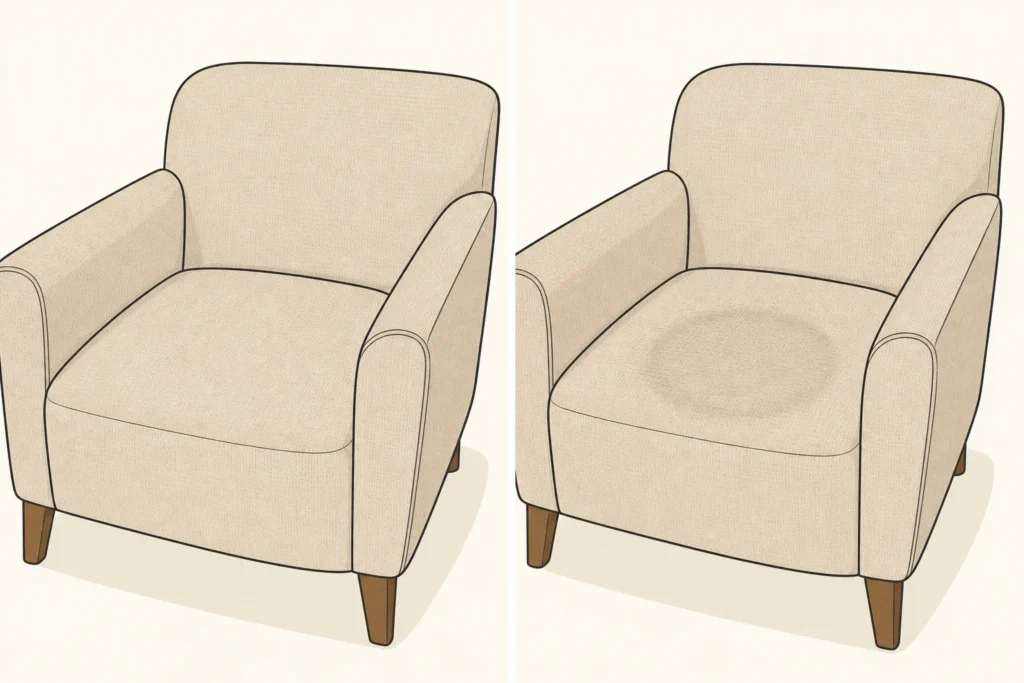
Stopping at that boundary is not an incomplete clean. The useful result is an item that remains usable and dries normally, not one that merely looks improved while it is darker and wetter.
Sources and references
- Shaw Floors: Shaw Floors Hardwood Floor Care & Maintenance
- La-Z-Boy: Fabric & Leather Care
- Room & Board: Fabric & Upholstery Care and Cleaning
- Federal Trade Commission: Care Labeling of Textile Wearing Apparel & Certain Piece Goods
- Institute of Inspection, Cleaning and Restoration Certification: ANSI/IICRC S500 Standard for Professional Water Damage Restoration
- Crypton: Crypton Home Fabric Cleaning and Care Instructions