


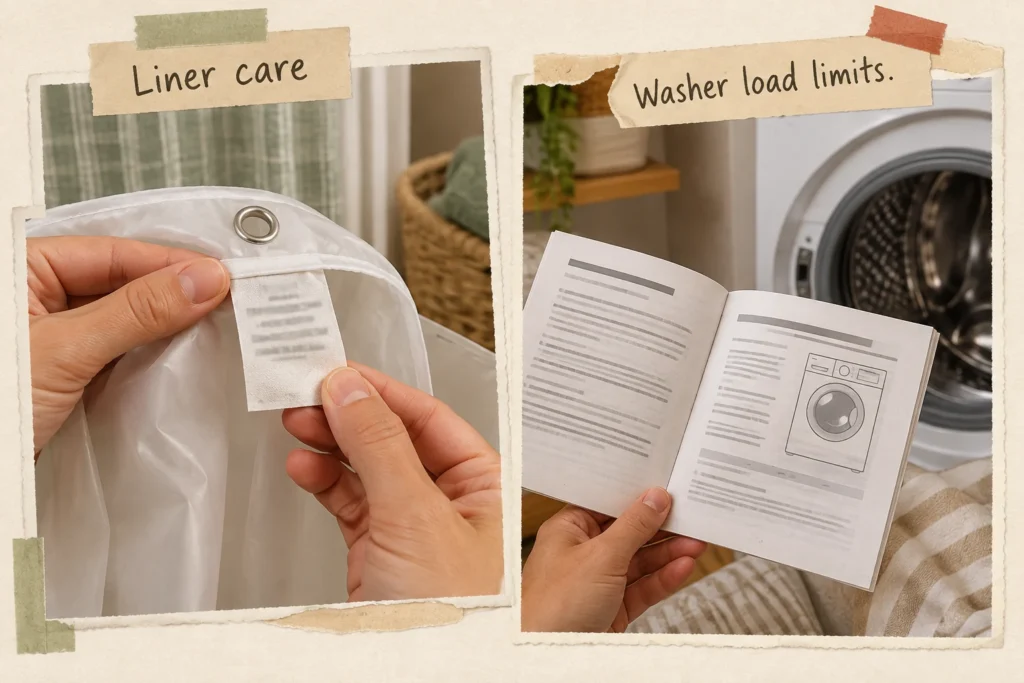
Shower curtain liners can be thrown in the washing machine, as long as your washer allows it and the liners permit it. Vinyl, PEVA, or fabric alone doesn't determine if it is machine washable. I wouldn't take a chance with a delicate cycle if the instructions for either the liner or the washer say no or aren't clear.
The material is a clue, not permission
Construction Specialties advises against machine washing its vinyl shower curtains. Its method is warm soapy wiping, rinsing, and air drying. By contrast, The Company Store’s polyester liner VH74-OS-WHITE allows cold, gentle machine washing separately, with no bleach, hang drying, and no ironing. That gives you two useful examples, not a washing recipe for every vinyl or polyester liner.
PEVA isn’t an automatic yes, either. Lush Decor’s mildew-resistant liner listing specifies wipe cleaning, but calls the material PEVA in one place and polyester in another. I’d treat that as a reason to clarify the item, not choose whichever description offers the easiest laundry day. Your original label takes priority over a similarly named replacement online; if it’s missing, use the product number or a photo to ask the maker for the applicable care method.
Your washer gets a say, too
Picture me, in an imagined laundry-room moment, holding a dripping liner over a basket of towels. I’m tempted to put everything in together and be done. Then I notice “wash separately” on the liner. Annoying, yes, but I put the towels aside and check the washer’s waterproof-load instructions before turning one small chore into two.
Advice about towels isn’t universal. Samsung says to not mix waterproof and non-waterproof items. Samsung has a support page on a Bedding/Waterproof cycle, though availability is model dependent. A waterproof liner’s machine washable care label does not negate washer restrictions, and a special washer cycle does not override the liner’s gentle cycle requirement.
The one restriction both sets of instructions allow is the item, cycle, temperature, and load restrictions, including the company of the load. If the liner requires gentle washing, but the washer only allows the liner on an incompatible cycle, hand washing is permitted. “Delicate” is not a workaround for conflicting set of instructions.
Removing the detachable shower hooks before loading is permitted, leaving grommets and sewn-in weights, is permitted. Don’t add laundry to balance the load unless both instructions permit it. Don’t guess about adding cleaning solution or bleach. Drying the liner is also a permission, Company Store liners can be hung to dry.
Before another wash, ask what’s actually left
A build up of a film can be soap scum, hard water deposits, or minerals. Cleaning instructions for the liner allow for cleaning small, inconspicuous areas, rinsing, and comparing to the rest of the material after it dries. Always review the manufacturer’s instructions for recommended cleaning and treatment.
Once the liner is dry, separate the remaining stain from a failed liner. The EPA states mold can leave stains, so discoloration alone does not prove mold is still present. Tears, cracked seams, failing attachment holes, and water escaping through the liner are all different from a failed liner. I can live with a liner that’s not new looking, but I’m not going to wash a moldy tear and reattach it.
If there is a suspected moldy odor, or suspected mold growth, this is different from a flat residual stain. A laundry cycle does not always remove mold. The EPA states complete mold removal is difficult or impossible from some porous materials, however that does not mean every washable polyester liner must be discarded. If permitted liner cleaning leaves suspected mold or a moldy odor, I would replace the liner, rather than increase the use of chemicals.
When you are certain mold is present, the EPA recommends wearing gloves, goggles, and an N95 respirator. Individuals with health concerns should contact their health care provider before mold cleanup to determine if there is a risk of health concerns from mold exposure.
If mold returns after cleaning, consider how the liner is dried. Spread it out, do not bunch it up, and utilize the bathroom vent to clear moist air. Mold will grow again if there is still moisture. Soil and a musty odor can also be indicators of mold growth. A residual stain can remain, and an old liner can still contain shower water, and soil, and still be kept.
Sources and references
- Construction Specialties: Hookless Shower Curtains Suggested Specifications (2024-08-05)
- The Company Store: Company Essentials Fabric Shower Curtain Liner, VH74-OS-WHITE
- Lush Decor: Mildew-Resistant Shower Curtain Liner
- Samsung US: Cycles, settings, and features on your Samsung washing machine
- CloroxPro: Addressing Hard Water or Rust
- US Environmental Protection Agency: Mold Cleanup in Your Home
- US Environmental Protection Agency: A Brief Guide to Mold, Moisture, and Your Home (2010-09)