

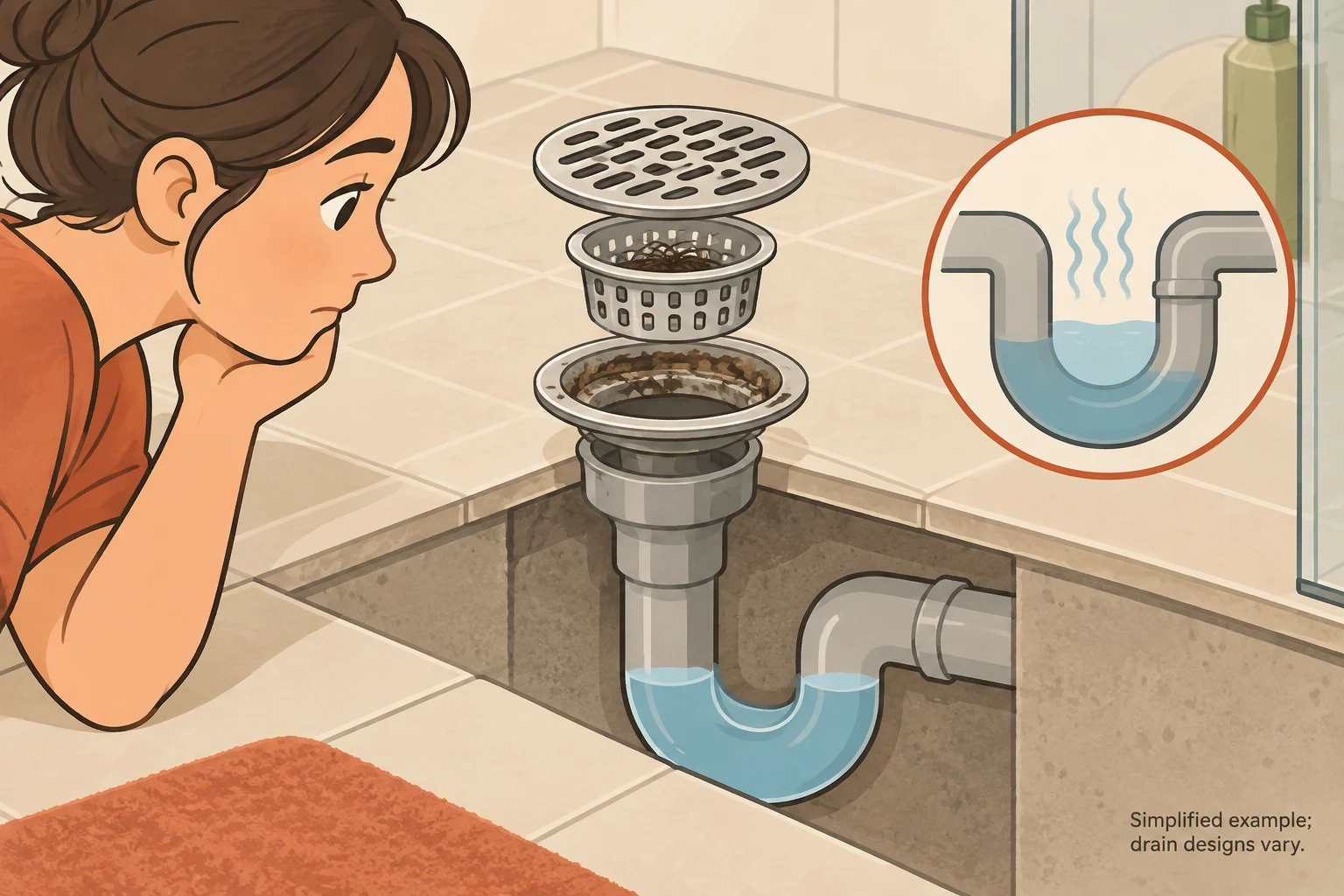
Cleaning can work to remove soap and grime if it’s still accessible. An unused shower may need water restored to its trap, not a cleaner. A persistent, recurring, and/or pervasive odor suggests an underlying problem that requires further evaluation. Cleaners work by their fragrance, so I wouldn’t pick a product based on its smell.
What changes when the water runs?
Plumbing traps contain water that blocks sewer gases. The water can evaporate and then the trap loses its sewer gas barrier. I would try water before a cleaner for a shower that has a musty smell, is seldom used, and has no potentially hazardous cleaners previously used in the drain. If the cleaner improves the smell, then a possibly blocked trap is one of the possible causes, but not a definite diagnosis. There is not a universal drying time or water running time for showers.
Imagine I'm about to open a seldom-used guest shower for a guest and the smell stops me at the door. Annoyed, I reach for a cleaning product. However, because the shower has been unused, I decide it’s better to check the water first, rather than turn a guest’s shower use into a cleaning project.
A smell that occurs only when water is running does not necessarily mean that water is the source of the odor. For a mild smell and where there aren’t concerns for health, the Portland Water Bureau recommends checking the smell of water by collecting water in a clean glass and removing it from the bathroom. To check for differences in temperature, see if the odor follows, and report anything else you observe. This will likely give you something to report, but it may not determine the safety of the water or identify the source of the odor or a failed plumbing component.
Remove what’s reachable; leave the fixed drain alone
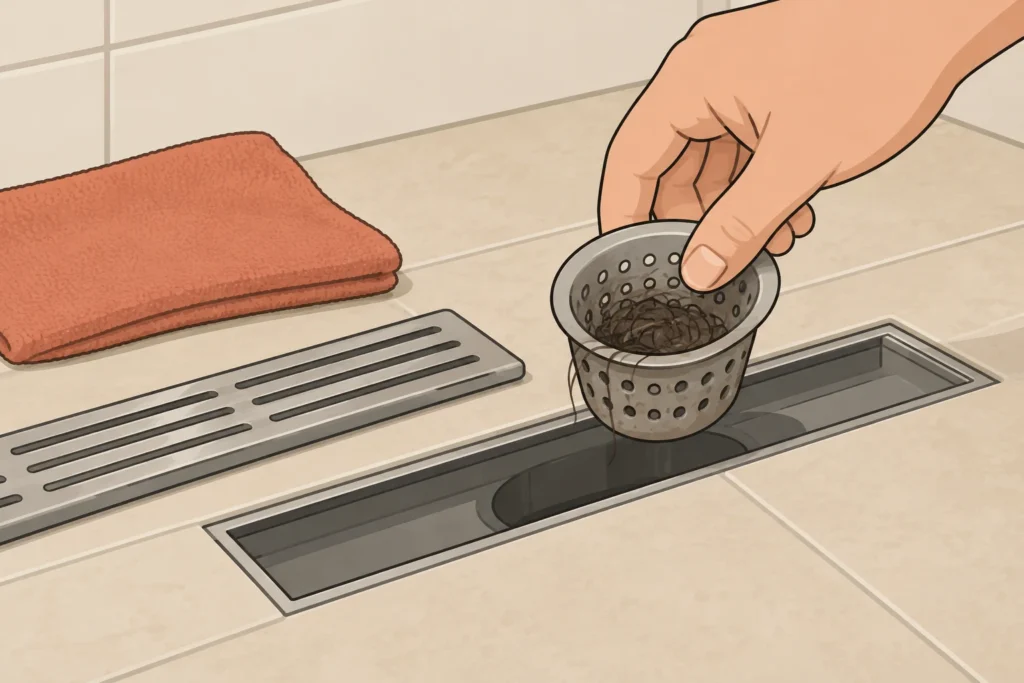
If there is a buildup of hair and soap and the shower smells, then I think it is fine to remove that buildup. I’d keep this a small job and remove a hair trap, if accessible, and clean other removable components and surfaces. It's better to keep a small job a small job.
How far you can take “removable” depends on the drain. Infinity Drain, for example, in its care guide, says you can remove the grate from an end of the drain, remove the hair basket, clean all parts with a mild soap and water, and put them all back. If your drain needs the same kind of access, that’s helpful info, but don’t take it as an invitation to mess with other parts. If it requires applying force, loosening the drain body, or moving seals, leave it alone.
A previous dose of drain opener can change that. If you don’t know if drain opener was used recently and you don’t know if it’s still present, don’t touch the drain or add anything else. Many drain openers are corrosive and can cause injury from splashing, and some cleaners produce toxic fumes when combined with other cleaners. Tell maintenance what was used, and when. In your effort to clean the drain, you’ve now introduced a new, mysterious substance into the drain. You have no idea what effects it’ll have.
When another cleaning attempt stops being useful
After you’ve done a proper cleaning, you should put all the parts back and see what happens with normal use. If it stays clean and odor-free, you can stop there. If you notice the odor returns, I’d report it, rather than going and buying even stronger cleaners. One unsuccessful cleaning doesn’t always mean there’s a plumbing problem, but if odor returns, it could mean there’s a leak that needs to be addressed. Surface cleanings can’t check for leaks.
Odor at several drains, especially drains with slow drainage or gurgling, is another reason to request a broader drainage assessment. Odor at drains doesn’t necessarily mean there is a blockage in the main line or a failure in the vent system. Report all visible leaks. If water backs up in one of the fixtures, do not continue to check if the water is still there. Stop using the fixture, keep people and especially pets away, and contact the maintenance department.
If you don’t own the property, you don’t have to identify the faulty part of the plumbing before reporting it. Tell them when it happened, the fixtures that were affected, what changes you observed in drainage, any visible leaks, the timing of the water-only checks, and the cleaning you attempted. “The odor returned during normal use after I cleaned the removable catcher” is helpful information, not an admission you haven’t scrubbed hard enough.
Sources and references
- Michigan State University Environmental Health and Safety: What's That Stink? It Could Be Your Drain (2020-02)
- Infinity Drain: Care & Maintenance User Guide
- Portland Water Bureau: Taste and odor issues in drinking water
- City of Tampa Wastewater Department: Cleaning Sanitary Sewage
- Wisconsin Department of Health Services: Air: Sewer Gas
- National Capital Poison Center: What's that smell? Identifying unknown fumes in your home
- National Capital Poison Center: What's in drain cleaner and what happens if you drink it?